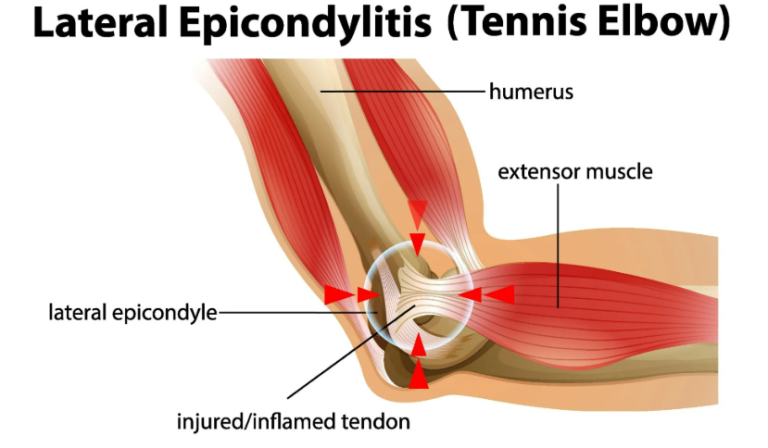
Tennis elbow, medically known as Lateral Epicondylitis, is a common condition that causes pain on the outer side of the elbow due to overuse of the forearm muscles and tendons. Despite its name, tennis elbow does not only affect tennis players. It is frequently seen in office workers, carpenters, painters, plumbers, mechanics, gym enthusiasts, computer users, and anyone who performs repetitive hand or wrist movements.
At Indu Physiotherapy Clinic, we provide evidence-based Tennis Elbow Treatment that focuses on relieving pain, promoting tendon healing, restoring strength, and helping you return to work, sports, and daily activities without discomfort. Our personalized physiotherapy programs target the root cause of your symptoms rather than simply masking the pain.
Tennis elbow is a repetitive strain injury affecting the tendons that attach the forearm muscles to the outside of the elbow. Repeated gripping, lifting, twisting, or wrist extension can cause tiny tears in these tendons, leading to pain and reduced arm function.
Without appropriate treatment, symptoms can gradually worsen and interfere with routine activities such as lifting objects, shaking hands, opening jars, typing, or even holding a coffee cup.
Early physiotherapy plays a key role in reducing pain, improving tendon health, and preventing long-term complications.
Several activities may contribute to tennis elbow, including:
Common symptoms include:
Tennis elbow commonly affects:
Every patient undergoes a detailed evaluation to identify the exact cause of the elbow pain.
Our assessment includes:
Based on the findings, we develop an individualized treatment plan designed to promote long-term recovery.
Hands-on techniques help improve joint mobility, reduce pain, and restore normal elbow movement.
Treatment of tight muscles and tendons to improve circulation and support healing.
Progressive strengthening and stretching exercises help restore tendon strength and improve arm function.
Specialized exercises that stimulate tendon healing and improve long-term outcomes.
Where clinically appropriate, dry needling may be used to relieve muscle tightness and reduce pain.
Evidence-based modalities such as IFT, TENS, or therapeutic ultrasound may be used to complement your rehabilitation program.
Guidance on workplace setup, sports technique, and daily activities to reduce tendon strain.
Recommendations to temporarily modify activities while maintaining safe movement during recovery.
A personalized home rehabilitation plan ensures continued progress between clinic visits.
Physiotherapy can help you:
Reduce your risk of tennis elbow by following these simple tips:
Yes. Physiotherapy is considered one of the most effective conservative treatments for tennis elbow. It helps reduce pain, improve tendon healing, restore strength, and reduce the risk of recurrence.
Recovery varies depending on the severity of the condition, how long symptoms have been present, and adherence to the rehabilitation program. Many patients notice improvement within several weeks, while chronic cases may require a longer rehabilitation period.
Not necessarily. Your physiotherapist will advise which activities should be modified and which exercises are safe to continue during recovery.
Most cases improve successfully with conservative treatment, including physiotherapy, exercise, and activity modification. Surgery is generally considered only if symptoms persist despite prolonged non-surgical treatment.
Consult a physiotherapist if you experience:
Early treatment often leads to faster recovery and better long-term outcomes.
Don’t let elbow pain limit your work, sports, or daily activities.
At Indu Physiotherapy Clinic, our experienced physiotherapists provide personalized treatment programs designed to relieve pain, restore strength, and help you return to an active lifestyle.
Most oral emergencies relate to pain, bleeding, or thoracic pain and should be attended by a Physiotherapist.
We will send you a confirmation within 24 hours. Emergency? Call +91-9289 059 265
Most oral emergencies relate to pain, bleeding, or thoracic pain and should be attended by a Physiotherapist.