(+91) 9289 059 265induphysiotherapy@gmail.com

Bell’s Palsy Physiotherapy Treatment

Bell’s Palsy Physiotherapy Treatment t

What Is Bell’s Palsy?

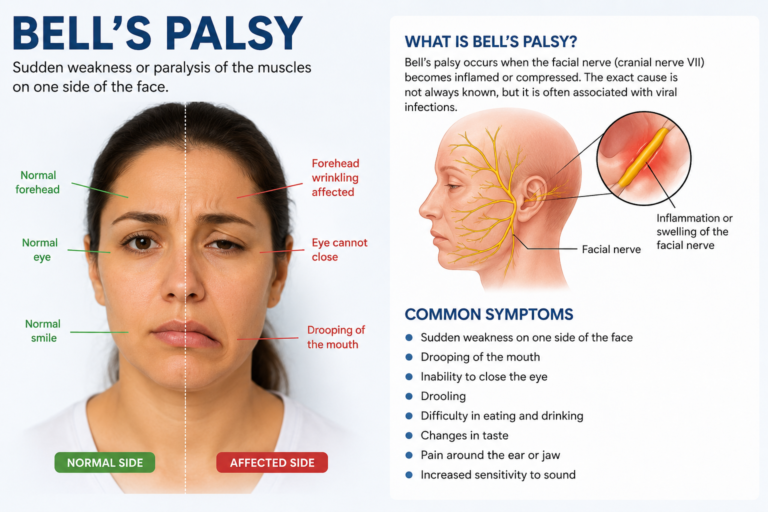
Bell’s palsy is a sudden weakness or paralysis of the facial muscles caused by dysfunction of the facial nerve, also called the seventh cranial nerve. The facial nerve controls many movements, including raising the eyebrows, closing the eyes, smiling, and moving the lips.

The condition usually affects one side of the face and may develop over hours or a few days. Symptoms can vary from mild weakness to complete facial paralysis.

How Bell’s Palsy Affects Facial Movement

When the facial nerve is affected, the muscles on one side of the face may receive reduced nerve signals. This can lead to:

  • Facial drooping
  • Difficulty closing one eye
  • Reduced facial expressions
  • Difficulty smiling
  • Changes in speech
  • Difficulty keeping food or liquids inside the mouth
Why Early Assessment Is Important

Sudden facial weakness should be assessed promptly by a qualified medical professional. Bell’s palsy is diagnosed after other possible causes of facial weakness are considered. Early medical treatment may be important, particularly during the first few days after symptoms begin.

Important Safety Note

If facial weakness occurs with arm or leg weakness, difficulty speaking, severe headache, confusion, loss of balance, or other neurological symptoms, seek emergency medical care immediately.

Common Symptoms of Bell’s Palsy

Symptoms may include:

  • Weakness or paralysis on one side of the face
  • Drooping of the mouth
  • Difficulty smiling
  • Inability to fully close one eye
  • Reduced blinking
  • Difficulty raising the eyebrow
  • Facial stiffness or tightness
  • Difficulty eating or drinking
  • Food collecting inside the cheek
  • Changes in speech
  • Increased sensitivity to sound
  • Changes in tear production
  • Facial discomfort or pain near the ear

Common Causes and Risk Factors

The exact cause of Bell’s palsy is not always known. It is often associated with inflammation or swelling of the facial nerve. Certain viral infections may be involved.

Possible risk factors include:

  • Recent viral illness
  • Diabetes
  • Pregnancy
  • Upper respiratory infections
  • Previous episodes of facial palsy
  • Certain immune or inflammatory conditions

Our Bell’s Palsy Physiotherapy Assessment

Before beginning rehabilitation, our physiotherapist performs a detailed assessment of facial movement and functional difficulties.

Facial Movement Assessment

The assessment may include:

  • Eyebrow movement
  • Eye closure
  • Smiling ability
  • Lip movement
  • Cheek movement
  • Facial symmetry
  • Speech and eating difficulties
  • Muscle stiffness
  • Unwanted facial movements

Functional Assessment

We also evaluate how facial weakness affects:

  • Eating and drinking
  • Speaking
  • Eye protection
  • Facial expressions
  • Social confidence
  • Daily activities

Personalized Recovery Planning

Based on the assessment, a customized rehabilitation plan is created to support safe and gradual facial recovery.

Bell’s Palsy Physiotherapy Treatment Methods

Facial Neuromuscular Re-Education

Facial neuromuscular re-education uses gentle, controlled movements to improve awareness and coordination of the facial muscles. Exercises are selected according to the patient’s recovery stage and ability.

Facial Movement Training

Specific exercises may focus on:

  • Gentle eyebrow movement
  • Controlled eye closure
  • Small, symmetrical smiles
  • Lip movement
  • Cheek activation
  • Controlled facial expressions
Mirror Feedback Training

Mirror-based exercises may help patients observe facial movement and improve control and symmetry. Exercises should be performed carefully to avoid excessive effort or unwanted muscle compensation.

Individual Exercise Progression

Exercises are gradually adjusted according to recovery. Overexercising or forceful facial movements may not be appropriate for every patient.

Gentle Facial Soft-Tissue Techniques

Gentle manual techniques may be used when clinically appropriate to improve comfort, reduce muscle tightness, and support facial relaxation.

Facial Massage and Relaxation

Gentle facial massage may help reduce:

  • Muscle stiffness
  • Facial tightness
  • Discomfort
  • Soft-tissue restriction

Biofeedback Training

Biofeedback techniques may help patients improve awareness and control of facial muscle activity. This can be particularly useful when facial movement is returning but remains uneven.

Synkinesis Management

Some people develop synkinesis, in which an unwanted movement occurs during another facial movement. For example, the eye may close while smiling.

Physiotherapy may help improve movement control through:

  • Slow, precise facial exercises
  • Relaxation techniques
  • Movement retraining
  • Mirror or biofeedback guidance

Home Exercise Program

A personalized home program may be provided to support recovery between physiotherapy sessions. Exercises should be performed only as instructed by the treating physiotherapist.

Benefits of Bell’s Palsy Physiotherapy Treatment

Physiotherapy may help patients:

  • Improve facial muscle awareness
  • Support controlled facial movement
  • Improve facial symmetry
  • Reduce facial stiffness
  • Improve eye and mouth movement
  • Improve facial coordination
  • Manage unwanted facial movements
  • Improve confidence during speaking and social interaction
  • Support long-term facial function

Important Treatment Considerations

Bell’s palsy recovery differs from person to person. Physiotherapy is not a replacement for medical diagnosis or prescribed medical treatment. The rehabilitation approach should be based on the severity of facial weakness, stage of recovery, and individual clinical findings.

Eye Care During Bell’s Palsy

If the affected eye cannot close fully, protecting the eye is essential. Reduced blinking may cause dryness and increase the risk of corneal injury. Eye protection measures should be discussed with a doctor or eye-care professional.

Eye Protection May Include

  • Prescribed lubricating eye drops
  • Eye ointment when advised
  • Protective eyewear
  • Keeping the eye clean
  • Following medical advice regarding eye closure or protection

Why Choose Indu Physiotherapy Clinic?

  • Personalized Bell’s palsy rehabilitation programs
  • Detailed facial movement assessment
  • Evidence-informed physiotherapy care
  • Individual facial exercise guidance
  • Facial movement and symmetry training
  • Support for persistent facial weakness
  • Synkinesis management strategies
  • Home rehabilitation guidance
  • Patient-focused and compassionate care

Tips for Bell’s Palsy Recovery

  • Seek medical assessment promptly after sudden facial weakness.
  • Follow prescribed medical treatment.
  • Protect the affected eye if it does not close properly.
  • Perform facial exercises only as advised.
  • Avoid forceful or excessive facial movements.
  • Maintain good oral hygiene.
  • Attend follow-up appointments.
  • Report new or worsening symptoms to your healthcare provider.

Frequently Asked Questions

Can Physiotherapy Help Bell’s Palsy?

Physiotherapy may be helpful for selected patients, especially those with persistent facial weakness, movement problems, facial stiffness, or synkinesis. Treatment should be individualized after a detailed assessment.

When Should Physiotherapy Begin?

The appropriate timing depends on the severity of symptoms, medical assessment, and stage of recovery. A physiotherapist can determine whether rehabilitation is suitable and which techniques are appropriate.

How Long Does Bell’s Palsy Recovery Take?

Recovery varies between individuals. Some people improve within weeks, while others may require several months. The severity of initial facial weakness and the response to treatment can affect recovery.

Are Facial Exercises Safe?

Facial exercises should be prescribed and monitored by a qualified healthcare professional. Forceful or excessive exercises may not be appropriate for every stage of recovery.

Can Bell’s Palsy Cause Permanent Facial Weakness?

Many people recover significantly, but some may experience persistent weakness, facial tightness, or unwanted movements. Rehabilitation may help manage these long-term effects.    


Monday8:30am–9:30pm
Tuesday8:30am–9:30pm
Wednesday8:30am–9:30pm
Thursday8:30am–9:30pm
Friday8:30am–9:30pm
Saturday8:30am–9:30pm
Sunday9:30am–9:30pm
+91-9289 059 265

Most oral emergencies relate to pain, bleeding, or thoracic pain and should be attended by a Physiotherapist.

Make an appointment

We will send you a confirmation within 24 hours. Emergency? Call +91-9289 059 265

Most oral emergencies relate to pain, bleeding, or thoracic pain and should be attended by a Physiotherapist.

    Working Hours

    Monday 8:30am–9:30pm
    Tuesday8:30am–9:30pm
    Wednesday8:30am–9:30pm
    Thursday8:30am–9:30pm
    Friday8:30am–9:30pm
    Saturday8:30am–9:30pm
    Sunday8:30am–9:30pm
    Meet the professional therapist team

    Get started with Indu Physiotherapy Clinic!