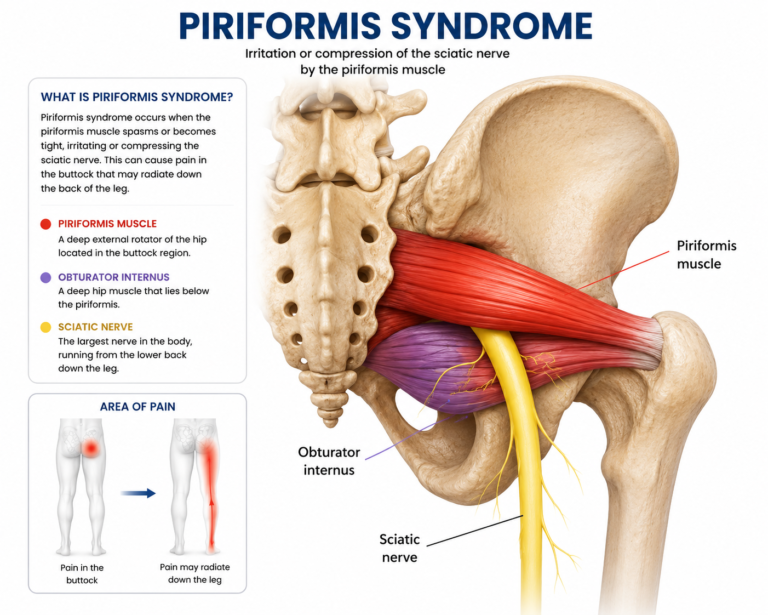
Piriformis Syndrome is a neuromuscular condition in which the piriformis muscle, located deep in the buttock, irritates or compresses the sciatic nerve. This can lead to pain in the buttock, hip, and lower back, with symptoms often radiating down the back of the thigh and leg. The condition may affect walking, sitting, climbing stairs, running, and other daily activities.
At Indu Physiotherapy Clinic, we provide evidence-based Piriformis Syndrome Physiotherapy Treatment to relieve pain, reduce muscle tightness, improve flexibility, restore movement, and prevent recurrence. Our personalized rehabilitation programs focus on treating the root cause rather than simply relieving symptoms.
The piriformis is a small muscle located beneath the gluteal muscles. It helps rotate and stabilize the hip joint during walking and other lower limb movements.
When this muscle becomes tight, inflamed, or goes into spasm, it can compress the sciatic nerve, causing pain that may resemble sciatica.
Lower Back
│
│
Hip Joint
│
┌────────┐
│ Piriformis Muscle │
└────────┘
│
Sciatic Nerve
│
▼
Buttock Pain
│
▼
Thigh Pain
│
▼
Leg Pain
People at higher risk include:
Consult a physiotherapist if:
At Indu Physiotherapy Clinic, our assessment includes:
Your physiotherapist will also help determine whether symptoms may be related to other conditions such as lumbar disc problems, sacroiliac joint dysfunction, or hip disorders, ensuring an appropriate treatment plan.
Our initial treatment focuses on reducing pain and muscle spasm through gentle physiotherapy techniques.
Manual therapy helps:
Targeted soft tissue techniques help release tension within the piriformis muscle and surrounding tissues.
Gentle stretching improves flexibility and reduces pressure on the sciatic nerve.
Strengthening exercises target:
Improving core stability supports better pelvic alignment and reduces stress on the piriformis muscle.
Poor posture often contributes to piriformis syndrome.
Our physiotherapists provide education on:
When clinically appropriate, treatment may include:
These modalities may help reduce pain as part of a broader rehabilitation program.
For selected patients and where performed by qualified professionals, dry needling may be used to reduce muscle tightness and improve function.
Every patient receives a personalized exercise plan designed to:
Many patients experience significant improvement with physiotherapy. Recovery depends on the severity of symptoms, contributing factors, and adherence to the prescribed rehabilitation program.
Mild cases may improve within a few weeks, while chronic cases can take longer depending on the individual’s condition and response to treatment.
No. Piriformis Syndrome is one possible cause of sciatic nerve pain. Sciatica can also result from conditions such as a lumbar disc herniation or spinal stenosis, so an accurate assessment is important.
Most oral emergencies relate to pain, bleeding, or thoracic pain and should be attended by a Physiotherapist.
We will send you a confirmation within 24 hours. Emergency? Call +91-9289 059 265
Most oral emergencies relate to pain, bleeding, or thoracic pain and should be attended by a Physiotherapist.