(+91) 9289 059 265induphysiotherapy@gmail.com

Ankylosing Spondylitis Physiotherapy Treatment

Ankylosing Spondylitis Physiotherapy Treatment

Living with Ankylosing Spondylitis (AS) can make everyday activities such as walking, bending, sitting, or sleeping difficult due to chronic pain and stiffness. Early diagnosis and appropriate physiotherapy play a crucial role in slowing disease progression, maintaining spinal mobility, improving posture, and enhancing overall quality of life.

At Indu Physiotherapy Clinic, we provide evidence-based Ankylosing Spondylitis Physiotherapy Treatment in Gurgaon tailored to each patient’s condition and functional goals. Our experienced physiotherapists design personalized rehabilitation programs that help reduce pain, improve flexibility, strengthen muscles, and restore mobility safely.

What is Ankylosing Spondylitis?

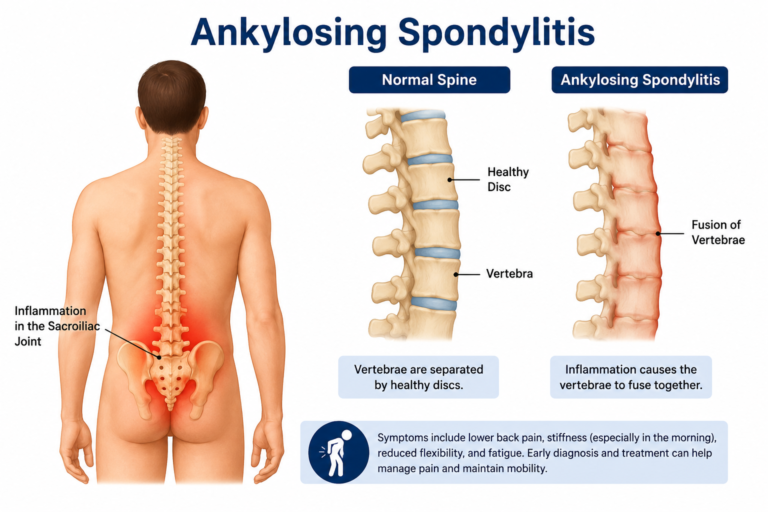
Ankylosing Spondylitis (AS) is a chronic inflammatory autoimmune disease that primarily affects the spine and sacroiliac joints. Over time, inflammation can cause the vertebrae to fuse together, resulting in reduced flexibility, stiffness, poor posture, and persistent pain.

Although AS mainly affects the spine, it can also involve the shoulders, hips, knees, ribs, and other joints.

Early physiotherapy intervention is one of the most effective ways to maintain mobility and prevent long-term disability.

Causes of Ankylosing Spondylitis

The exact cause remains unknown, but several factors increase the risk:

  • Genetic predisposition (HLA-B27 gene)
  • Autoimmune disorders
  • Family history
  • Abnormal immune response
  • Environmental factors
  • Chronic inflammation
  • Male gender (more commonly affected)
  • Young adults between 15–40 years

Symptoms of Ankylosing Spondylitis

Common symptoms include:

  • Persistent lower back pain
  • Morning stiffness lasting more than 30 minutes
  • Pain improving after exercise
  • Reduced spinal flexibility
  • Difficulty bending forward
  • Hip pain
  • Neck stiffness
  • Shoulder pain
  • Fatigue
  • Poor posture
  • Chest tightness during breathing
  • Difficulty standing upright
  • Pain in buttocks
  • Joint stiffness
  • Muscle tightness

When Should You See a Physiotherapist?

Consult a physiotherapist if you experience:

  • Chronic back pain lasting more than three months
  • Morning stiffness every day
  • Difficulty standing straight
  • Reduced flexibility
  • Pain while walking
  • Limited spinal movement
  • Poor posture
  • Recurring hip pain
  • Difficulty performing daily activities

Early treatment helps reduce complications and preserve spinal function.

Benefits of Ankylosing Spondylitis Physiotherapy Treatment

Physiotherapy offers numerous benefits for patients with Ankylosing Spondylitis, including:

  • Pain reduction
  • Improved spinal mobility
  • Better posture
  • Increased flexibility
  • Improved breathing capacity
  • Stronger back muscles
  • Enhanced joint mobility
  • Reduced muscle stiffness
  • Better balance
  • Improved walking pattern
  • Increased endurance
  • Prevention of spinal deformity
  • Better quality of life
  • Reduced disability
  • Improved independence

Comprehensive Assessment at Indu Physiotherapy Clinic

Before starting treatment, our physiotherapists perform a thorough evaluation including:

Medical History

  • Duration of symptoms
  • Previous treatments
  • Medication history
  • Lifestyle assessment

Physical Examination

  • Spinal mobility
  • Joint flexibility
  • Muscle strength
  • Posture assessment
  • Walking analysis
  • Functional assessment
  • Pain evaluation
  • Balance testing

Ankylosing Spondylitis Physiotherapy Treatment Techniques

Pain Management Therapy

Our pain management approach includes:

  • Heat therapy
  • Cold therapy
  • TENS (Transcutaneous Electrical Nerve Stimulation)
  • Interferential Therapy (IFT)
  • Ultrasound Therapy
  • Soft tissue mobilization

These therapies help reduce inflammation and muscle tightness.

Manual Therapy

Hands-on techniques include:

  • Joint mobilization
  • Soft tissue release
  • Myofascial release
  • Muscle stretching
  • Gentle spinal mobilization
  • Trigger point release

Postural Correction Training

Poor posture is common in Ankylosing Spondylitis.

Our rehabilitation focuses on:

  • Upright posture training
  • Spine alignment exercises
  • Ergonomic education
  • Functional posture correction

Flexibility Exercises

Stretching exercises help maintain spinal mobility.

These include:

  • Hamstring stretches
  • Hip flexor stretches
  • Chest opening stretches
  • Back extension exercises
  • Neck mobility exercises
  • Shoulder mobility exercises

Strengthening Exercises

Strengthening helps support the spine.

Programs may include:

  • Core strengthening
  • Back extensor strengthening
  • Glute strengthening
  • Hip strengthening
  • Shoulder strengthening
  • Postural muscle training

Breathing Exercises

AS may reduce chest expansion.

Our breathing program includes:

  • Deep breathing exercises
  • Diaphragmatic breathing
  • Chest expansion exercises
  • Rib mobility exercises

Balance and Functional Training

We help patients improve daily function through:

  • Walking training
  • Balance exercises
  • Stair climbing practice
  • Functional movement training
  • Gait correction

Hydrotherapy (When Recommended)

Aquatic therapy helps by:

  • Reducing joint stress
  • Improving mobility
  • Enhancing flexibility
  • Decreasing pain
  • Increasing endurance

Home Exercise Program

A customized home exercise plan may include:

  • Daily stretching
  • Spine mobility exercises
  • Walking program
  • Posture correction exercises
  • Core strengthening
  • Breathing exercises
  • Flexibility training

Consistency is essential for long-term improvement.

Lifestyle Tips for Ankylosing Spondylitis

To manage symptoms effectively:

  • Stay physically active
  • Exercise regularly
  • Maintain good posture
  • Sleep on a firm mattress
  • Avoid smoking
  • Maintain a healthy body weight
  • Take frequent movement breaks
  • Practice stretching daily
  • Follow ergonomic principles
  • Eat a balanced anti-inflammatory diet
  • Stay hydrated
  • Manage stress

What to Avoid

Avoid:

  • Long periods of sitting
  • Poor posture
  • Heavy lifting without guidance
  • High-impact activities during flare-ups
  • Smoking
  • Sedentary lifestyle
  • Ignoring persistent pain

Recovery Timeline

Recovery varies depending on disease severity and treatment consistency.

Initial Phase (2–4 Weeks)

  • Reduced pain
  • Improved mobility
  • Less stiffness

Intermediate Phase (4–8 Weeks)

  • Better flexibility
  • Improved posture
  • Increased strength

Long-Term Management (3–12 Months)

  • Better spinal mobility
  • Improved daily function
  • Reduced flare-ups
  • Enhanced quality of life

Why Choose Indu Physiotherapy Clinic?

Patients trust us because we provide:

  • Experienced physiotherapists
  • Personalized treatment plans
  • Evidence-based rehabilitation
  • Advanced electrotherapy modalities
  • One-on-one therapy sessions
  • Modern physiotherapy equipment
  • Home exercise guidance
  • Patient education
  • Comfortable treatment environment
  • Comprehensive rehabilitation programs

Frequently Asked Questions (FAQs)

Can physiotherapy cure Ankylosing Spondylitis?

No. Ankylosing Spondylitis is a chronic condition that cannot currently be cured. However, physiotherapy can significantly reduce pain, improve mobility, maintain posture, and slow functional decline when combined with appropriate medical care.

How often should I attend physiotherapy?

The frequency depends on your symptoms and stage of the condition. Many patients benefit from 2–3 supervised sessions per week initially, along with a daily home exercise program.

Is exercise safe during Ankylosing Spondylitis?

Yes. Regular, appropriately prescribed exercise is one of the most important treatments for Ankylosing Spondylitis. Exercises should be guided by a qualified physiotherapist, especially during flare-ups.

Can Ankylosing Spondylitis affect posture?

Yes. Without proper treatment, chronic inflammation may lead to a forward-stooped posture. Physiotherapy helps improve posture and maintain spinal alignment.

Which exercises are best for Ankylosing Spondylitis?

The most beneficial exercises generally include spinal mobility exercises, stretching, posture correction, breathing exercises, and core strengthening. Your physiotherapist will tailor the program to your condition.

Monday8:30am–9:30pm
Tuesday8:30am–9:30pm
Wednesday8:30am–9:30pm
Thursday8:30am–9:30pm
Friday8:30am–9:30pm
Saturday8:30am–9:30pm
Sunday9:30am–9:30pm
+91-9289 059 265

Most oral emergencies relate to pain, bleeding, or thoracic pain and should be attended by a Physiotherapist.

Make an appointment

We will send you a confirmation within 24 hours. Emergency? Call +91-9289 059 265

Most oral emergencies relate to pain, bleeding, or thoracic pain and should be attended by a Physiotherapist.

    Working Hours

    Monday 8:30am–9:30pm
    Tuesday8:30am–9:30pm
    Wednesday8:30am–9:30pm
    Thursday8:30am–9:30pm
    Friday8:30am–9:30pm
    Saturday8:30am–9:30pm
    Sunday8:30am–9:30pm
    Meet the professional therapist team

    Get started with Indu Physiotherapy Clinic!