(+91) 9289 059 265induphysiotherapy@gmail.com

Carpal Tunnel Syndrome Physiotherapy treatment

Carpal Tunnel Syndrome Physiotherapy Treatment

Carpal Tunnel Syndrome Physiotherapy Treatment

What Is Carpal Tunnel Syndrome?

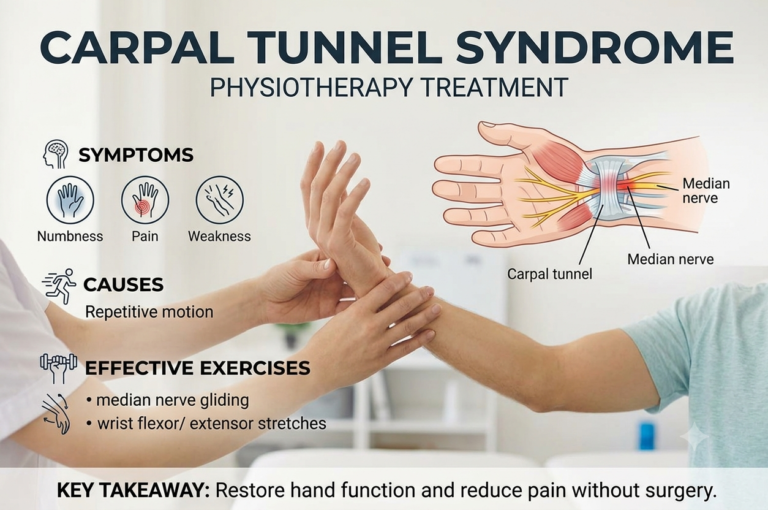
Carpal Tunnel Syndrome (CTS) is a common condition caused by compression of the median nerve as it passes through a narrow passage in the wrist called the carpal tunnel. It may cause pain, tingling, numbness, burning sensations, and weakness in the hand and fingers.

Physiotherapy for Carpal Tunnel Syndrome focuses on reducing pain, improving wrist and hand mobility, relieving pressure on the median nerve, strengthening muscles, and restoring normal hand function.

Common Symptoms

  • Tingling or numbness in the thumb, index, middle, and part of the ring finger
  • Wrist, palm, or hand pain
  • Burning or electric-like sensations
  • Weak grip or difficulty holding objects
  • Symptoms that become worse at night
  • Difficulty with typing, writing, or other fine-motor activities

Causes and Risk Factors

Several factors can increase the risk of Carpal Tunnel Syndrome, including:

  • Repetitive wrist and hand movements
  • Prolonged computer or mobile-phone use
  • Poor wrist and hand posture
  • Repetitive gripping activities
  • Pregnancy and hormonal changes
  • Diabetes and thyroid disorders
  • Arthritis and other wrist conditions
  • Obesity and genetic factors

How Physiotherapy Helps

A personalized physiotherapy program may help:

Pain Relief → Nerve Mobility → Flexibility → Strength → Function

Physiotherapy can include pain-relief techniques, soft-tissue treatment, median nerve-gliding exercises, stretching, strengthening, ergonomic correction, and posture education.

Physiotherapy Treatment for Carpal Tunnel Syndrome

1. Pain-Relief Modalities

Depending on the patient’s condition, a physiotherapist may use modalities such as TENS or other appropriate therapeutic techniques to help manage pain.

2. Soft-Tissue Mobilization

Manual therapy and soft-tissue techniques may help reduce muscle and soft-tissue tightness around the wrist and forearm.

3. Median Nerve-Gliding Exercises

Specific nerve-gliding exercises can improve median nerve mobility and reduce restrictions around the nerve.

4. Wrist and Forearm Stretching

Gentle stretching may improve flexibility and reduce tightness in the wrist and forearm muscles.

5. Strengthening Exercises

Progressive exercises can strengthen the wrist, hand, and forearm muscles and improve grip function.

6. Ergonomic and Posture Correction

A physiotherapist can guide patients on proper keyboard and mouse positioning, wrist posture, workstation setup, and activity modification.

Effective Physiotherapy Exercises

Wrist Flexor Stretch

Gently extend the wrist and fingers while keeping the elbow straight. Hold for approximately 20–30 seconds, as advised by your physiotherapist.

Wrist Extensor Stretch

Gently stretch the muscles on the back of the forearm while maintaining a comfortable wrist position.

Median Nerve Gliding

Controlled nerve-gliding movements may help maintain median nerve mobility. These should be performed according to professional guidance.

Tendon-Gliding Exercises

Sequential finger movements can help maintain tendon mobility and hand flexibility.

Important: Exercises should be individualized according to your symptoms and clinical assessment. Stop an exercise if it significantly increases pain, numbness, or tingling.

Tips to Manage and Prevent Carpal Tunnel Symptoms

  • Take regular breaks during repetitive activities.
  • Maintain a neutral wrist position while working.
  • Use an ergonomic keyboard and mouse setup.
  • Avoid prolonged forceful gripping.
  • Follow prescribed stretching and strengthening exercises.
  • Maintain regular physical activity and a healthy lifestyle.
  • Modify activities that repeatedly aggravate your symptoms.

When Should You See a Physiotherapist?

If wrist or hand pain, numbness, tingling, weakness, or difficulty with daily activities persists, an early physiotherapy assessment can help identify contributing factors and develop an appropriate treatment plan. Persistent or worsening symptoms may require medical evaluation to determine the severity of nerve compression.

Physiotherapy vs Surgery

For appropriate mild-to-moderate cases, physiotherapy may be used as a non-invasive treatment approach to manage symptoms and improve hand and wrist function. Severe or persistent nerve compression may require additional medical management, and surgery may be recommended by a qualified medical professional when conservative treatment is insufficient.

Diagrammatic Presentation

Carpal Tunnel Syndrome

Repetitive Use / Poor Wrist Posture

Swelling or Reduced Space in Carpal Tunnel

Median Nerve Compression

Pain + Tingling + Numbness + Weak Grip

Physiotherapy Assessment

Pain Management + Nerve Gliding + Stretching + Strengthening

Better Wrist Mobility & Hand Function

Key Takeaway

Carpal Tunnel Syndrome Physiotherapy Treatment can help reduce symptoms, improve wrist and hand movement, support nerve mobility, and restore functional strength. Early assessment and an individualized treatment program can be valuable, particularly when symptoms are interfering with work, sleep, or everyday activities.

GURGAON

Monday8:30am–9:30pm
Tuesday8:30am–9:30pm
Wednesday8:30am–9:30pm
Thursday8:30am–9:30pm
Friday8:30am–9:30pm
Saturday8:30am–9:30pm
Sunday9:30am–9:30pm
+91-9289 059 265

Most oral emergencies relate to pain, bleeding, or thoracic pain and should be attended by a Physiotherapist.

Make an appointment

We will send you a confirmation within 24 hours. Emergency? Call +91-9289 059 265

Most oral emergencies relate to pain, bleeding, or thoracic pain and should be attended by a Physiotherapist.

    Working Hours

    Monday 8:30am–9:30pm
    Tuesday8:30am–9:30pm
    Wednesday8:30am–9:30pm
    Thursday8:30am–9:30pm
    Friday8:30am–9:30pm
    Saturday8:30am–9:30pm
    Sunday8:30am–9:30pm
    Meet the professional therapist team

    Get started with Indu Physiotherapy Clinic!