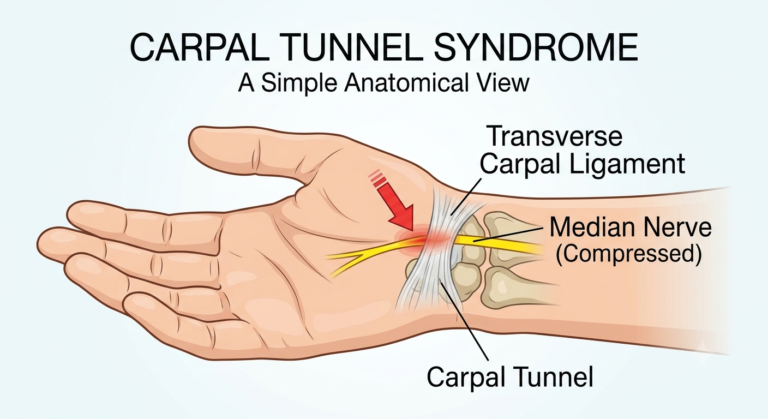
Carpal Tunnel Syndrome Physiotherapy Treatment in Gurgaon is a specialized approach for people experiencing wrist pain, hand numbness, tingling, weakness, or difficulty with gripping activities. Carpal Tunnel Syndrome occurs when the median nerve becomes compressed at the wrist, affecting sensation and movement in the hand.
Physiotherapy can help reduce symptoms, improve wrist and hand mobility, strengthen supporting muscles, and correct contributing movement or ergonomic factors. At Indu Physiotherapy Clinic, treatment is customized according to the patient’s symptoms, occupation, lifestyle, and functional requirements.
The carpal tunnel is a narrow passage located on the palm side of the wrist. The median nerve and several tendons pass through this space. When pressure or swelling develops within the tunnel, the median nerve may become compressed.
This can lead to symptoms affecting the thumb, index finger, middle finger, and part of the ring finger.
Common symptoms include:
Carpal Tunnel Syndrome can develop due to several factors. Repetitive hand movements, prolonged wrist positions, and activities involving frequent gripping may contribute to irritation around the median nerve.
Common risk factors include:
Not every case has the same underlying cause, so a proper assessment is important before beginning treatment.
The goal of physiotherapy is to reduce symptoms, improve hand and wrist function, and address factors that may be contributing to nerve irritation.
Treatment begins with an assessment of your symptoms and functional limitations. The physiotherapist may evaluate:
This helps create a treatment plan specific to your condition.
Median nerve mobility exercises, often called nerve gliding or nerve flossing exercises, may be used when appropriate. These exercises are designed to encourage normal movement of the nerve and surrounding tissues.
They should be performed carefully because excessive or inappropriate nerve stretching can aggravate symptoms.
A personalized exercise program can help improve mobility and strength. Depending on your assessment, exercises may include:
Exercises are gradually progressed according to your symptoms and recovery.
Manual therapy may be used to address stiffness or restricted movement in the wrist, hand, and forearm. Depending on the individual assessment, soft-tissue and joint-mobility techniques may be incorporated into treatment.
Physiotherapy may include appropriate pain-management techniques alongside exercises and activity modification. The treatment approach is selected according to the individual’s presentation rather than applying the same treatment to every patient.
Ergonomics is particularly important for people who spend long hours working on computers or performing repetitive hand activities.
Your physiotherapist may advise you on:
A structured physiotherapy program may help improve:
The expected outcome depends on the severity, duration, and underlying cause of the condition.
Exercises are selected according to individual symptoms and assessment findings. Commonly used exercise categories include:
Wrist mobility → Tendon gliding → Median nerve mobility → Forearm flexibility → Progressive strengthening → Functional activities
Exercises should be performed within a comfortable range. If an exercise significantly increases numbness, tingling, pain, or weakness, it should be stopped and discussed with a healthcare professional.
Physiotherapy may be useful for people experiencing symptoms associated with mild to moderate Carpal Tunnel Syndrome, particularly when symptoms are related to repetitive activities, movement restrictions, or ergonomic factors.
It may be especially relevant for:
You should consider professional assessment if wrist or hand symptoms persist or interfere with work, sleep, exercise, or daily activities.
Seek appropriate medical evaluation if you develop:
In more advanced cases, additional medical investigations or specialist treatment may be required.
At Indu Physiotherapy Clinic, Carpal Tunnel Syndrome treatment focuses on individualized assessment and functional rehabilitation. Treatment is planned according to your symptoms, physical findings, work demands, and daily activities.
The objective is to help you manage symptoms while improving wrist and hand movement, strength, and function.
Physiotherapy can help manage symptoms and improve wrist and hand function, particularly in appropriate cases. The treatment plan depends on the severity and cause of nerve compression.
The number of sessions varies according to symptom severity, duration, response to treatment, and individual goals. Your physiotherapist can recommend an appropriate treatment schedule after assessment.
Yes. Median nerve compression can contribute to weakness in the hand, particularly in muscles involved in thumb movement and grip.
Incorrect exercises or excessive nerve stretching may aggravate symptoms. Exercises should therefore be selected and progressed according to individual assessment.
Repetitive computer and hand activities, particularly when combined with prolonged or awkward wrist positioning, may contribute to wrist and hand symptoms. Proper ergonomic setup and regular movement breaks can help reduce strain.
Carpal Tunnel Syndrome Physiotherapy Treatment in Gurgaon can help people manage wrist pain, numbness, tingling, and functional difficulties associated with median nerve compression. A personalized rehabilitation program may include nerve mobility exercises, wrist and hand exercises, manual therapy, strengthening, symptom management, and ergonomic correction.
If your wrist or hand symptoms are persistent or affecting your daily activities, professional physiotherapy assessment can help identify contributing factors and guide an appropriate treatment plan.
Most oral emergencies relate to pain, bleeding, or thoracic pain and should be attended by a Physiotherapist.
We will send you a confirmation within 24 hours. Emergency? Call +91-9289 059 265
Most oral emergencies relate to pain, bleeding, or thoracic pain and should be attended by a Physiotherapist.