(+91) 9289 059 265induphysiotherapy@gmail.com

shoulder dislocation physiotherapy treatment

Shoulder Dislocation Physiotherapy Treatment

Shoulder Dislocation Physiotherapy Treatment

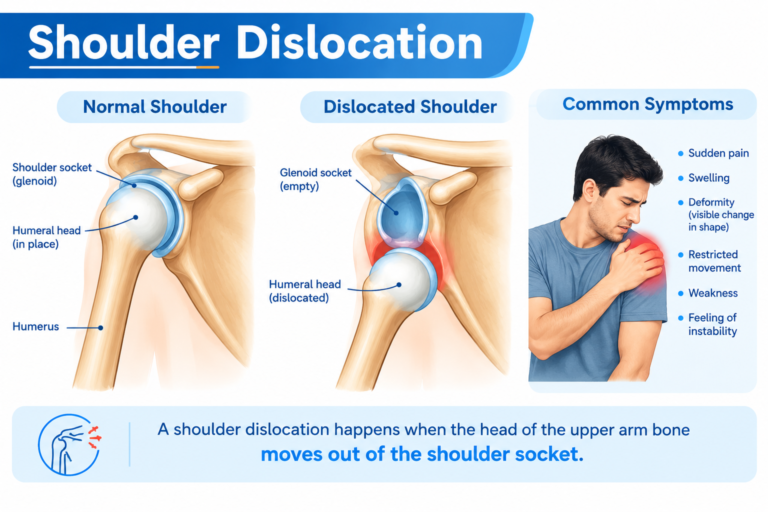
Shoulder dislocation occurs when the head of the upper-arm bone (humerus) moves completely out of the shoulder socket (glenoid). It commonly happens after a fall, sports injury, sudden force, or accident. Physiotherapy plays an important role after medical reduction by reducing pain and stiffness, restoring shoulder movement, rebuilding strength, and improving joint stability.

Important: A suspected shoulder dislocation should be assessed urgently by a medical professional. Do not attempt to put the shoulder back into place yourself. Physiotherapy usually begins after the joint has been medically reduced and the treating doctor has confirmed that rehabilitation is appropriate.

Shoulder Dislocation: How It Happens

Simple Diagrammatic Presentation

Injury / sudden force
↓
Shoulder joint becomes unstable
↓
Humeral head moves out of the glenoid socket
↓
Pain + swelling + restricted movement
↓
Medical assessment & reduction
↓
Immobilization as advised
↓
Physiotherapy rehabilitation
↓
Mobility → Strength → Stability → Functional recovery

What Happens Inside the Shoulder?

The shoulder is a highly mobile joint formed mainly by the humeral head and glenoid socket. Because the socket is relatively shallow, the shoulder depends heavily on muscles, tendons, ligaments and the joint capsule for stability.

During a dislocation, these supporting structures may become stretched or injured.

Shoulder Dislocation

Humeral head
→ moves away from
Glenoid socket
→ may affect
Capsule + ligaments + labrum + surrounding muscles
→ resulting in
Pain + instability + weakness + reduced movement

Common Causes of Shoulder Dislocation

Shoulder dislocation can occur due to:

  • Falling on an outstretched hand
  • Sports-related injuries
  • Road or workplace accidents
  • Direct impact to the shoulder
  • Sudden twisting or forceful arm movement
  • Previous shoulder dislocation
  • Repetitive activities in an unstable shoulder

Anterior shoulder dislocation is the most common type, although posterior and inferior dislocations can also occur.

Symptoms of Shoulder Dislocation

Common symptoms may include:

  • Sudden and intense shoulder pain
  • Visible change in shoulder shape
  • Difficulty moving the arm
  • Swelling or tenderness
  • Muscle spasm
  • Weakness
  • Feeling that the shoulder is unstable
  • Numbness or tingling in the arm or hand in some cases

If there is severe pain, deformity, loss of sensation, or inability to move the arm after an injury, seek urgent medical assessment.

Shoulder Dislocation Physiotherapy Treatment

Physiotherapy is generally progressed according to the stage of healing, type of dislocation, associated injuries, age, activity level and medical advice.

Phase 1: Pain and Protection

The initial rehabilitation phase focuses on protecting the healing tissues.

Goals:

  • Reduce pain and swelling
  • Protect the shoulder
  • Maintain safe movement of nearby joints
  • Prevent unnecessary stiffness
  • Educate the patient about shoulder precautions

Your physiotherapist may recommend gentle exercises for the hand, wrist, elbow and other appropriate areas while the shoulder is protected.

Do not force shoulder movements during the early healing stage.

Phase 2: Restore Shoulder Mobility

Once appropriate healing has occurred and movement is medically permitted, rehabilitation gradually works toward restoring shoulder range of motion.

Treatment may include:

  • Gentle assisted shoulder movements
  • Controlled range-of-motion exercises
  • Pendulum exercises when appropriate
  • Scapular mobility exercises
  • Gradual functional movements

The objective is controlled mobility, rather than rapidly forcing the shoulder into a large range.

Phase 3: Strengthening

After adequate healing, strengthening becomes an important part of rehabilitation.

Muscles Commonly Targeted

Rotator cuff
↓
Improves dynamic shoulder stability

Scapular stabilizers
↓
Improves shoulder blade control

Deltoid and surrounding muscles
↓
Improves functional strength

Core and upper-limb muscles
↓
Supports overall movement control

Exercises are gradually progressed according to tolerance and functional requirements.

Phase 4: Shoulder Stability Training

A major goal after dislocation is improving the shoulder’s ability to remain stable during movement.

Physiotherapy may include:

  • Isometric shoulder exercises
  • Resistance-band exercises
  • Rotator cuff strengthening
  • Scapular stabilization
  • Closed-chain exercises
  • Proprioception exercises
  • Controlled weight-bearing activities

Stability Rehabilitation Flow

Weak / unstable shoulder
↓
Muscle activation
↓
Rotator cuff strengthening
↓
Scapular control
↓
Proprioception training
↓
Functional stability

Phase 5: Return to Work, Sports & Daily Activities

The final stage focuses on restoring confidence and functional performance.

Depending on the person’s needs, rehabilitation may include:

  • Reaching activities
  • Lifting progression
  • Overhead movement training
  • Work-specific exercises
  • Sport-specific drills
  • Reaction and coordination exercises
  • Gradual return-to-sport training

Returning to high-demand activities should be based on functional recovery rather than simply the absence of pain.

Why Physiotherapy Is Important After Shoulder Dislocation

Without appropriate rehabilitation, some people may experience:

  • Persistent weakness
  • Reduced shoulder mobility
  • Poor movement control
  • Recurrent instability
  • Fear of certain movements
  • Difficulty returning to sports or work

A structured physiotherapy program can help restore mobility, strength, coordination and shoulder stability.

When Can You Start Physiotherapy?

The timing depends on factors such as:

  • Type of dislocation
  • Whether the shoulder was surgically treated
  • Associated ligament, labral or bone injuries
  • Age and activity level
  • Medical assessment
  • Healing status

Your physiotherapist should coordinate rehabilitation with the treating orthopedic specialist when necessary.

Shoulder Dislocation Physiotherapy Treatment in Gurgaon

If you are recovering from a shoulder dislocation, a physiotherapist can assess your shoulder mobility, muscle strength, movement pattern and functional limitations and develop a progressive rehabilitation program.

At Indu Physiotherapy Clinic, physiotherapy may be tailored for patients recovering from shoulder injuries, instability and post-treatment rehabilitation in Gurgaon/Gurugram.

Frequently Asked Questions

Can physiotherapy fix a dislocated shoulder?

Physiotherapy does not replace the medical reduction of an acute dislocation. After the shoulder has been appropriately treated, physiotherapy helps restore movement, strength, stability and function.

How long does shoulder dislocation rehabilitation take?

Recovery varies considerably depending on the severity of the injury, associated tissue damage, treatment received and individual healing. Your physiotherapist can provide a more appropriate timeline after assessment.

Can a shoulder dislocate again?

Yes. Recurrent instability can occur, particularly after previous dislocations or when supporting structures have been significantly injured. Appropriate rehabilitation can help improve strength and dynamic stability.

What exercises are useful after shoulder dislocation?

Exercises commonly progress from gentle mobility and muscle activation to rotator cuff strengthening, scapular stabilization, proprioception and functional training. The exact exercises should be selected according to the stage of recovery.

Can I return to sports after shoulder dislocation?

Many people can return to sports after appropriate rehabilitation, but the timing depends on healing, strength, stability, range of motion and the demands of the sport.

Final Takeaway

Shoulder dislocation rehabilitation is a gradual process:

Medical assessment
→ Protection
→ Pain management
→ Safe mobility
→ Strengthening
→ Stability & proprioception
→ Functional training
→ Return to work/sports

A properly supervised shoulder dislocation physiotherapy treatment program can help you regain shoulder movement, strength and confidence while reducing the risk of ongoing functional problems.


Monday8:30am–9:30pm
Tuesday8:30am–9:30pm
Wednesday8:30am–9:30pm
Thursday8:30am–9:30pm
Friday8:30am–9:30pm
Saturday8:30am–9:30pm
Sunday9:30am–9:30pm
+91-9289 059 265

Most oral emergencies relate to pain, bleeding, or thoracic pain and should be attended by a Physiotherapist.

Make an appointment

We will send you a confirmation within 24 hours. Emergency? Call +91-9289 059 265

Most oral emergencies relate to pain, bleeding, or thoracic pain and should be attended by a Physiotherapist.

    Working Hours

    Monday 8:30am–9:30pm
    Tuesday8:30am–9:30pm
    Wednesday8:30am–9:30pm
    Thursday8:30am–9:30pm
    Friday8:30am–9:30pm
    Saturday8:30am–9:30pm
    Sunday8:30am–9:30pm
    Meet the professional therapist team

    Get started with Indu Physiotherapy Clinic!