(+91) 9289 059 265induphysiotherapy@gmail.com

Peripheral Neuropathy Physiotherapy Treatment

Peripheral Neuropathy Physiotherapy Treatment

Peripheral Neuropathy Physiotherapy Treatment in Gurgaon

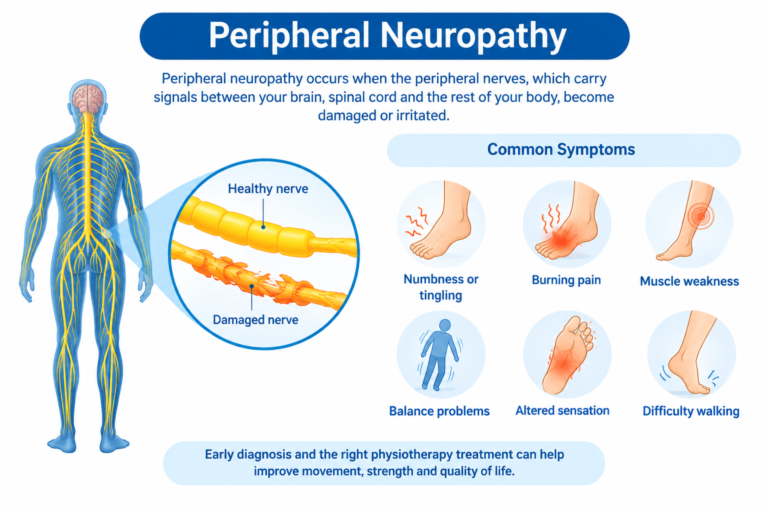
Peripheral Neuropathy Physiotherapy Treatment focuses on improving movement, balance, muscle strength, coordination and functional independence in people experiencing nerve-related problems. Peripheral neuropathy can affect the nerves of the hands, feet, arms and legs, leading to symptoms such as numbness, tingling, burning pain, weakness and difficulty walking.

At Indu Physiotherapy, physiotherapy treatment is planned according to the individual’s symptoms, nerve involvement, strength, balance and daily functional requirements.

What Is Peripheral Neuropathy?

Peripheral neuropathy occurs when peripheral nerves become damaged or irritated. These nerves carry signals between the brain, spinal cord and the rest of the body.

The condition commonly affects the feet and hands first. Some people experience altered sensation, while others may develop muscle weakness, balance difficulties or changes in walking.

Peripheral Neuropathy – Simple Diagram

Underlying Cause
↓
Peripheral Nerve Damage / Irritation
↓
Altered Nerve Signals
↓
Numbness • Tingling • Burning • Pain
↓
Muscle Weakness / Reduced Sensation
↓
Poor Balance & Walking Difficulty
↓
Reduced Daily Functional Ability

Common Symptoms of Peripheral Neuropathy

Symptoms can vary depending on the nerves affected.

Sensory Symptoms

  • Numbness in the hands or feet
  • Tingling or “pins and needles”
  • Burning sensation
  • Increased or reduced sensitivity
  • Difficulty feeling temperature or touch
  • Sharp or electric-shock-like pain

Motor Symptoms

  • Muscle weakness
  • Difficulty lifting the foot
  • Reduced grip strength
  • Muscle fatigue
  • Difficulty climbing stairs
  • Changes in walking pattern

Balance & Functional Problems

  • Unsteadiness while standing
  • Difficulty walking on uneven surfaces
  • Increased risk of tripping
  • Difficulty maintaining balance
  • Reduced confidence while walking

Causes of Peripheral Neuropathy

Peripheral neuropathy can have several possible causes. Common causes include:

  • Diabetes
  • Vitamin deficiencies
  • Certain medications
  • Alcohol-related nerve damage
  • Nerve compression or injury
  • Certain infections
  • Autoimmune conditions
  • Kidney or metabolic disorders
  • Chemotherapy-related nerve damage
  • Some hereditary neurological conditions

Important: The underlying cause should be evaluated by an appropriate medical professional. Physiotherapy works alongside medical management and does not replace diagnosis or treatment of the underlying disease.


How Physiotherapy Helps in Peripheral Neuropathy

Physiotherapy can help a person maintain or improve physical function despite sensory or motor nerve problems.

Physiotherapy Treatment Flowchart

Initial Physiotherapy Assessment
↓
Sensory + Muscle Strength Assessment
↓
Balance & Gait Assessment
↓
Identify Functional Limitations
↓
Individualized Exercise Programme
↓
Strength + Balance + Mobility Training
↓
Gait & Functional Training
↓
Regular Progress Assessment

Peripheral Neuropathy Physiotherapy Treatment

1. Therapeutic Exercises

A customized exercise programme may include:

  • Active range-of-motion exercises
  • Lower-limb strengthening
  • Upper-limb strengthening
  • Core strengthening
  • Functional exercises
  • Flexibility exercises

Exercises are progressed according to the patient’s strength, sensation, fatigue and functional ability.

2. Balance Training

Reduced sensation in the feet can affect balance. Physiotherapists may use graded balance exercises such as:

Supported Standing
→ Weight Shifting
→ Stable-Surface Balance
→ Dynamic Balance
→ Functional Balance Activities

The difficulty should be increased gradually and safely.

3. Gait Training

If neuropathy affects walking, physiotherapy may focus on:

  • Walking pattern correction
  • Step control
  • Foot placement
  • Lower-limb strengthening
  • Walking confidence
  • Turning and obstacle negotiation
  • Safe stair practice

Appropriate walking aids may be considered when required.

4. Mobility & Flexibility Exercises

Gentle mobility exercises can help maintain joint movement and reduce stiffness associated with inactivity.

Common areas addressed include:

  • Ankle
  • Knee
  • Hip
  • Wrist
  • Hand
  • Shoulder

5. Foot Care & Safety Education

People with reduced sensation, particularly those with diabetes, should pay special attention to foot safety.

Physiotherapy education may include:

  • Checking the feet regularly
  • Wearing suitable footwear
  • Avoiding walking barefoot when sensation is impaired
  • Taking care around hot surfaces
  • Maintaining a safe home environment
  • Reducing fall hazards

Any unexplained wound, ulcer, infection or significant skin change should receive prompt medical attention.

6. Functional Training

Treatment may include activities that are important in everyday life, such as:

  • Getting up from a chair
  • Standing safely
  • Walking indoors
  • Walking outdoors
  • Climbing stairs
  • Reaching and carrying objects
  • Improving hand function

Benefits of Peripheral Neuropathy Physiotherapy

Depending on the individual’s condition and underlying cause, physiotherapy may help with:

  • Improved muscle strength
  • Better balance
  • Improved walking ability
  • Better joint mobility
  • Improved coordination
  • Increased confidence during movement
  • Reduced risk of falls
  • Improved functional independence
  • Better ability to perform daily activities

Physiotherapy cannot reverse every type of nerve damage, and outcomes depend on the cause, severity and duration of neuropathy.

Peripheral Neuropathy Exercise Programme

A physiotherapist may develop an individualized programme involving:

Warm-Up
↓
Joint Mobility
↓
Muscle Strengthening
↓
Balance Training
↓
Gait Training
↓
Functional Activities
↓
Cool-Down & Home Exercise Advice

The programme should be progressed according to the person’s response rather than following a one-size-fits-all routine.

When Should You Consider Physiotherapy?

Consider a physiotherapy assessment if you experience:

  • Persistent numbness or tingling
  • Difficulty walking
  • Frequent loss of balance
  • Muscle weakness
  • Difficulty climbing stairs
  • Changes in walking pattern
  • Reduced hand or foot function
  • Difficulty performing everyday activities

A medical evaluation is particularly important when symptoms are new, rapidly progressing or associated with significant weakness.

Peripheral Neuropathy Physiotherapy in Gurgaon

If you are searching for Peripheral Neuropathy Physiotherapy Treatment in Gurgaon, an individualized assessment can help identify your specific movement, strength, balance and functional limitations.

Indu Physiotherapy provides physiotherapy care for neurological and musculoskeletal conditions with treatment plans designed around the patient’s functional goals.

Patients from areas including Sector 38, Sector 39, Sector 40, Sector 45, Sector 46, Sector 47, Sector 49, Sector 50, Sector 51, Sector 52 and nearby Gurgaon/Gurugram areas can consider a physiotherapy assessment based on their requirements.

Frequently Asked Questions

Can physiotherapy cure peripheral neuropathy?

Physiotherapy generally cannot guarantee reversal of nerve damage. However, it can help improve strength, balance, mobility, walking ability and functional independence while the underlying cause is medically managed.

What exercises are good for peripheral neuropathy?

Depending on the individual’s condition, exercises may include strengthening, joint mobility, balance, gait and functional exercises. A physiotherapist should select and progress exercises according to sensory loss, weakness and balance ability.

Can physiotherapy help with neuropathy-related balance problems?

Yes. Balance and gait training can help people improve movement control and safety, particularly when reduced sensation contributes to unsteadiness.

Is walking good for peripheral neuropathy?

Walking may be beneficial for many people, but the appropriate amount depends on the person’s symptoms, strength, balance, foot condition and underlying cause. Individuals with significant sensory loss should receive appropriate safety guidance.

Can diabetic neuropathy be treated with physiotherapy?

Physiotherapy can help manage functional problems associated with diabetic peripheral neuropathy, including weakness, balance impairment and reduced mobility. Diabetes and its underlying medical management should continue under appropriate medical supervision.

How long does peripheral neuropathy physiotherapy take?

Treatment duration varies depending on the cause, severity of nerve involvement, symptoms, functional limitations and response to treatment. Regular reassessment helps determine progression.

Conclusion

Peripheral Neuropathy Physiotherapy Treatment aims to help patients move more safely and confidently by addressing muscle weakness, balance problems, mobility restrictions and functional limitations. A personalized programme combining strengthening, balance training, gait rehabilitation, mobility exercises and safety education can support better day-to-day function.

If you are experiencing numbness, tingling, burning sensations, weakness or walking difficulties, a proper medical and physiotherapy assessment can help determine the most appropriate management approach.

Monday8:30am–9:30pm
Tuesday8:30am–9:30pm
Wednesday8:30am–9:30pm
Thursday8:30am–9:30pm
Friday8:30am–9:30pm
Saturday8:30am–9:30pm
Sunday9:30am–9:30pm
+91-9289 059 265

Most oral emergencies relate to pain, bleeding, or thoracic pain and should be attended by a Physiotherapist.

Make an appointment

We will send you a confirmation within 24 hours. Emergency? Call +91-9289 059 265

Most oral emergencies relate to pain, bleeding, or thoracic pain and should be attended by a Physiotherapist.

    Working Hours

    Monday 8:30am–9:30pm
    Tuesday8:30am–9:30pm
    Wednesday8:30am–9:30pm
    Thursday8:30am–9:30pm
    Friday8:30am–9:30pm
    Saturday8:30am–9:30pm
    Sunday8:30am–9:30pm
    Meet the professional therapist team

    Get started with Indu Physiotherapy Clinic!