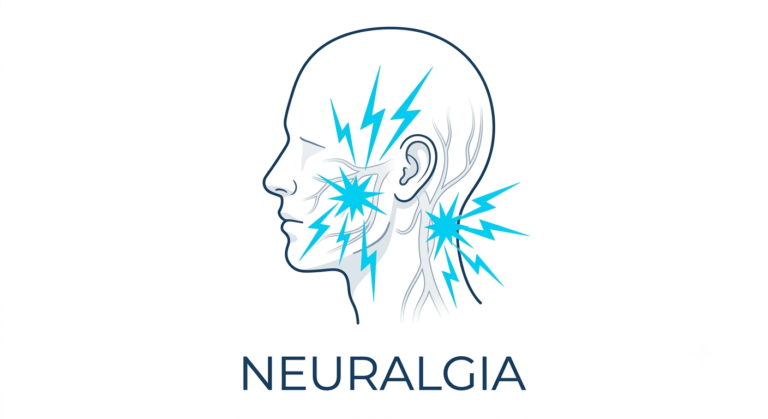
Neuralgia—characterized by sharp, burning, or shock-like nerve pain—occurs when peripheral or cranial nerves become irritated, inflamed, or compressed. Whether dealing with trigeminal neuralgia, occipital neuralgia, post-herpetic neuralgia, or sciatica, structured physical therapy provides non-invasive management to alleviate nerve sensitivity, improve mobility, and prevent recurring flare-ups.
[ Initial Clinical & Neurological Assessment ]
│
▼
[ Phase 1: Acute Desensitization & Inflammation Control ]
├── Electrotherapy (TENS / Microcurrent)
├── Targeted Cryotherapy / Thermotherapy
└── Gentle Soft Tissue Glides
│
▼
[ Phase 2: Neural Mobilization & Tissue Release ]
├── Nerve Gliding & Tensioning Exercises
├── Myofascial Trigger Point Release
└── Sub-Pain Threshold Manual Mobilization
│
▼
[ Phase 3: Dynamic Stabilization & Functional Re-education ]
├── Postural Alignment & Core Stability
├── Progressive Resistance Strengthening
└── Proprioceptive Neuromuscular Training
│
▼
[ Phase 4: Long-Term Neuropathic Maintenance ]
├── Ergonomic Adaptation
└── Daily At-Home Neural Gliding Routine
[ COMMON NEURALGIA TYPES ]
Trigeminal Neuralgia Occipital Neuralgia
┌─────────────────────────┐ ┌─────────────────────────┐
│ Sharp facial pain along │ │ Throbbing base-of-skull │
│ CN V branches (V1–V3). │ │ radiating to forehead. │
└────────────┬────────────┘ └────────────┬────────────┘
│ │
└─────────────────┬──────────────────┘
│
▼
┌──────────────────────────────────────────────────────┐
│ Intercostal & Peripheral Neuralgia / Sciatica │
│ Sharp, radiating nerve pain along trunk or limbs. │
└──────────────────────────────────────────────────────┘
Sharp, Electric-Shock Sensations: Sudden bouts of intense, shooting pain triggered by minor contact or movements.
Allodynia & Hyperalgesia: Pain triggered by non-painful stimuli (such as light touch, clothing, or cool air).
Radiating Numbness or Tingling: Sensations traveling along specific dermatomal distributions.
Reflexive Muscle Guarding: Involuntary muscular tightness surrounding affected nerve pathways to prevent motion.
[ TREATMENT MATRIX ]
Passive Modalities Active Interventions
┌──────────────────┐ ┌──────────────────┐
│ Electrotherapy │ │ Nerve Gliding │
│ (TENS / IFT) │ │ Mobilization │
└────────┬─────────┘ └────────┬─────────┘
│ │
└──────────────────┬──────────────────┘
│
▼
┌──────────────────────────────────┐
│ Manual Soft Tissue Release │
│ & Postural Re-alignment │
└──────────────────────────────────┘
Dermatome & Myotome Testing: Mapping sensory changes and localized muscle weakness.
Neural Tension Tests: Straight Leg Raise (SLR), Slump Test, or Upper Limb Tension Tests (ULTT) to identify nerve entrapment sites.
Transcutaneous Electrical Nerve Stimulation (TENS): Delivers mild electrical currents to modify pain signaling at the spinal cord level (Gate Control Theory).
Interferential Therapy (IFT): Deep-tissue low-frequency electrical stimulation to relieve chronic neuropathic spasms.
Gentle, oscillatory movements designed to restore free movement of peripheral nerves through surrounding anatomical tunnels, reducing intraneural edema and mechanosensitivity.
| Exercise Name | Targeted Nerve Path | Primary Clinical Benefit |
|---|---|---|
| Median Nerve Glide | C5–T1 (Arm & Hand) | Releases nerve entrapment in upper limbs and carpal tunnel regions. |
| Sciatic Nerve Flossing | L4–S3 (Lower Limb) | Reduces nerve adherence along the posterior thigh and calf. |
| Occipital Nerve Release | C2–C3 (Base of Skull) | Relieves suboccipital tightness causing nerve-compression headaches. |
| Suboccipital Chin Tucks | Cervical Plexus | Improves head alignment, taking physical stress off upper neck nerves. |
[ IDEAL ERGONOMIC ALIGNMENT ]
[ Screen at Eye Level ]
│
( Neutral Spine ) ──────┼─── ( Minimal Neck Strain )
│
[ Supported Forearms ]
│
[ Ergonomic Lumbar Support ]
Neutral Joint Positioning: Avoid prolonged end-range postures that place tensile stress on peripheral nerves.
Supportive Pillow Setup: Use contoured pillows to keep cervical and lumbar spines aligned neutrally during sleep.
Micro-Movement Breaks: Incorporate 60-second active movements every 30 to 45 minutes to prevent ischemia in peripheral nerve tissues.
Acute Nerve Irritation 2–4 Weeks
Subacute Neuralgia 4–8 Weeks
Chronic Neuropathic Pain 8–12+ Weeks
Early intervention by a licensed physical therapist ensures precise neural mobilization, safe progression, and optimal neuropathic pain control.
Most oral emergencies relate to pain, bleeding, or thoracic pain and should be attended by a Physiotherapist.
We will send you a confirmation within 24 hours. Emergency? Call +91-9289 059 265
Most oral emergencies relate to pain, bleeding, or thoracic pain and should be attended by a Physiotherapist.