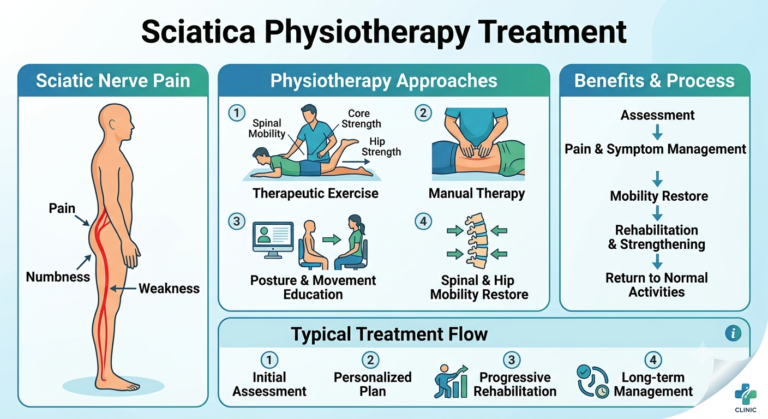
Sciatica is a condition that causes pain, tingling, numbness, or weakness along the path of the sciatic nerve, which runs from the lower back through the buttocks and down the back of the leg. It usually affects one side of the body.
Sciatica is often associated with irritation or compression of a nerve root in the lower spine. Common causes include a slipped or herniated disc, spinal stenosis, degenerative changes in the spine, or muscle-related nerve irritation.
Physiotherapy can help reduce pain, improve movement, restore muscle strength, and support a safe return to daily activities.
Sciatica symptoms can vary depending on the underlying cause and the level of nerve irritation.
Common symptoms include:
Lower Back → Buttock → Back of Thigh → Calf → Foot
Nerve irritation/compression
↓
Pain / Tingling / Numbness
↓
Reduced movement
↓
Muscle weakness & activity limitation
↓
Physiotherapy assessment and individualized rehabilitation
Several conditions can irritate or compress the nerves that contribute to the sciatic nerve.
A disc between the vertebrae can bulge or herniate and irritate a nearby spinal nerve root.
Narrowing of the spinal canal or nerve openings can put pressure on spinal nerves and contribute to sciatic symptoms.
Age-related changes in the spine may contribute to narrowing and irritation around the nerves.
Tightness or dysfunction around the hip and buttock region may contribute to symptoms in some people.
Prolonged sitting, poor lifting techniques, and inappropriate movement patterns can increase stress on the lower back.
Sciatica physiotherapy treatment is based on the individual’s symptoms, physical examination, mobility, strength, and functional limitations.
A physiotherapist may use a combination of:
The physiotherapist evaluates:
This assessment helps determine an appropriate rehabilitation program.
Depending on the patient’s condition, treatment may include therapeutic exercise, manual therapy, education, activity modification, and other appropriate physiotherapy techniques.
Exercises are selected according to the individual’s presentation. They may include:
Exercises should be progressed gradually and should be individualized rather than followed as a one-size-fits-all program.
Where appropriate, physiotherapists may use hands-on techniques to improve joint and soft-tissue mobility and assist with movement.
Patients may learn safer and more comfortable ways to:
Improving strength and movement control around the trunk and hips can support functional recovery and help patients return to normal activities.
A typical rehabilitation program may progress through different stages:
Assessment
↓
Pain & symptom management
↓
Mobility restoration
↓
Core and hip strengthening
↓
Functional training
↓
Return to normal activities
The exact progression depends on the person’s symptoms, diagnosis, goals, and response to treatment.
A properly designed physiotherapy program may help:
Consider consulting a qualified physiotherapist if sciatica symptoms are interfering with your:
Early assessment can help identify contributing factors and establish an appropriate rehabilitation plan.
Not all back and leg pain is routine sciatica. Seek urgent medical attention if you develop symptoms such as:
These symptoms may indicate a serious spinal or neurological problem requiring prompt medical evaluation.
If you are looking for sciatica physiotherapy treatment in Gurgaon, a personalized assessment can help identify the factors contributing to your pain and functional limitations.
At Indu Physiotherapy Clinic, physiotherapy care can be tailored to the individual’s condition and rehabilitation goals. Treatment may focus on pain management, mobility, strengthening, posture and movement education, and progressive functional rehabilitation.
Physiotherapy can be an effective part of conservative management for many people with sciatica. Treatment is individualized according to the underlying cause and symptoms.
Recovery varies considerably. Some cases improve within a few weeks, while persistent or more complex symptoms may require longer rehabilitation.
Some exercises may aggravate symptoms if they are inappropriate for the individual’s condition or progressed too quickly. Exercises should therefore be selected and progressed according to symptoms and clinical assessment.
Physiotherapy may help improve strength, movement control, physical capacity, and self-management, which can support long-term spinal health. However, recurrence cannot always be prevented.
Prolonged bed rest is generally not recommended for most people with uncomplicated low-back-related sciatica. Maintaining comfortable activity and gradually returning to normal movement is often encouraged, provided there are no medical contraindications.
Sciatica physiotherapy treatment focuses on understanding the cause of symptoms, reducing pain, restoring mobility, improving strength, and helping patients return safely to their normal activities. A personalized rehabilitation program can be an important part of recovery for many people experiencing sciatic nerve pain.
If your back or leg pain is persistent, worsening, or associated with neurological symptoms, consult an appropriately qualified healthcare professional for assessment.
Most oral emergencies relate to pain, bleeding, or thoracic pain and should be attended by a Physiotherapist.
We will send you a confirmation within 24 hours. Emergency? Call +91-9289 059 265
Most oral emergencies relate to pain, bleeding, or thoracic pain and should be attended by a Physiotherapist.