Dry Needling Therapy: An Effective Physiotherapy Treatment for Muscle Pain
Muscle pain, tightness, stiffness, and trigger points can affect your daily activities, exercise, work, and overall quality of life. When these symptoms persist, physiotherapy can provide several treatment options to help improve movement and manage pain.
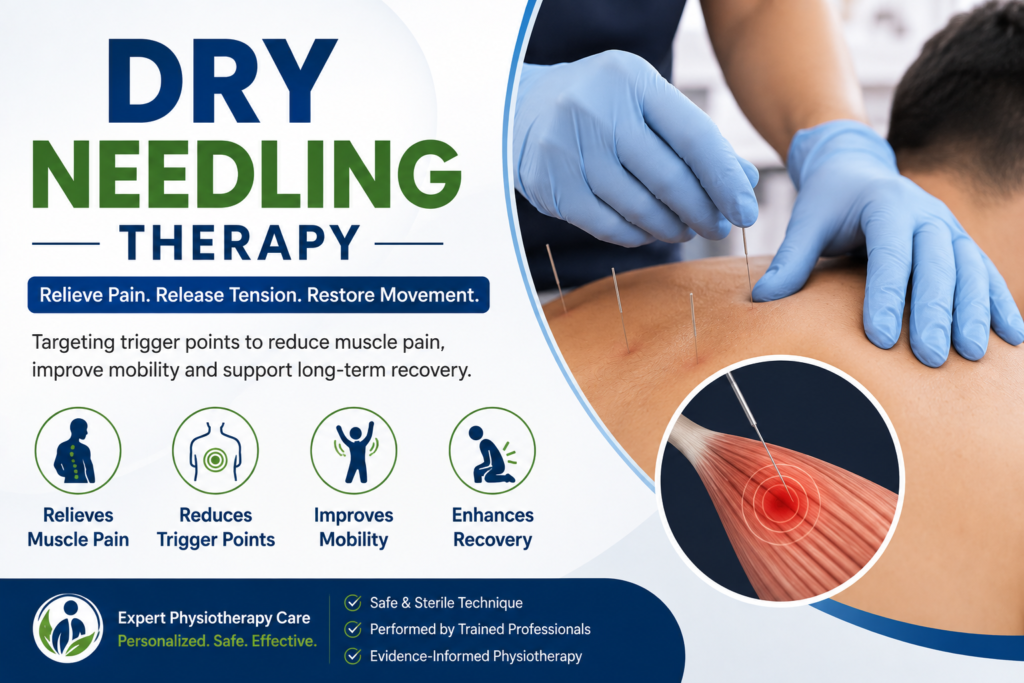
Dry needling therapy is one technique used by trained physiotherapists to address certain types of muscular pain and myofascial trigger points. It involves inserting very fine sterile needles into targeted muscles or trigger points to stimulate a therapeutic response.
While dry needling can be helpful for some people, it is not an “instant” or guaranteed cure for every type of muscle pain. It is generally most effective when used as part of a broader physiotherapy program that may include therapeutic exercises, mobility training, strengthening, education, and activity modification.
What Is Dry Needling Therapy?
Dry needling therapy is a physiotherapy technique that uses thin, sterile needles to target specific muscles or myofascial trigger points.
Unlike acupuncture, which is based on traditional Chinese medicine principles, dry needling is commonly used within a modern musculoskeletal rehabilitation approach to address muscular pain, sensitivity, and movement problems.
A trained physiotherapist assesses the painful area and determines whether dry needling is appropriate based on your symptoms and physical examination.
What Are Myofascial Trigger Points?
A trigger point is a sensitive area within a muscle that may be associated with localized tenderness and sometimes pain felt in another area.
Trigger points may be associated with:
- Muscle tightness
- Localized tenderness
- Reduced movement
- Pain during muscle contraction
- Pain during stretching
- Referred pain
- Muscle fatigue
Trigger points are only one possible contributor to musculoskeletal pain, so proper assessment is important before treatment.
How Does Dry Needling Work?
During dry needling, a physiotherapist inserts a fine needle into a selected muscle or trigger point.
The stimulation may produce a brief local twitch response or other sensory response. The technique is intended to influence the sensitivity and function of the targeted muscle and surrounding tissues.
The exact mechanisms behind the effects of dry needling are complex and may involve several physiological and neurophysiological responses.
Treatment is usually combined with active rehabilitation rather than being used as a standalone solution.
How Physiotherapy Uses Dry Needling for Muscle Pain
Physiotherapy may use dry needling as one component of a comprehensive treatment plan.
Depending on the condition, treatment may also include:
- Therapeutic exercises
- Muscle strengthening
- Stretching and mobility exercises
- Joint mobility techniques
- Manual therapy
- Posture and movement education
- Ergonomic advice
- Functional rehabilitation
- Home exercise programs
This combination can address both symptoms and factors that may contribute to recurring pain.
Benefits of Dry Needling Therapy
Dry needling may provide benefits for some people with appropriate musculoskeletal conditions.
Potential benefits may include:
- Temporary reduction in muscle pain
- Reduced muscle sensitivity
- Improved movement
- Reduced muscle tightness
- Improved tolerance to exercise
- Improved range of motion in some cases
- Support for rehabilitation
- Reduced discomfort during certain movements
The response varies between individuals and depends on the underlying condition.
Dry Needling for Neck Pain
Neck pain may be associated with muscle tightness, prolonged static positions, repetitive activities, or other musculoskeletal factors.
When clinically appropriate, dry needling may be used on selected muscles as part of a broader physiotherapy program.
Treatment may also include:
- Neck mobility exercises
- Deep neck strengthening
- Upper-back strengthening
- Shoulder exercises
- Postural and ergonomic education
Dry Needling for Shoulder Pain
Shoulder pain can involve muscles around the shoulder, upper back, and neck.
Depending on the diagnosis and assessment, dry needling may be considered for selected muscular components of shoulder pain.
A complete rehabilitation program may include:
- Rotator cuff strengthening
- Shoulder mobility exercises
- Scapular strengthening
- Functional exercises
- Activity modification
Dry Needling for Back Pain
Some people with low back pain experience muscular tightness or sensitivity.
Dry needling may be considered for appropriate muscular contributors to back pain. It should not be assumed that all back pain originates from muscles.
Physiotherapy may also focus on:
- Core strengthening
- Hip strengthening
- Mobility exercises
- Movement retraining
- Gradual return to activity
Dry Needling for Tennis Elbow
Tennis elbow, also known as lateral epicondylalgia, commonly causes pain around the outside of the elbow and may affect gripping and wrist movements.
Dry needling may sometimes be incorporated into treatment for appropriate muscular or tendon-related presentations.
Exercise-based rehabilitation, particularly progressive strengthening, is an important part of managing many cases.
Dry Needling for Sports Injuries
Athletes may develop muscle tightness, overuse-related pain, or muscular trigger points during training and competition.
A physiotherapist may consider dry needling as an adjunct to rehabilitation when appropriate.
Treatment can also include:
- Strength training
- Mobility exercises
- Sport-specific rehabilitation
- Load management
- Movement analysis
- Gradual return-to-sport training
What Happens During a Dry Needling Session?
A typical session may involve several steps.
Step 1: Physiotherapy Assessment
The physiotherapist assesses your symptoms, medical history, movement, strength, and the affected area.
Step 2: Identifying the Target Area
If dry needling is considered appropriate, the physiotherapist identifies the muscle or tissue to be treated.
Step 3: Preparing the Treatment Area
Appropriate hygiene and sterile technique are used.
Step 4: Needle Insertion
A very fine sterile needle is inserted into the selected tissue.
You may experience a brief sensation during insertion or stimulation.
Step 5: Post-Treatment Assessment
The physiotherapist may reassess movement, pain, or muscle function and then provide appropriate exercises or advice.
Does Dry Needling Hurt?
People experience dry needling differently.
You may feel:
- A brief prick
- Pressure
- Muscle twitching
- A temporary ache
- Mild soreness afterward
Some people experience little discomfort, while others may be more sensitive to the technique.
Your physiotherapist should explain the procedure and discuss any concerns before treatment.
Is Soreness Normal After Dry Needling?
Mild temporary soreness can occur after dry needling, similar to the feeling some people experience after exercise.
Depending on the treatment area, soreness may last for a short period.
Follow the aftercare advice provided by your physiotherapist and report unusual or severe symptoms.
How Many Dry Needling Sessions Are Needed?
There is no fixed number of sessions that is appropriate for everyone.
The number of treatments depends on:
- The underlying condition
- Duration of symptoms
- Treatment response
- Physical activity
- Rehabilitation goals
- Exercise adherence
A physiotherapist should regularly reassess your progress rather than continuing treatment automatically.
Dry Needling vs Massage Therapy
Dry needling and massage therapy are different techniques.
Dry needling uses fine needles to target selected tissues.
Massage therapy uses hands or other manual techniques to influence soft tissues.
Depending on the condition, either technique—or a combination of approaches—may be considered.
Exercise and active rehabilitation are often important components of long-term musculoskeletal care.
Dry Needling vs Acupuncture
Although both techniques use thin needles, they are not the same treatment.
Dry needling is commonly used within musculoskeletal physiotherapy to target specific muscles and trigger points based on a physical assessment.
Acupuncture is a broader traditional medicine practice based on its own diagnostic and treatment framework.
If you are considering either treatment, choose a properly trained and qualified practitioner.
Is Dry Needling Safe?
When performed by an appropriately trained healthcare professional using proper sterile technique and appropriate precautions, dry needling is generally considered a relatively safe procedure.
However, like any invasive technique, it has potential risks.
Possible side effects can include:
- Temporary soreness
- Minor bleeding
- Bruising
- Temporary discomfort
- Dizziness or fainting
More serious complications are uncommon but can occur, particularly when certain anatomical areas are treated.
This is why proper training, anatomical knowledge, screening, and sterile technique are essential.
Who Should Avoid or Discuss Dry Needling With a Physiotherapist First?
Dry needling may not be appropriate for everyone.
You should inform your physiotherapist about:
- Blood-thinning medication
- Bleeding disorders
- Significant medical conditions
- Pregnancy
- Needle phobia
- Skin infection near the treatment area
- Recent surgery
- Significant immune-system problems
- Allergies or sensitivities relevant to treatment
Your physiotherapist can determine whether dry needling is appropriate or whether another treatment approach would be safer.
Dry Needling Should Be Combined With Exercise
One of the most important aspects of physiotherapy is addressing the underlying functional problem rather than relying only on passive treatment.
After dry needling, your physiotherapist may recommend exercises to help:
- Improve muscle strength
- Improve flexibility
- Restore movement
- Build physical capacity
- Improve coordination
- Reduce the risk of recurring symptoms
For example, someone with shoulder pain may benefit from dry needling for selected muscular symptoms alongside progressive rotator cuff and shoulder-blade strengthening.
How Physiotherapy Helps Provide Long-Term Pain Management
Dry needling may help with short-term symptoms, but long-term management often requires a broader rehabilitation strategy.
Physiotherapy can help you:
- Understand your condition
- Identify contributing factors
- Improve muscle strength
- Improve mobility
- Increase physical activity
- Modify aggravating activities
- Improve movement patterns
- Return gradually to exercise
- Develop a home exercise program
The goal is to help you become more capable and confident with movement.
Dry Needling for Chronic Muscle Pain
People with persistent muscle pain may sometimes consider dry needling after other approaches have not provided sufficient relief.
Before treatment, it is important to determine whether the pain is actually related to a muscular or myofascial problem.
Persistent pain can have multiple contributing factors, and dry needling may not be appropriate for every person.
A comprehensive physiotherapy assessment can help determine the most suitable approach.
How to Prepare for Dry Needling Therapy
Before your session:
- Tell your physiotherapist about your medical history.
- Inform them about medications you take.
- Wear comfortable clothing that allows access to the treatment area.
- Eat and hydrate normally unless instructed otherwise.
- Tell the physiotherapist if you are anxious about needles.
- Discuss any previous reactions to needling.
Good communication helps make treatment safer and more comfortable.
What to Do After Dry Needling
After treatment, your physiotherapist may recommend:
- Gentle movement
- Appropriate exercises
- Normal daily activity as tolerated
- Adequate hydration
- Following the prescribed rehabilitation program
Avoid significantly increasing exercise intensity immediately after treatment unless your physiotherapist advises that it is appropriate.
When Should You See a Physiotherapist for Muscle Pain?
Consider a physiotherapy assessment if muscle pain:
- Persists for several days or weeks
- Keeps returning
- Limits movement
- Affects work
- Interferes with exercise
- Makes everyday activities difficult
- Is associated with muscle weakness
- Does not improve with normal activity modification
A physiotherapist can determine whether the pain appears musculoskeletal and whether dry needling or another treatment approach may be appropriate.
When Should Muscle Pain Be Medically Evaluated?
Not all muscle pain is suitable for physiotherapy or dry needling.
Seek medical evaluation if pain is associated with:
- Significant trauma
- Severe or rapidly worsening symptoms
- Fever
- Unexplained weight loss
- Significant swelling or redness
- New or progressive weakness
- Severe numbness
- Chest pain or breathing difficulties
- Other concerning systemic symptoms
Dry Needling Therapy in Gurgaon
If you are looking for dry needling therapy in Gurgaon for muscle pain, trigger points, or selected musculoskeletal conditions, a professional physiotherapy assessment can help determine whether the technique is appropriate for you.
At Indu Physiotherapy Clinic, treatment can be customized according to your symptoms, physical assessment, movement limitations, and rehabilitation goals. Depending on your condition, physiotherapy may include dry needling where appropriate, therapeutic exercises, strengthening, mobility training, manual therapy, ergonomic advice, and a personalized home exercise program.
Dry needling should be performed only by an appropriately trained professional following suitable safety and hygiene procedures.
Frequently Asked Questions About Dry Needling Therapy
What is dry needling therapy?
Dry needling is a physiotherapy technique that uses thin sterile needles to target selected muscles or myofascial trigger points as part of musculoskeletal rehabilitation.
Is dry needling an effective treatment for muscle pain?
Dry needling can help some people with certain types of musculoskeletal pain, particularly when muscular sensitivity or trigger points are involved. It is not a guaranteed cure and is generally best used alongside active rehabilitation.