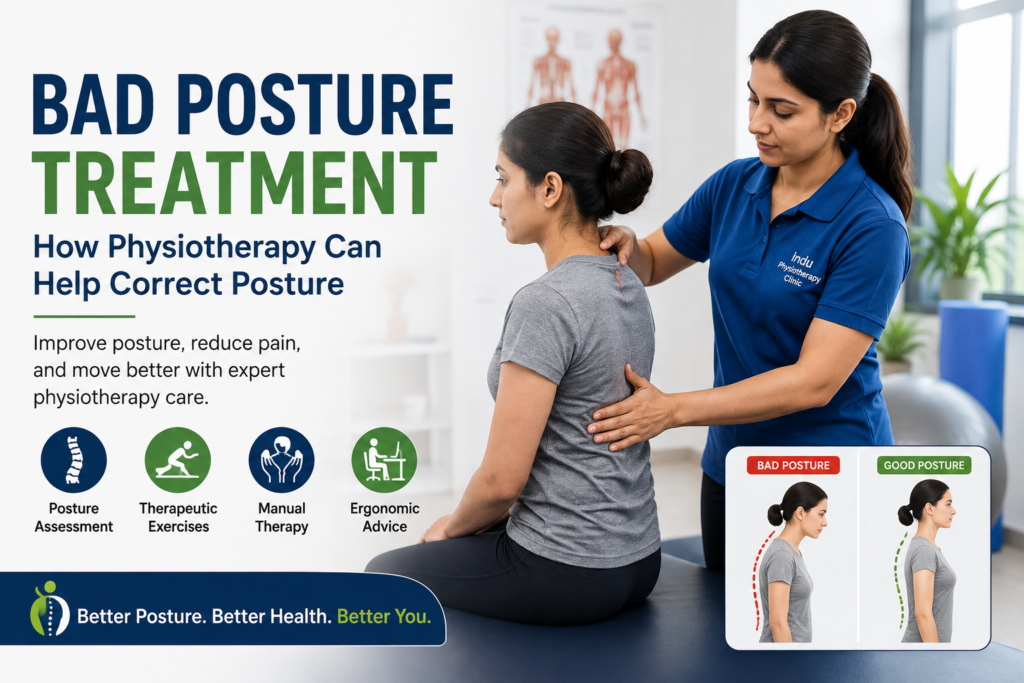
Bad posture is a common problem that can affect people of all ages. Spending long hours sitting at a desk, using smartphones, working on computers, driving, or maintaining an incorrect body position during daily activities can gradually lead to poor posture. Over time, bad posture may contribute to neck pain, back pain, shoulder discomfort, headaches, muscle stiffness, and reduced movement.
Bad posture treatment focuses on identifying the underlying causes of poor posture and improving the alignment of the spine, muscles, joints, and other parts of the body. Physiotherapy can play an important role in correcting posture through personalized exercises, posture education, manual techniques, stretching, strengthening, and movement training.
What Is Bad Posture?
Bad posture refers to an incorrect or inefficient alignment of the body while sitting, standing, walking, sleeping, or performing daily activities.
Good posture allows the body to maintain proper alignment with minimal unnecessary stress on muscles and joints. In contrast, poor posture can place excessive strain on certain muscles and structures.
Common examples of poor posture include:
- Rounded shoulders
- Forward head posture
- Slouching while sitting
- Excessive arching of the lower back
- Uneven shoulders
- Hunched upper back
- Leaning to one side while sitting or standing
- Poor posture while using a mobile phone or computer
If these habits continue for a long time, they may contribute to muscular imbalance and discomfort.
Common Causes of Bad Posture
Bad posture can develop gradually because of lifestyle habits, muscle weakness, injuries, or certain physical conditions.
1. Prolonged Sitting
Sitting for several hours without changing position can encourage slouching and forward-head posture. This is particularly common among people who work at computers.
2. Excessive Smartphone Use
Looking down at a phone for extended periods may place additional stress on the neck and upper back.
3. Weak Core Muscles
Weak abdominal, back, and pelvic muscles can make it difficult to maintain a stable and upright posture.
4. Muscle Tightness
Tight muscles around the chest, hips, neck, and lower back may affect normal body alignment.
5. Poor Workplace Ergonomics
An incorrectly positioned computer screen, chair, keyboard, or desk can encourage unhealthy sitting positions.
6. Lack of Physical Activity
Limited physical activity can contribute to muscle weakness, stiffness, and reduced mobility.
7. Previous Injuries
Pain or movement restrictions following an injury can cause a person to change their posture to avoid discomfort.
8. Poor Sleeping Position
An unsuitable pillow, mattress, or sleeping position may contribute to neck and back stiffness, although sleeping posture is only one of many factors affecting overall posture.
Signs and Symptoms of Bad Posture
Poor posture does not always cause symptoms immediately. However, persistent postural problems may be associated with:
- Neck pain or stiffness
- Upper back pain
- Lower back pain
- Shoulder discomfort
- Rounded shoulders
- Forward head position
- Muscle tightness
- Reduced flexibility
- Frequent muscle fatigue
- Headaches associated with neck muscle tension
- Difficulty maintaining an upright position
- Reduced range of movement
If pain is severe, persistent, worsening, or associated with weakness, numbness, loss of balance, or other concerning symptoms, medical evaluation is appropriate.
How Does Bad Posture Affect the Body?
Maintaining an inefficient posture for long periods can increase stress on muscles, joints, and other tissues.
For example, a forward head position can increase the workload of the muscles supporting the neck. Rounded shoulders may affect the movement and positioning of the shoulder blades. Slouched sitting can also increase stress on the muscles and structures around the spine.
Over time, poor movement habits may contribute to discomfort and reduced physical performance.
What Is Bad Posture Treatment?
Bad posture treatment involves improving the way the body is positioned and moves during everyday activities.
Treatment should not simply focus on “standing straight.” A physiotherapist can assess:
- Spinal alignment
- Muscle strength
- Muscle flexibility
- Joint mobility
- Movement patterns
- Sitting and standing habits
- Workplace ergonomics
- Walking and functional movements
- Previous injuries or pain
Based on the assessment, a physiotherapist can develop an individualized posture correction treatment plan.
How Physiotherapy Can Help Correct Bad Posture
Physiotherapy can help address the physical factors contributing to poor posture and teach healthier movement habits.
Postural Assessment
The first step is understanding what may be contributing to the individual’s posture. A physiotherapist may observe sitting, standing, walking, and specific movements.
This assessment helps identify areas of weakness, stiffness, poor movement control, or muscular imbalance.
Posture Correction Exercises
A physiotherapist may prescribe exercises designed to improve strength, mobility, flexibility, and body awareness.
Depending on the individual’s needs, exercises may target:
- Neck muscles
- Upper back muscles
- Shoulder blade stabilizers
- Core muscles
- Hip muscles
- Lower back muscles
Stretching Exercises
Tight muscles can contribute to restricted movement and poor posture. Stretching may be recommended for areas such as:
- Chest muscles
- Neck muscles
- Upper back
- Hip flexors
- Hamstrings
Stretching should be performed according to individual needs rather than using the same routine for everyone.
Strengthening Exercises
Strengthening weak muscles can help improve postural control.
Common areas that may require strengthening include the:
- Core
- Upper back
- Shoulder stabilizers
- Gluteal muscles
- Deep neck muscles
The exact exercises and progression should be based on an individual’s assessment.
Manual Physiotherapy Techniques
When appropriate, a physiotherapist may use hands-on techniques to help address joint or soft-tissue restrictions and improve movement.
Manual therapy may be combined with active exercises rather than used as the only treatment.
Ergonomic Advice
Physiotherapists can also provide guidance about workstation setup and daily activities.
Helpful recommendations may include:
- Keeping the computer screen at a comfortable height
- Supporting the lower back while sitting
- Keeping frequently used items within easy reach
- Taking regular movement breaks
- Avoiding prolonged static positions
- Adjusting the chair and desk to suit your body
Bad Posture Exercises
Exercise selection depends on the individual’s posture, strength, flexibility, and symptoms. Common exercise categories used in posture programs include:
Chin Tucks
Chin tuck exercises may help improve awareness and control of the head and neck position.
Scapular Retraction
Gentle shoulder-blade exercises can help improve control of the upper back and shoulder region.
Chest Stretch
A chest stretch may be useful for people who have tight chest muscles associated with prolonged rounded-shoulder positions.
Thoracic Extension Exercises
Mobility exercises for the upper back can help improve movement in the thoracic spine.
Core Strengthening
Core exercises can help improve trunk stability and control during everyday movements.
Important: Exercises should be selected and progressed according to individual needs, particularly if you already have pain or an injury.
How to Improve Bad Posture While Sitting
Many people spend a large portion of their day sitting. Improving sitting habits can therefore be an important part of posture management.
Try these practical tips:
- Keep your feet comfortably supported.
- Avoid prolonged slouching.
- Keep the screen at a comfortable viewing height.
- Support your lower back when necessary.
- Keep your shoulders relaxed.
- Avoid holding your head forward for long periods.
- Change your position regularly.
- Take short movement breaks throughout the day.
Remember that there is no single “perfect” sitting position that needs to be maintained continuously. Regular movement and changing positions are important.
How to Improve Posture While Using a Smartphone
Smartphone use can encourage prolonged neck flexion and rounded shoulders.
To reduce unnecessary strain:
- Bring the phone closer to eye level when practical.
- Avoid keeping your head bent forward for extended periods.
- Take regular breaks.
- Change positions frequently.
- Perform gentle neck and upper-back movements during breaks.
Bad Posture and Back Pain
Bad posture and back pain can sometimes occur together, but posture is not necessarily the only cause of back pain.
Back pain can have many contributing factors, including muscle strain, reduced activity, injuries, stress, sleep issues, and other conditions.
A physiotherapy assessment can help determine whether movement patterns, strength, flexibility, or daily habits may be contributing to your symptoms.
Bad Posture and Neck Pain
Forward-head posture and prolonged screen use can increase the workload of muscles around the neck and upper back.
Physiotherapy for posture-related neck discomfort may include:
- Postural education
- Neck mobility exercises
- Deep neck muscle strengthening
- Upper-back strengthening
- Stretching
- Ergonomic advice
- Movement retraining
A personalized treatment approach is generally more appropriate than relying solely on generic exercises.
Can Physiotherapy Permanently Correct Bad Posture?
Physiotherapy can help improve posture, movement control, strength, flexibility, and awareness. However, maintaining improvements usually requires continued healthy movement habits.
Posture is influenced by many factors, including:
- Muscle strength
- Flexibility
- Daily activities
- Work environment
- Exercise habits
- Pain
- Previous injuries
- Individual anatomy
Therefore, posture correction is usually a gradual process rather than a quick fix.
When Should You See a Physiotherapist for Bad Posture?
Consider consulting a physiotherapist if you experience:
- Persistent neck or back discomfort
- Recurrent shoulder pain
- Difficulty maintaining an upright position
- Reduced flexibility
- Muscle stiffness
- Frequent headaches associated with neck discomfort
- Postural changes after an injury
- Difficulty performing daily activities comfortably
A physiotherapist can assess your movement and develop an appropriate treatment program.
Benefits of Posture Correction Physiotherapy
A structured physiotherapy program may help with:
- Improved body awareness
- Better muscle strength
- Improved flexibility
- Better movement control
- Improved sitting and standing habits
- Reduced muscular strain
- Improved functional movement
- Greater confidence during daily activities
The results vary depending on the underlying cause, consistency with exercises, lifestyle factors, and overall health.
Prevention Tips for Bad Posture
Preventing poor posture is easier when healthy movement habits become part of your daily routine.
Follow these simple tips:
- Exercise regularly.
- Strengthen your core and upper back.
- Avoid staying in one position for too long.
- Take regular movement breaks at work.
- Adjust your workstation.
- Use your smartphone at a comfortable height.
- Maintain flexibility through appropriate stretching.
- Pay attention to posture during daily activities.
- Seek professional advice if pain persists.
Bad Posture Treatment in Gurgaon
If you are experiencing posture-related discomfort or want professional guidance for posture correction, physiotherapy can provide an individualized approach based on your assessment and daily activities.
At Indu Physiotherapy Clinic, physiotherapy treatment can focus on identifying contributing factors such as muscle weakness, stiffness, poor movement patterns, and ergonomic habits. A personalized program may include posture education, therapeutic exercises, strengthening, stretching, mobility work, and functional movement training.
For persistent or unexplained pain, a proper assessment is recommended before starting an exercise program.
Frequently Asked Questions About Bad Posture
What is the best treatment for bad posture?
The best treatment depends on the cause of the poor posture. Physiotherapy may include posture assessment, strengthening exercises, stretching, mobility exercises, ergonomic advice, and movement retraining.
Can bad posture cause back pain?
Poor posture may contribute to muscular strain and discomfort in some people, but back pain can have many causes. A physiotherapy assessment can help identify contributing factors.
Can physiotherapy correct bad posture?
Physiotherapy can help improve posture, muscle strength, flexibility, movement control, and postural awareness. Maintaining the improvements generally requires consistent exercise and healthy movement habits.
How long does it take to improve bad posture?
The time required varies from person to person. Factors include the severity and duration of the postural issue, underlying conditions, activity levels, exercise consistency, and lifestyle habits.
Are bad posture exercises safe?
Many posture exercises are generally safe when appropriately selected, but exercises should be modified or avoided if they cause significant pain. People with existing injuries or medical conditions should seek professional guidance.
Can sitting all day cause bad posture?
Prolonged sitting can encourage slouching and reduced movement, particularly when combined with poor workstation setup. Regular movement breaks and ergonomic adjustments can help.
Conclusion
Bad posture treatment is not simply about forcing the body into a straight position. Effective posture correction involves understanding the individual’s movement habits, muscle strength, flexibility, daily activities, and contributing factors.
Physiotherapy can help improve posture through assessment, therapeutic exercises, strengthening, stretching, mobility training, ergonomic education, and movement retraining. With consistent practice and healthier daily habits, many people can improve their posture and move more comfortably.
If you are experiencing persistent neck, shoulder, or back pain along with postural problems, consider getting a professional physiotherapy assessment to determine the most appropriate treatment approach.