(+91) 9289 059 265induphysiotherapy@gmail.com

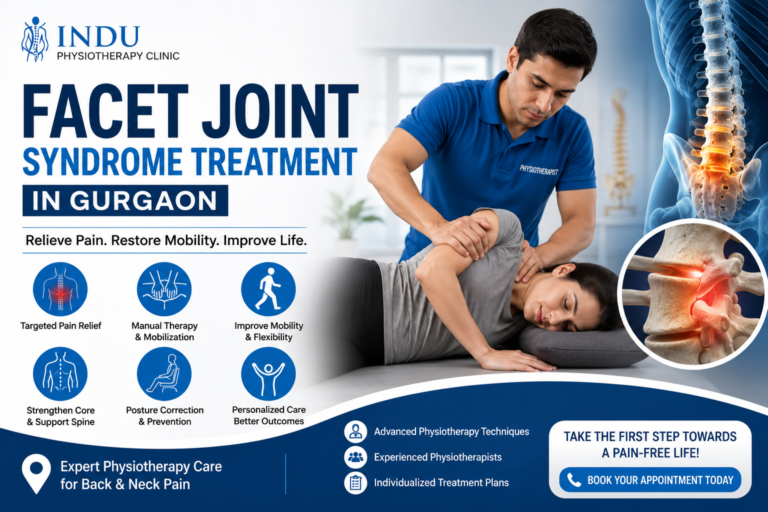
Facet Joint Syndrome Treatment In Gurgaon

Facet Joint Syndrome Treatment In Gurgaon

Facet Joint Syndrome is one of the most common causes of chronic neck and back pain. The facet joints are small joints located between the vertebrae of the spine that help maintain stability while allowing smooth movement. Injury, arthritis, poor posture, or age-related degeneration can cause inflammation and stiffness in these joints, leading to pain, restricted movement, and difficulty performing daily activities.

At Indu Physiotherapy Clinic, we provide comprehensive Facet Joint Syndrome Treatment in Gurgaon using evidence-based physiotherapy techniques. Our personalized rehabilitation programs focus on reducing pain, restoring spinal mobility, strengthening supporting muscles, and preventing recurrence, helping patients return to an active and pain-free lifestyle.

What is Facet Joint Syndrome?

Facet Joint Syndrome is a condition in which the facet joints of the spine become irritated, inflamed, or degenerated. These joints connect each vertebra and enable movements such as bending, twisting, and extending the spine. When the cartilage within these joints wears down or becomes inflamed, it can cause localized pain, stiffness, and reduced flexibility.

Facet Joint Syndrome may affect the:

  • Cervical Spine (Neck)
  • Thoracic Spine (Upper Back)
  • Lumbar Spine (Lower Back)

Although the condition can occur at any age, it is more common in adults over 40 due to age-related degeneration.

Anatomy of the Facet Joints

Facet joints are paired synovial joints located at the back of the spine. Each vertebra has two upper and two lower facet joints that work together to guide spinal movement.

The facet joints help:

  • Maintain spinal stability
  • Control movement
  • Prevent excessive twisting
  • Support body weight
  • Protect spinal nerves
  • Facilitate smooth spinal motion

Healthy facet joints are covered with cartilage and surrounded by a lubricated joint capsule that allows pain-free movement.

Causes of Facet Joint Syndrome

Several factors may contribute to facet joint pain, including:

Age-Related Degeneration

As we age, the cartilage within the facet joints gradually wears away, leading to osteoarthritis and chronic pain.

Poor Posture

Prolonged sitting, slouching, and improper workstation ergonomics increase stress on the spine.

Repetitive Spinal Movements

Frequent bending, twisting, or lifting heavy objects can overload the facet joints.

Sports Injuries

High-impact sports or sudden spinal trauma may damage the facet joints.

Obesity

Excess body weight places additional stress on the spinal joints.

Degenerative Disc Disease

Loss of disc height increases pressure on the facet joints, accelerating wear and tear.

Spinal Arthritis

Osteoarthritis commonly affects the facet joints, causing inflammation and stiffness.

Symptoms of Facet Joint Syndrome

Symptoms vary depending on the affected region of the spine but commonly include:

Neck Symptoms

  • Neck pain
  • Neck stiffness
  • Difficulty turning the head
  • Headaches originating from the neck
  • Shoulder pain
  • Pain while looking upward

Lower Back Symptoms

  • Localized low back pain
  • Pain during standing or walking
  • Morning stiffness
  • Pain after prolonged sitting
  • Difficulty bending backward
  • Reduced spinal flexibility
  • Pain radiating to the buttocks (usually not below the knee)

General Symptoms

  • Muscle spasms
  • Tenderness over the affected joint
  • Reduced range of motion
  • Pain during twisting movements
  • Pain relieved by changing positions

Risk Factors

You may have a higher risk of developing Facet Joint Syndrome if you:

  • Are over 40 years of age
  • Have poor posture
  • Perform repetitive lifting
  • Sit for prolonged hours
  • Are overweight
  • Have spinal arthritis
  • Have previous spinal injuries
  • Lead a sedentary lifestyle
  • Participate in high-impact sports

Diagnosis of Facet Joint Syndrome

A thorough assessment is essential for accurate diagnosis.

Your physiotherapist and physician may recommend:

Physical Examination

Evaluation includes:

  • Posture assessment
  • Range of motion testing
  • Joint mobility assessment
  • Muscle strength testing
  • Neurological examination
  • Palpation of painful joints

Imaging Studies

If required:

  • X-rays
  • MRI Scan
  • CT Scan
  • Diagnostic Facet Joint Injection (in selected cases)

Why Physiotherapy is Important for Facet Joint Syndrome

Physiotherapy is considered one of the most effective conservative treatments for Facet Joint Syndrome. It addresses the root cause of pain by improving joint mobility, correcting posture, strengthening spinal muscles, and enhancing overall function.

Early physiotherapy can:

  • Reduce inflammation
  • Improve flexibility
  • Restore spinal movement
  • Decrease pain
  • Improve posture
  • Prevent recurrence
  • Reduce dependence on pain medications

Facet Joint Syndrome Physiotherapy Treatment at Indu Physiotherapy Clinic

Our rehabilitation program begins with a detailed assessment followed by an individualized treatment plan.

Comprehensive Physiotherapy Assessment

We evaluate:

  • Pain intensity
  • Joint mobility
  • Spinal alignment
  • Posture
  • Core muscle strength
  • Flexibility
  • Walking pattern
  • Functional limitations
  • Daily activity level

Advanced Physiotherapy Treatment Techniques

Manual Therapy

Manual therapy improves joint mobility, reduces stiffness, and relieves pain using gentle hands-on techniques.

Benefits

  • Improved movement
  • Reduced stiffness
  • Pain relief
  • Better joint function

Joint Mobilization

Gentle mobilization techniques restore normal movement of the affected facet joints while reducing muscle guarding.

Soft Tissue Release

Soft tissue therapy helps relax tight muscles surrounding the spine, reducing tension and improving circulation.

Dry Needling (When Clinically Indicated)

Dry needling may be recommended to relieve muscle trigger points and reduce chronic muscle tightness associated with facet joint pain.

Electrotherapy

Advanced electrotherapy modalities may include:

  • TENS Therapy
  • Interferential Therapy (IFT)
  • Ultrasound Therapy

These treatments can help reduce pain and support rehabilitation when used alongside exercise therapy.


Heat Therapy

Heat therapy helps:

  • Increase blood circulation
  • Reduce muscle stiffness
  • Relieve pain
  • Improve tissue flexibility

Therapeutic Exercises

Customized exercises improve:

Core Strengthening

A strong core supports the spine and reduces stress on the facet joints.

Flexibility Exercises

Stretching improves spinal mobility and reduces stiffness.

Spinal Stabilization Exercises

These exercises enhance spinal control and reduce the risk of future injuries.

Postural Correction Exercises

Correct posture minimizes unnecessary stress on the spine during daily activities.

Home Exercise Program

Patients receive individualized home exercise plans to maintain progress between clinic sessions. Regular practice supports long-term pain relief and functional improvement.

Benefits of Physiotherapy for Facet Joint Syndrome

A structured rehabilitation program can help:

  • Reduce neck and back pain
  • Improve spinal flexibility
  • Increase joint mobility
  • Enhance posture
  • Strengthen core muscles
  • Improve daily function
  • Reduce muscle spasms
  • Lower the risk of recurrence
  • Improve quality of life

Lifestyle Tips to Prevent Facet Joint Pain

To reduce the risk of recurrence:

  • Maintain good posture
  • Exercise regularly
  • Strengthen your core muscles
  • Avoid prolonged sitting
  • Lift objects correctly
  • Maintain a healthy weight
  • Use ergonomic furniture
  • Stretch throughout the day
  • Stay physically active

Recovery Timeline

Recovery depends on the severity of the condition, your overall health, and adherence to the rehabilitation program. Many patients notice improvement within a few weeks of consistent physiotherapy, while chronic cases may require longer-term management.

Why Choose Indu Physiotherapy Clinic in Gurgaon?

At Indu Physiotherapy Clinic, we provide personalized care using evidence-based physiotherapy techniques for spinal conditions.

Our clinic offers:

  • Experienced physiotherapists
  • Individualized treatment plans
  • One-on-one therapy sessions
  • Modern physiotherapy equipment
  • Advanced manual therapy
  • Exercise-based rehabilitation
  • Patient education
  • Home exercise guidance
  • Flexible appointments
  • Convenient Gurgaon location

Frequently Asked Questions (FAQs)

Is physiotherapy effective for Facet Joint Syndrome?

Yes. Physiotherapy is a highly effective conservative treatment that helps reduce pain, improve spinal mobility, strengthen supporting muscles, and restore function.

How many physiotherapy sessions will I need?

The number of sessions varies based on the severity of your symptoms, overall fitness, and treatment goals. Your physiotherapist will create a personalized rehabilitation plan.

Can Facet Joint Syndrome heal without surgery?

Many people experience significant improvement with physiotherapy, activity modification, and appropriate medical care. Surgery is generally considered only when conservative treatment has not been successful and after specialist evaluation.

What activities should I avoid?

Avoid prolonged sitting, repetitive twisting, heavy lifting with poor technique, and activities that significantly increase your pain until advised otherwise by your healthcare provider.

Can I exercise with Facet Joint Syndrome?

Yes. A physiotherapist can prescribe safe, targeted exercises to improve flexibility, strengthen the core, and support spinal health without aggravating symptoms.

Book Your Facet Joint Syndrome Treatment in Gurgaon

If you’re experiencing persistent neck or back pain that may be related to facet joint dysfunction, early physiotherapy can help restore mobility and reduce discomfort. At Indu Physiotherapy Clinic, we provide personalized treatment plans designed to relieve pain, improve spinal function, and support long-term recovery.

Contact us today to schedule your assessment and begin your journey toward better spin

Monday8:30am–9:30pm
Tuesday8:30am–9:30pm
Wednesday8:30am–9:30pm
Thursday8:30am–9:30pm
Friday8:30am–9:30pm
Saturday8:30am–9:30pm
Sunday9:30am–9:30pm
+91-9289 059 265

Most oral emergencies relate to pain, bleeding, or thoracic pain and should be attended by a Physiotherapist.

Make an appointment

We will send you a confirmation within 24 hours. Emergency? Call +91-9289 059 265

Most oral emergencies relate to pain, bleeding, or thoracic pain and should be attended by a Physiotherapist.

    Working Hours

    Monday 8:30am–9:30pm
    Tuesday8:30am–9:30pm
    Wednesday8:30am–9:30pm
    Thursday8:30am–9:30pm
    Friday8:30am–9:30pm
    Saturday8:30am–9:30pm
    Sunday8:30am–9:30pm
    Meet the professional therapist team

    Get started with Indu Physiotherapy Clinic!