(+91) 9289 059 265induphysiotherapy@gmail.com

Cervical Pain Physiotherapy In Gurgaon

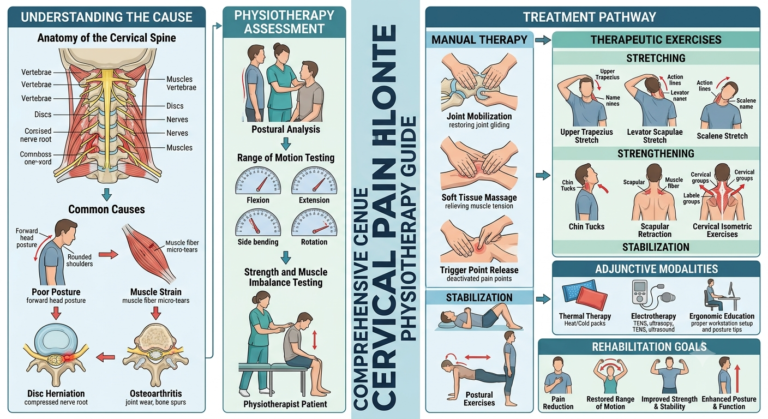
generate diagramatic image regarding Cervical Pain Physiotherapy

Cervical Pain Physiotherapy in Gurgaon: Advanced Rehabilitation & Relief

Cervical pain—commonly felt in the neck and upper back—is one of the most frequent musculoskeletal issues affecting professionals and residents across Gurgaon. With high concentrations of corporate desk jobs, long commuting hours, and increased screen time, the strain on the cervical spine has surged.

Seeking specialized cervical pain physiotherapy in Gurgaon offers a targeted, non-surgical approach to relieve acute discomfort, fix posture alignment, and restore long-term cervical spine mobility.

 Comprehensive Care Pathway

[ Clinical Assessment ]
          │
          ▼
[ Phase 1: Pain & Inflammation Relief ]
  ├── Electrotherapy (TENS / IFT)
  ├── Heat / Cryotherapy
  └── Gentle Manual Mobilization
          │
          ▼
[ Phase 2: Mobility & Muscle Release ]
  ├── Myofascial Trigger Point Therapy
  ├── Soft Tissue Massage
  └── Cervical Traction (If Radiculopathy present)
          │
          ▼
[ Phase 3: Strengthening & Posture Correction ]
  ├── Deep Cervical Flexor Activation
  ├── Scapular Retraction Exercises
  └── Isometric Neck Exercises
          │
          ▼
[ Phase 4: Long-Term Ergonomic Management ]
  ├── Workstation Setup (Eye-level monitor)
  └── Cervical Pillow & Sleep Hygiene

Understanding the Cervical Spine

The neck consists of seven cervical vertebrae () cushioned by intervertebral discs and stabilized by surrounding muscles and nerves. When stress or structural wear impacts this system, pain occurs.

       [ Cervical Spine Structure ]
       
               ( Head / Skull )
                      │
           C1 ─── Atlas (Rotation)
           C2 ─── Axis
           C3 ───┐
           C4 ──── Top Muscle Strain Area
           C5 ───┐
           C6 ──── Disc Bulge / Nerve Compression Area
           C7 ───┘
                      │
               ( Thoracic Spine )

Primary Causes of Cervical Neck Pain

  • Text Neck Syndrome: Prolonged forward head tilt while using smartphones, placing excessive force on the upper trapezius and levator scapulae.

  • Cervical Spondylosis: Age-related degenerative wear affecting intervertebral discs and facet joints.

  • Cervical Radiculopathy: Pinched or compressed nerve roots causing sharp, radiating pain or numbness down into the shoulders, arms, or fingers.

  • Postural Deconditioning: Weak upper back muscles combined with tight chest and neck muscles (Upper Crossed Syndrome).

Core Components of Physiotherapy Treatment

1. Diagnostic Evaluation

A specialized physiotherapist conducts range-of-motion assessments, nerve conduction checks, and posture analysis to pinpoint the root cause of the neck strain.

2. Pain Mitigation & Modalities

  • TENS / IFT: Blocks nerve pain signals and relaxes involuntary muscle spasms.

  • Thermotherapy: Warm compress applications to boost localized blood circulation.

  • Cervical Traction: Gently expands intervertebral spacing to relieve pressure on compressed nerve roots.

3. Hands-On Manual Therapy

  • Trigger Point Release: Targets hyper-irritable muscle knots in the suboccipital and upper shoulder regions.

  • Joint Mobilization: Controlled, passive joint gliding to restore restricted neck rotation and side-bending.

Targeted Rehabilitation Exercises

               [ REHABILITATION MATRIX ]

     Flexibility                     Strengthening
  ┌────────────────┐              ┌────────────────┐
  │ Upper Trapezius│              │   Chin Tucks   │
  │     Stretch    │              │  (Deep Flexors)│
  └───────┬────────┘              └───────┬────────┘
          │                               │
          └───────────────┬───────────────┘
                          │
                          ▼
            ┌──────────────────────────┐
            │ Cervical Isometrics      │
            │ & Scapular Retractions   │
            └──────────────────────────┘
Exercise Name Target Area Clinical Benefit
Chin Tucks Deep Cervical Flexors Retracts forward head posture and reduces upper neck strain.
Upper Trapezius Stretch Side of Neck & Shoulder Releases severe tightness and stress-induced muscle knots.
Scapular Retraction Rhomboids & Mid-Trapezius Pulls shoulder blades together to correct rounded shoulders.
Isometric Cervical Hold Neck Stabilizers Builds neck strength against static resistance without joint movement.

Ergonomic & Daily Management

                 [ IDEAL WORKSPACE SETUP ]

                  [ Eye-Level Display ]
                           │
      ( Head Neutral ) ────┼── ( Screen 20–24 inches away )
                           │
                   [ Elbows at 90° ]
                           │
                 [ Lumbar Support Backrest ]
                           │
                  [ Feet Flat on Floor ]
  • Monitor Positioning: Keep the top third of your screen directly at eye level.

  • Arm Support: Rest forearms comfortably on armrests so shoulders remain un-shrugged.

  • Regular Breaks: Take a 60-second micro-break every 30 to 45 minutes to change posture and perform gentle neck movements.

  • Sleep Position: Use a supportive cervical pillow that keeps your spine aligned neutrally whether sleeping on your back or side.

Expected Recovery Timeline

Acute Strain         1–2 Weeks
Cervical Spondylosis   3–5 Weeks
Radiculopathy         4–8 Weeks

Consulting an experienced clinician for cervical pain physiotherapy in Gurgaon ensures an accurate diagnosis, safe exercise execution, and an individualized recovery plan to eliminate pain permanently.

Monday8:30am–9:30pm
Tuesday8:30am–9:30pm
Wednesday8:30am–9:30pm
Thursday8:30am–9:30pm
Friday8:30am–9:30pm
Saturday8:30am–9:30pm
Sunday9:30am–9:30pm
+91-9289 059 265

Most oral emergencies relate to pain, bleeding, or thoracic pain and should be attended by a Physiotherapist.

Make an appointment

We will send you a confirmation within 24 hours. Emergency? Call +91-9289 059 265

Most oral emergencies relate to pain, bleeding, or thoracic pain and should be attended by a Physiotherapist.

    Working Hours

    Monday 8:30am–9:30pm
    Tuesday8:30am–9:30pm
    Wednesday8:30am–9:30pm
    Thursday8:30am–9:30pm
    Friday8:30am–9:30pm
    Saturday8:30am–9:30pm
    Sunday8:30am–9:30pm
    Meet the professional therapist team

    Get started with Indu Physiotherapy Clinic!