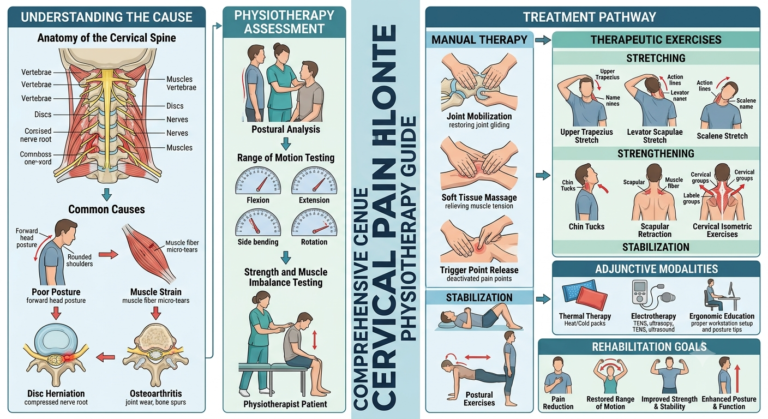
Cervical pain, commonly known as neck pain, is one of the most common musculoskeletal conditions affecting people of all ages. Long working hours on computers, poor posture, mobile phone overuse, stress, and age-related changes can all contribute to cervical pain.
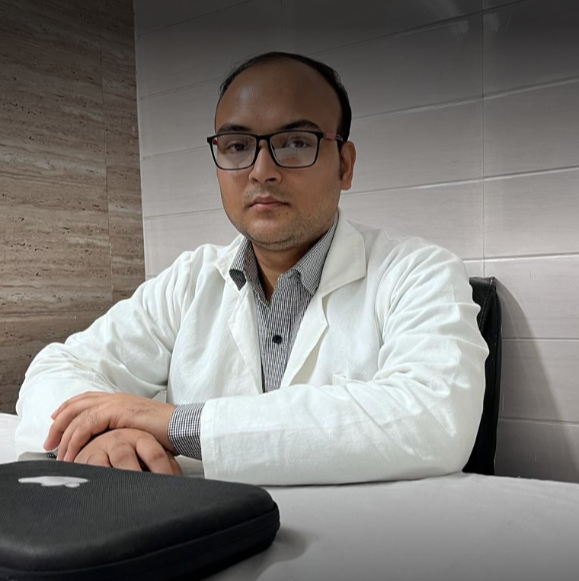
At Indu Physiotherapy Clinic, Gurgaon, we provide personalized cervical pain physiotherapy programs to reduce pain, improve neck mobility, strengthen muscles, and help prevent future episodes.
Healthy Cervical Spine
Supports the head, protects the spinal cord, and allows smooth neck movement.
Painful Cervical Spine
Poor posture, muscle tightness, disc problems, or nerve compression can cause neck pain and stiffness.
The cervical spine consists of seven vertebrae (C1–C7) that support the head and allow neck movement. Cervical pain occurs when muscles, joints, ligaments, discs, or nerves become irritated or injured.
It may range from mild stiffness to severe pain that radiates into the shoulders, arms, or fingers.
|
Type |
Description |
|---|---|
| Mechanical Neck Pain | Pain due to poor posture or muscle strain. |
| Cervical Spondylosis | Age-related wear and tear of cervical discs and joints. |
| Cervical Radiculopathy | Nerve compression causing pain, numbness, or tingling in the arm. |
| Whiplash Injury | Sudden neck injury after an accident. |
| Muscle Spasm | Tight muscles causing restricted neck movement. |
Poor sitting posture while working.
Looking down at mobile phones for long periods (“Text Neck”).
Long computer usage.
Muscle strain or overuse.
Cervical spondylosis.
Cervical disc bulge or herniation.
Stress-related muscle tightness.
Sports injuries.
Sleeping with improper pillow support.
Trauma or whiplash injury.
Neck pain and stiffness.
Difficulty turning the neck.
Shoulder pain.
Headaches starting from the neck.
Pain radiating to the arm.
Tingling or numbness in fingers.
Muscle tightness.
Reduced neck movement.
Dizziness in some cases.
Severe arm weakness.
Loss of balance.
Loss of bladder or bowel control.
Sudden numbness in both arms.
|
Risk Group |
Reason |
|---|---|
| Office Workers | Long hours on laptop or desktop. |
| Students | Excessive mobile and study posture. |
| Drivers | Prolonged driving posture. |
| Elderly People | Degenerative cervical changes. |
| Gym & Sports Persons | Muscle strain or injury. |
Detailed pain history.
Posture analysis.
Neck range of motion testing.
Muscle strength examination.
Neurological assessment.
Special orthopedic tests.
Functional movement assessment.
This helps identify the root cause of cervical pain.
Recovery focuses on reducing pain first, then restoring mobility, strength, posture, and long-term prevention.
Manual Therapy
Soft Tissue Release
Myofascial Release
Trigger Point Therapy
Heat Therapy
Cold Therapy
TENS Therapy
Ultrasound Therapy (when appropriate)
Manual therapy helps:
Reduce muscle tightness.
Improve joint mobility.
Reduce stiffness.
Increase flexibility.
Dry needling may help relieve:
Trigger points.
Muscle spasms.
Chronic neck pain.
Upper trapezius tightness.
Cervical radiculopathy.
Disc bulge.
Nerve compression.
Radiating arm pain.
Only after proper physiotherapy assessment.
Benefits: Corrects forward head posture and strengthens deep neck muscles.
Steps:
Sit straight.
Pull chin backward.
Hold for 5 seconds.
Repeat 10–15 times.
Benefits: Relieves muscle tightness.
Steps:
Tilt head sideways.
Hold for 20–30 seconds.
Repeat both sides.
Benefits: Strengthens cervical muscles.
Steps:
Press forehead into palm.
Hold 5 seconds.
Repeat sideways and backward.
Benefits: Improves posture.
Steps:
Pull shoulder blades together.
Hold 5 seconds.
Repeat 15 times.
|
Correct Habit |
Benefit |
|---|---|
| Monitor at eye level. | Reduces neck bending. |
| Keep shoulders relaxed. | Prevents muscle tension. |
| Use lumbar support. | Maintains spinal alignment. |
| Keep feet flat on floor. | Improves posture. |
| Take breaks every 30–40 minutes. | Reduces stiffness. |
Laptop screen at eye level.
Keyboard close to the body.
Elbows at 90 degrees.
Wrists neutral.
Chair with back support.
Avoid prolonged sitting.
Stretch every hour.
Use a cervical support pillow.
Sleep on your back or side.
Avoid sleeping on your stomach.
Avoid holding phone between shoulder and ear.
Stay hydrated.
Perform daily stretching exercises.
Avoid sudden neck movements.
|
Condition |
Expected Recovery |
|---|---|
| Mild Muscle Strain | 1–2 weeks. |
| Poor Posture Neck Pain | 2–4 weeks. |
| Cervical Spondylosis | 4–8 weeks with physiotherapy. |
| Cervical Radiculopathy | 6–12 weeks depending on severity. |
Detailed Physiotherapy Assessment.
Personalized Treatment Plan.
Manual Therapy.
Dry Needling.
Electrotherapy.
Exercise Therapy.
Posture Correction Program.
Home Exercise Program.
Ergonomic Counseling.
Home Physiotherapy in Gurgaon.
Experienced Physiotherapists | Personalized Care | Evidence-Based Treatment
Reduces neck pain naturally.
Improves flexibility.
Restores neck movement.
Strengthens cervical muscles.
Corrects posture.
Reduces headaches related to neck pain.
Helps avoid recurring neck pain.
Improves daily activities and quality of life.
Yes. Physiotherapy is one of the most effective non-surgical treatments for cervical pain, helping reduce pain, stiffness, and muscle weakness.
Most patients need 8–15 sessions, depending on the severity and underlying condition.
Many cases improve significantly with physiotherapy, posture correction, ergonomic changes, and regular exercises. Chronic conditions require ongoing management.
Yes, but exercises should be prescribed by a qualified physiotherapist after assessment.
Cervical pain can interfere with work, sleep, and daily life, but early physiotherapy treatment can provide long-lasting relief. At Indu Physiotherapy Clinic in Gurgaon, we focus on identifying the root cause of neck pain and providing personalized rehabilitation through manual therapy, exercises, posture correction, and ergonomic education.
Most oral emergencies relate to pain, bleeding, or thoracic pain and should be attended by a Physiotherapist.
We will send you a confirmation within 24 hours. Emergency? Call +91-9289 059 265
Most oral emergencies relate to pain, bleeding, or thoracic pain and should be attended by a Physiotherapist.