(+91) 9289 059 265induphysiotherapy@gmail.com

Shin Splint Pain Physiotherapy

Shin Splint Pain Physiotherapy

Shin splints are one of the most common sports injuries affecting runners, athletes, dancers, and people who suddenly increase their physical activity. The pain usually occurs along the inner edge of the shinbone (tibia) and can make walking, running, or exercising uncomfortable. Physiotherapy is one of the safest and most effective treatments for shin splints because it reduces pain, improves muscle strength, corrects movement patterns, and helps prevent the injury from returning.

At Indu Physiotherapy Clinic, Gurgaon, we provide personalized rehabilitation programs for shin splints using evidence-based physiotherapy techniques.


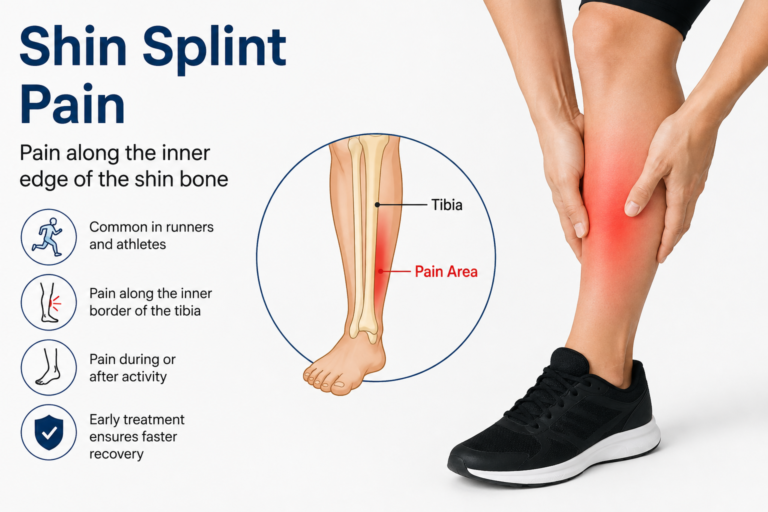
Shin Splints Explained (Diagram)

Pain Location & Recovery Flow

Common pain area

Inner border of the shinbone (tibia)

Physiotherapy goal

Restore pain-free walking, running, jumping, and sports activity.

What is Shin Splint Pain?

Shin splints, medically called Medial Tibial Stress Syndrome (MTSS), refer to pain and inflammation of the muscles, tendons, and bone tissue around the tibia (shinbone).

Shin Splints (Medial Tibial Stress Syndrome): Causes and Treatment – Roam

Shin Splints in Runners: How Physical Therapy Can Help


Shin Splints Treatment Mississauga

 
  • Running

  • Jumping

  • Football

  • Cricket

  • Basketball

  • Dance

  • Military training

  • Gym workouts

Without proper treatment, shin splints can progress into stress fractures.

Symptoms of Shin Splint Pain

Schienbeinkantensyndrom: Ursachen, Diagnose, Therapien - Orthinform


Shin Splint Relief: 5 Tips From an Atlanta Podiatrist


SHIN PAIN IN RUNNERS EXPLAINED — Back To Back


Symptom Description
Inner shin pain Pain along the inside border of the tibia.
Tenderness Pain when touching the shin.
Swelling Mild inflammation around the shin area.
Pain during activity Running, jumping, climbing stairs.
Pain after exercise Discomfort continues even after stopping activity.
Muscle tightness Tight calf muscles and Achilles tendon.
 

Causes of Shin Splints

Why Runners Should Train on Pavement | TrainingPeaks


Flat Feet Treatment Services in Dearborn | Michigan Foot & Ankle Specialists


Musculos


Common Causes

Cause How It Leads to Shin Splints
Overuse Excessive running or training.
Sudden increase in activity Rapid increase in exercise intensity.
Improper footwear Poor shock absorption.
Flat feet Excess stress on tibia.
High arches Reduced shock absorption.
Tight calf muscles Increased pulling on shin muscles.
Weak hip and ankle muscles Poor lower limb mechanics.
Hard running surfaces Greater impact on legs.
 

Risk Factors

People at higher risk include:

  • Runners and marathon athletes.

  • Football and basketball players.

  • Dancers.

  • Military recruits.

  • Gym beginners.

  • Individuals with poor posture or flat feet.

  • People wearing worn-out sports shoes.


Shin Splints Pain Assessment at Indu Physiotherapy Clinic

Medial tibial stress syndrome | Above ankle | Biomechanical problems | What We Treat | Chiropody.co.uk | Leading chiropodist & Podiatrists in Manchester and Liverpool


Ankle Stabilisation - Ankle - Surgery - What We Treat - Physio.co.uk


Complete Physio - Complete Pilates


Our physiotherapist performs:

  • Detailed posture assessment.

  • Walking and running gait analysis.

  • Foot arch examination.

  • Muscle flexibility assessment.

  • Strength testing.

  • Balance and movement evaluation.

  • Sports injury screening.

This helps identify the root cause rather than treating only pain.


Shin Splint Physiotherapy Treatment Plan

Shin Splints - tfd gym


A Runner's Guide to Exercises for Shin Splints – Swift Running


Sindrome da Stress Tibiale Mediale I Centro Colombo Genova


Phase 1 – Pain Relief & Inflammation Control

  • Ice therapy.

  • Compression techniques.

  • Manual therapy.

  • Soft tissue release.

  • Gentle stretching.

  • Activity modification.

Goal: Reduce pain and inflammation.

Phase 2 – Restore Flexibility

재활의학과 의사가 알려주는 무릎에 좋은 운동 : 운동편(스트레칭 part 2)


How to stretch Achilles tendon while sitting and standing


Achilles tendonitis stretching exercises – When to avoid them and why


Exercises include:

  • Calf stretches.

  • Soleus stretches.

  • Achilles tendon mobility.

  • Shin muscle stretching.

  • Ankle mobility exercises.

Phase 3 – Strengthening Exercises

العلاج الطبيعي (@Rehab_PT1) on X


heel raise - Innovative Physical Therapy


11 Hammer Toe Exercises and Stretches for Pain Relief – Carevion


7 .Strengthening targets:

Exercise Purpose
Toe Raises Strengthen tibialis anterior.
Heel Raises Improve calf strength.
Resistance Band Exercises Strengthen ankle muscles.
Foot Arch Exercises Improve stability.
Single Leg Balance Enhance coordination.

Phase 4 – Functional Rehabilitation

Digital Detox for Students: Reduce screentime and boost wellness | Scape UK


Fysiotherapie Noordwijkerhout: Pijnvrij Bewegen - PMC Groep


Cardio Strength Workout | Run Faster Progressed Hybrid Strength


5. Includes:

  • Balance training.

  • Jump mechanics.

  • Running drills.

  • Agility exercises.

  • Sport-specific rehabilitation.


Shin Splint Rehabilitation Flow (Diagram)

4-Step Recovery Progression

Typical recovery focus

Progress from pain-free walking to jogging, running, and sports without recurrence.

Best Exercises for Shin Splints

7 Bone Spur Foot Exercises to Ease Pain & Improve Mobility - Podiatrists in Richmond, VA | Achilles Foot and Ankle Center


Types of Exercises - Tan Tock Seng Hospital


Plantar Fasciitis Exercises in Burlington | Best Stretches for Heel Pain Relief

6.Recommended Exercises

  1. Wall Calf Stretch

  2. Soleus Stretch

  3. Toe Raises

  4. Heel Raises

  5. Resistance Band Dorsiflexion

  6. Foot Arch Strengthening

  7. Single Leg Balance

  8. Glute Strengthening

  9. Hip Abduction Exercises

  10. Foam Roller Calf Release

Always perform exercises under physiotherapy guidance if pain is severe.

Advanced Physiotherapy Techniques

Dry Needling


Medical Taping bij Scheenbeenklachten / Shin Splint - FysioTape


Ultrasound Therapy & Electrotherapy for Sale - Compare Prices & Suppliers

 
Therapy Benefits
Manual Therapy Reduce muscle tightness.
Dry Needling Release trigger points.
Kinesio Taping Support muscles during activity.
Ultrasound Therapy Promote tissue healing.
Sports Massage Improve circulation.
Myofascial Release Decrease muscle tension.

Home Care Tips for Shin Splint Pain

A Runner's Guide to Exercises for Shin Splints – Swift Running


ACTIV RUNNING SHOES - BLUE - RU25102 - Activ Abou Alaa


Περιοστίτιδα Κνήμης

 
  • Rest from painful activities.

  • Apply ice for 15–20 minutes.

  • Wear supportive shoes.

  • Stretch calf muscles daily.

  • Warm up before exercise.

  • Increase training gradually.

Don’ts

  • Ignore persistent shin pain.

  • Run through severe pain.

  • Wear worn-out footwear.

  • Increase mileage suddenly.

Recovery Timeline

Severity Expected Recovery
Mild 2–3 weeks
Moderate 4–6 weeks
Severe 6–12 weeks with rehabilitation.

Recovery depends on early diagnosis, activity modification, and consistent physiotherapy.

How to Prevent Shin Splints

Getting ready for some road action


Post-Marathon Knee Pain: Prevention & Management (2026)


LINZ - RUNNERS STORE

 
  • Wear proper sports footwear.

  • Replace shoes after heavy mileage.

  • Warm up before workouts.

  • Stretch calves regularly.

  • Strengthen foot and hip muscles.

  • Avoid sudden increases in running distance.

  • Train on softer surfaces when possible.

  • Improve running mechanics.


Why Choose Indu Physiotherapy Clinic in Gurgaon?

Sports Physiotherapy Treatment in Gurgaon | DynaFisio


Physical therapist working with athlete


Fisioterapia para deportistas: Descubre la rehabilitación

 
  • Comprehensive sports injury assessment.

  • Personalized shin splint rehabilitation programs.

  • Advanced manual therapy techniques.

  • Dry Needling (when appropriate).

  • Kinesio Taping.

  • Gait and posture correction.

  • Athletic return-to-sport rehabilitation.

  • Home visit physiotherapy in Gurgaon.

Our goal is to help patients recover safely and return to daily activities and sports without recurring pain.

Frequently Asked Questions (FAQs)

Is physiotherapy effective for shin splints?

Yes. Physiotherapy helps reduce pain, improve flexibility, strengthen muscles, and correct movement patterns that contribute to shin splints.

Can I continue running with shin splints?

Running through pain can worsen the condition. Your physiotherapist may recommend temporary activity modification and a gradual return-to-running program.

How many physiotherapy sessions are needed?

Most patients improve within 6–12 physiotherapy sessions, depending on the severity and duration of the injury.

Are shin splints different from stress fractures?

Yes. Shin splints involve irritation of muscles and bone tissue, while stress fractures are small cracks in the bone and require medical evaluation.

Conclusion

Shin splints are a common overuse injury, but with timely physiotherapy they can be treated effectively without long-term complications. A structured rehabilitation program focusing on pain relief, stretching, strengthening, gait correction, and gradual return to activity offers the best recovery.

For Shin Splint Pain Physiotherapy in Gurgaon, Indu Physiotherapy Clinic provides personalized treatment plans designed for runners, athletes, fitness enthusiasts, and anyone experiencing persistent shin pain.


GURGAON

Monday8:30am–9:30pm
Tuesday8:30am–9:30pm
Wednesday8:30am–9:30pm
Thursday8:30am–9:30pm
Friday8:30am–9:30pm
Saturday8:30am–9:30pm
Sunday9:30am–9:30pm
+91-9289 059 265

Most oral emergencies relate to pain, bleeding, or thoracic pain and should be attended by a Physiotherapist.

Make an appointment

We will send you a confirmation within 24 hours. Emergency? Call +91-9289 059 265

Most oral emergencies relate to pain, bleeding, or thoracic pain and should be attended by a Physiotherapist.

    Working Hours

    Monday 8:30am–9:30pm
    Tuesday8:30am–9:30pm
    Wednesday8:30am–9:30pm
    Thursday8:30am–9:30pm
    Friday8:30am–9:30pm
    Saturday8:30am–9:30pm
    Sunday8:30am–9:30pm
    Meet the professional therapist team

    Get started with Indu Physiotherapy Clinic!