(+91) 9289 059 265induphysiotherapy@gmail.com

Shin Splint Pain Physiotherapy In Gurgaon

Shin Splint Pain Physiotherapy

Shin Splint Pain Physiotherapy In Gurgaon

Shin splints are a common cause of lower-leg pain, especially among runners, athletes, walkers, and people who suddenly increase their physical activity. The pain usually develops along the inner or front portion of the shin and may become worse during running, jumping, or prolonged walking.

At Indu Physiotherapy Clinic, our physiotherapy approach for shin splint pain focuses on identifying the underlying cause, reducing pain, improving flexibility and strength, and helping patients safely return to their normal activities.

What Are Shin Splints?

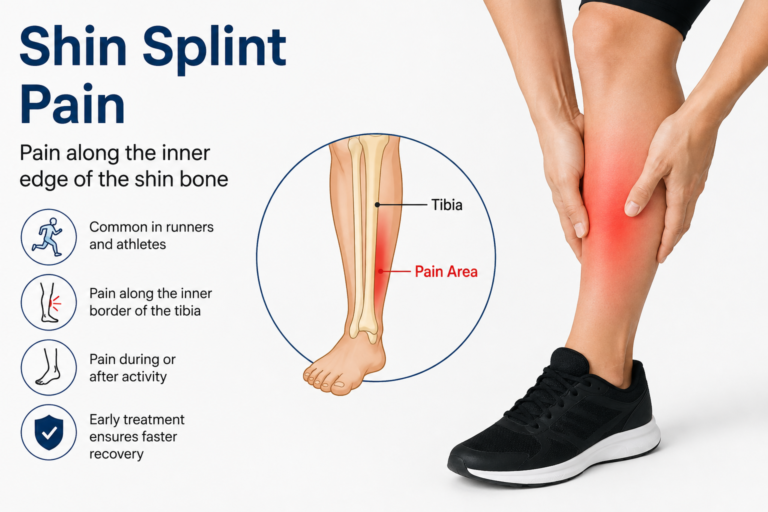
Shin splints, commonly associated with medial tibial stress syndrome (MTSS), refer to pain and tenderness around the shin bone. Repetitive loading of the lower leg can irritate the muscles, tendons, and tissues surrounding the tibia.

Without appropriate management, continuing high-impact activities may increase symptoms and interfere with sports, exercise, work, or daily movement.

Common Symptoms of Shin Splints

Typical signs of shin splint pain include:

  • Pain along the inner side of the shin
  • Tenderness around the lower leg
  • Pain during or after running and exercise
  • Discomfort while walking or climbing stairs
  • Mild swelling or sensitivity around the shin
  • Tight calf muscles
  • Pain that may initially improve with rest but return with activity

Persistent, severe, or localized bone pain should be evaluated by a qualified healthcare professional to rule out conditions such as a stress fracture.

What Causes Shin Splint Pain?

Several factors can contribute to shin splints, including:

1. Sudden Increase in Activity

Rapidly increasing running distance, workout intensity, or training frequency can place excessive stress on the lower leg.

2. Poor Running or Exercise Mechanics

Improper movement patterns can increase repetitive loading through the ankle, foot, and shin.

3. Tight Calf Muscles

Reduced flexibility in the calf and ankle may alter normal movement and increase stress on the lower leg.

4. Weak Lower-Limb Muscles

Weakness in the calf, foot, ankle, hip, or core muscles can affect lower-limb control during exercise.

5. Unsuitable Footwear

Worn-out or inappropriate shoes may contribute to poor shock absorption and altered biomechanics.

6. Hard Training Surfaces

Repeated running or jumping on hard surfaces can increase impact forces on the lower extremities.

Shin Splint Pain Physiotherapy In Gurgaon

Shin splint pain physiotherapy in Gurgaon can help manage symptoms while addressing contributing movement, flexibility, strength, and training factors.

At Indu Physiotherapy Clinic, treatment may be tailored according to your symptoms, activity level, physical assessment, and recovery goals.

Physiotherapy Assessment

A physiotherapist may assess:

  • Pain location and severity
  • Walking and running pattern
  • Ankle mobility
  • Calf flexibility
  • Foot and ankle strength
  • Lower-limb alignment
  • Muscle balance and control
  • Training routine and activity progression

This assessment helps develop an individualized rehabilitation program.

Physiotherapy Treatment for Shin Splints

Pain Management

Depending on your condition, physiotherapy may include appropriate pain-management strategies and activity modification to reduce excessive stress on the affected tissues.

Calf and Lower-Limb Stretching

Gentle stretching can help improve flexibility of the calf and surrounding muscles. Exercises are progressed gradually according to tolerance.

Strengthening Exercises

A rehabilitation program may include strengthening for:

  • Calf muscles
  • Tibialis muscles
  • Foot and ankle muscles
  • Quadriceps and hamstrings
  • Hip muscles
  • Core muscles

Better muscular strength and control can improve lower-limb function during walking, running, and sports.

Balance and Proprioception Training

Balance exercises can improve ankle stability and neuromuscular control, which are important for athletes and active individuals.

Gait and Movement Correction

Your physiotherapist may identify movement patterns that contribute to repeated stress on the shin and teach more efficient movement strategies.

Gradual Return to Running

Returning to running too quickly can cause symptoms to come back. Physiotherapy can help establish a gradual progression based on pain levels, strength, mobility, and functional tolerance.

Exercises for Shin Splints

Common rehabilitation exercises may include:

  1. Calf stretching
  2. Soleus stretching
  3. Calf raises
  4. Tibialis strengthening
  5. Resistance-band ankle exercises
  6. Foot intrinsic muscle exercises
  7. Single-leg balance
  8. Hip strengthening
  9. Functional lower-limb exercises

Exercises should be selected and progressed according to individual assessment rather than following a one-size-fits-all program.

How Can Physiotherapy Help?

A structured physiotherapy program can help you:

  • Reduce shin pain
  • Improve ankle and calf flexibility
  • Build lower-limb strength
  • Improve balance and movement control
  • Correct contributing biomechanical factors
  • Manage training load
  • Reduce the risk of recurring symptoms
  • Return safely to running and sports

Shin Splints vs. Stress Fracture

Shin splints and stress fractures can have overlapping symptoms, but they are not the same condition. Shin splint pain is often more diffuse along the shin, while a stress fracture may cause more localized tenderness and pain that can progressively worsen.

If pain is severe, occurs at rest or at night, is concentrated in a small area, or does not improve with appropriate activity modification, medical evaluation is important.

Who Can Benefit From Shin Splint Physiotherapy?

Physiotherapy may be useful for:

  • Runners
  • Athletes
  • Gym enthusiasts
  • Football and cricket players
  • Walkers
  • Dancers
  • People returning to exercise
  • Individuals with recurring lower-leg pain

Why Choose Indu Physiotherapy Clinic For Shin Splints In Gurgaon?

At Indu Physiotherapy Clinic, treatment is focused on personalized rehabilitation rather than simply managing pain. The physiotherapy program can be adapted to your activity level, symptoms, physical findings, and recovery objectives.

Whether you are an athlete trying to return to sport or an individual experiencing shin pain during daily activities, a structured rehabilitation plan can help you move toward better function and confidence.

When Should You See a Physiotherapist?

Consider a professional assessment if shin pain:

  • Keeps returning during exercise
  • Interferes with walking or sports
  • Continues despite rest
  • Gradually becomes worse
  • Is associated with significant tenderness
  • Prevents you from performing normal activities

Early assessment can help identify contributing factors and guide appropriate rehabilitation.

Frequently Asked Questions

Is physiotherapy good for shin splints?

Yes. Physiotherapy can help address pain, muscle tightness, weakness, mobility restrictions, movement patterns, and training-related factors associated with shin splints.

How long does it take for shin splints to improve?

Recovery varies depending on symptom severity, activity level, training load, and contributing factors. Following an appropriate rehabilitation and activity-modification plan can support recovery.

Can I continue running with shin splints?

Continuing the same level of painful high-impact activity may delay recovery. Your physiotherapist can help determine suitable activity modifications and a gradual return-to-running plan.

Can shin splints come back?

Yes. Shin splints may recur when training intensity increases too quickly or contributing factors such as muscle weakness, limited mobility, or movement issues remain unaddressed.

Where can I get shin splint physiotherapy in Gurgaon?

You can consult Indu Physiotherapy Clinic for an individualized assessment and rehabilitation program for shin splint pain in Gurgaon.

Take the First Step Toward Pain-Free Movement

Don’t let shin pain keep you away from running, exercise, or your daily routine. Professional assessment and a progressive physiotherapy program can help identify the factors contributing to your symptoms and support a safe return to activity.

Looking for Shin Splint Pain Physiotherapy In Gurgaon? Consult Indu Physiotherapy Clinic for personalized physiotherapy and rehabilitation.


Monday8:30am–9:30pm
Tuesday8:30am–9:30pm
Wednesday8:30am–9:30pm
Thursday8:30am–9:30pm
Friday8:30am–9:30pm
Saturday8:30am–9:30pm
Sunday9:30am–9:30pm
+91-9289 059 265

Most oral emergencies relate to pain, bleeding, or thoracic pain and should be attended by a Physiotherapist.

Make an appointment

We will send you a confirmation within 24 hours. Emergency? Call +91-9289 059 265

Most oral emergencies relate to pain, bleeding, or thoracic pain and should be attended by a Physiotherapist.

    Working Hours

    Monday 8:30am–9:30pm
    Tuesday8:30am–9:30pm
    Wednesday8:30am–9:30pm
    Thursday8:30am–9:30pm
    Friday8:30am–9:30pm
    Saturday8:30am–9:30pm
    Sunday8:30am–9:30pm
    Meet the professional therapist team

    Get started with Indu Physiotherapy Clinic!