(+91) 9289 059 265induphysiotherapy@gmail.com

Trigger Finger Physiotherapy Treatment

Trigger Finger Physiotherapy Treatment in Gurgaon

Trigger Finger Physiotherapy Treatment

Trigger Finger Physiotherapy Treatment is a conservative approach designed to reduce finger pain, stiffness, swelling, clicking, and locking while improving smooth finger movement. Trigger finger, also known as stenosing tenosynovitis, occurs when the flexor tendon has difficulty gliding smoothly through the pulley system of the finger.

Physiotherapy can help manage symptoms through targeted exercises, stretching, splinting, soft-tissue techniques, and activity modification. Early assessment may help prevent worsening stiffness and loss of hand function.

What Is Trigger Finger?

Trigger finger is a condition in which a finger may become painful, stiff, or difficult to straighten. Some people experience a clicking, catching, or locking sensation, particularly when bending or straightening the finger.

The problem commonly involves irritation and thickening around the tendon and A1 pulley, which can interfere with normal tendon movement.

Simple Diagram: How Trigger Finger Develops

 
NORMAL FINGER
       ↓
Flexor Tendon
      ╲
       ╲  Smooth gliding
        ╲
      [ A1 Pulley ]
           ↓
      Finger moves freely


TRIGGER FINGER
       ↓
Inflamed / Thickened Tendon
           ↓
      [ A1 Pulley ]
       ⚠ Narrow passage
           ↓
   Tendon catches while moving
           ↓
 Clicking → Pain → Stiffness → Locking
 

Common Symptoms of Trigger Finger

Symptoms can vary depending on the severity of the condition. Common signs include:

  • Pain or tenderness near the base of the affected finger
  • Finger stiffness, especially in the morning
  • Clicking or popping while moving the finger
  • A catching or sticking sensation
  • Difficulty fully bending or straightening the finger
  • Finger locking in a bent position
  • Tenderness in the palm
  • Reduced ability to perform gripping and hand activities

Causes and Risk Factors

Trigger finger may develop due to repeated irritation of the tendon and surrounding structures. Factors associated with increased risk can include:

  • Repetitive gripping activities
  • Frequent hand-intensive work
  • Prolonged use of tools
  • Repetitive finger movements
  • Previous hand injury
  • Certain medical conditions
  • Increasing age

Not every case has an identifiable cause.

How Physiotherapy Helps Trigger Finger

A physiotherapist evaluates finger movement, pain, stiffness, grip function, and daily activities before developing an individualized treatment plan.

1. Pain and Swelling Management

Physiotherapy may use appropriate conservative techniques to help reduce pain and irritation around the affected finger.

2. Finger and Tendon Exercises

Specific exercises can help maintain mobility and encourage smoother tendon movement.

Examples may include:

  • Gentle finger flexion and extension
  • Tendon-gliding exercises
  • Controlled finger-opening exercises
  • Thumb and hand mobility exercises
  • Gentle stretching

Exercises should be selected according to the individual’s symptoms and irritability.

3. Splinting

A suitable finger splint may sometimes be recommended to limit aggravating movements and allow irritated tissues to settle. The type and duration of splint use should be determined according to the individual’s condition.

4. Soft-Tissue Techniques

A physiotherapist may use appropriate manual techniques around the hand and finger to address soft-tissue tightness and improve comfortable movement.

5. Activity Modification

Reducing repetitive gripping, forceful hand movements, and activities that repeatedly trigger symptoms can help support recovery.

6. Functional Rehabilitation

Once pain and stiffness improve, rehabilitation can gradually focus on restoring:

Finger Mobility → Grip Function → Hand Strength → Daily Activities

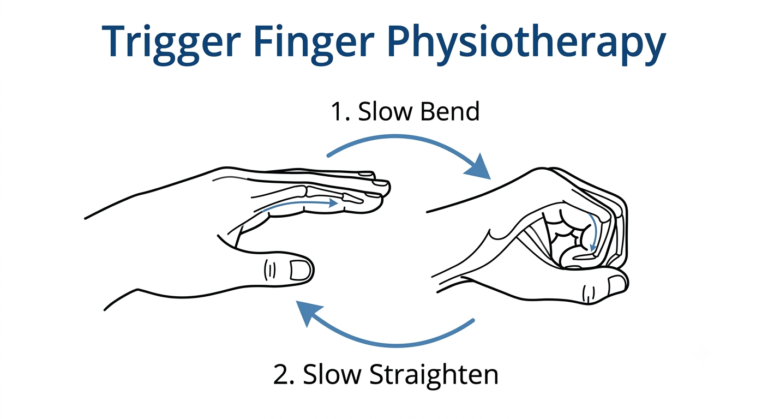
Trigger Finger Physiotherapy Exercise Diagram

 
        TRIGGER FINGER EXERCISE

             Finger Straight
                  │
                  ▼
          ┌─────────────┐
          │   ✋ HAND    │
          └─────────────┘
                  │
                  ▼
        Slowly Bend Finger
                  │
                  ▼
          Gentle Fist Position
                  │
                  ▼
        Slowly Straighten
                  │
                  ▼
        Repeat as Advised
 

Important: Exercises should be gentle and should not force a painful or locked finger.

Benefits of Physiotherapy for Trigger Finger

An individualized physiotherapy program may help:

  • Reduce pain and stiffness
  • Improve finger mobility
  • Maintain tendon movement
  • Improve hand function
  • Reduce irritation from repetitive activities
  • Improve grip-related activities
  • Support return to normal daily activities

When Should You See a Physiotherapist?

Consider professional assessment if you have persistent:

  • Finger pain
  • Morning stiffness
  • Clicking or catching
  • Difficulty straightening the finger
  • Recurrent finger locking
  • Difficulty using the affected hand

Early assessment can help determine whether conservative treatment is appropriate or whether referral to a hand specialist is required.

Trigger Finger Treatment at Indu Physiotherapy Clinic

At Indu Physiotherapy Clinic, physiotherapy for trigger finger can be tailored according to the individual’s symptoms, hand function, occupation, and activity requirements. Treatment may include therapeutic exercises, mobility work, splinting advice, manual therapy, and activity modification where appropriate.

The goal is to reduce symptoms, improve finger movement, restore hand function, and help you return to everyday activities comfortably.

Trigger Finger Physiotherapy Treatment: Recovery Approach

 
Assessment
    ↓
Identify Pain, Stiffness & Locking
    ↓
Reduce Irritation
    ↓
Gentle Mobility & Tendon Exercises
    ↓
Splinting / Activity Modification if Appropriate
    ↓
Progressive Hand & Finger Function
    ↓
Return to Normal Activities
 

Frequently Asked Questions

Is physiotherapy good for trigger finger?

Physiotherapy can be useful for selected cases, particularly when symptoms are mild to moderate. Treatment may focus on mobility, tendon gliding, activity modification, and symptom management.

Can trigger finger heal without surgery?

Some cases improve with conservative management. However, persistent or severe symptoms may require medical assessment and other treatments.

How long does trigger finger physiotherapy take?

Recovery varies depending on symptom severity, duration, underlying factors, and response to treatment. A physiotherapist can provide a more individualized rehabilitation plan after assessment.

Can I exercise with trigger finger?

Gentle exercises may be beneficial, but exercises should not force the finger through painful catching or locking. A physiotherapist can recommend appropriate exercises.

When is surgery considered?

If conservative treatment does not provide sufficient improvement or the finger remains significantly locked or functionally restricted, a doctor or hand specialist may discuss other treatment options, including surgery.

Conclusion

Trigger Finger Physiotherapy Treatment focuses on reducing pain and stiffness while improving finger mobility and hand function. A personalized program combining therapeutic exercises, tendon-gliding movements, appropriate splinting, manual techniques, and activity modification can support conservative management in suitable case.


GURGAON

Monday8:30am–9:30pm
Tuesday8:30am–9:30pm
Wednesday8:30am–9:30pm
Thursday8:30am–9:30pm
Friday8:30am–9:30pm
Saturday8:30am–9:30pm
Sunday9:30am–9:30pm
+91-9289 059 265

Most oral emergencies relate to pain, bleeding, or thoracic pain and should be attended by a Physiotherapist.

Make an appointment

We will send you a confirmation within 24 hours. Emergency? Call +91-9289 059 265

Most oral emergencies relate to pain, bleeding, or thoracic pain and should be attended by a Physiotherapist.

    Working Hours

    Monday 8:30am–9:30pm
    Tuesday8:30am–9:30pm
    Wednesday8:30am–9:30pm
    Thursday8:30am–9:30pm
    Friday8:30am–9:30pm
    Saturday8:30am–9:30pm
    Sunday8:30am–9:30pm
    Meet the professional therapist team

    Get started with Indu Physiotherapy Clinic!