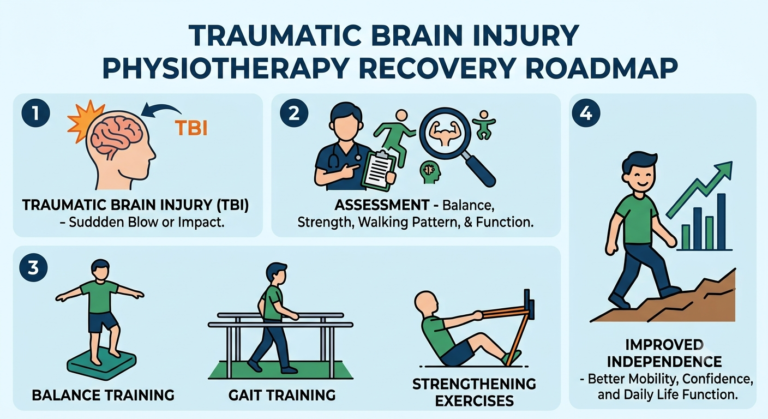
Traumatic Brain Injury (TBI) can significantly alter a person’s physical capabilities, cognitive processes, and overall quality of life. Accessing specialized Traumatic Brain Injury Physiotherapy In Gurgaon ensures that survivors receive evidence-based neuro-rehabilitation designed to restore mobility, enhance motor function, and rebuild independence. At Indu Physiotherapy Clinic in Gurgaon, our dedicated neuro physiotherapists design customized care pathways tailored to each stage of brain injury recovery.
A Traumatic Brain Injury occurs when an external physical force damages brain tissue. Whether caused by motor vehicle accidents, accidental falls, athletic impacts, or occupational injuries, TBI disrupts neural pathways, leading to motor deficits, balance impairments, and muscle control loss.
Concussion: A mild TBI resulting from temporary neural disruption, often causing dizziness or headaches.
Brain Contusion: Direct bruising of brain tissue accompanied by localized swelling.
Diffuse Axonal Injury (DAI): Extensive shearing of nerve fibers throughout the brain, impacting coordination and motor skills.
Hematoma / Intracranial Hemorrhage: Blood pooling inside or surrounding brain structures, requiring critical care followed by physical rehabilitation.
Physiotherapy directly targets the physical and sensory impairments associated with TBI. Key clinical symptoms addressed during rehabilitation include:
Postural Instability & Ataxia: Difficulty maintaining balance or standing unassisted.
Spasticity & Muscle Rigidity: Abnormal muscle tightness that limits joint range of motion.
Gait Anomalies: Asymmetrical walking patterns, foot drop, or altered stride length.
Motor Coordination Deficits: Inability to perform smooth, controlled voluntary movements.
Vestibular Imbalance: Frequent dizziness, vertigo, or difficulty visually tracking movement.
Persistent Fatigue: Low physical endurance during routine daily tasks.
Neuro-rehabilitation follows a progressive model structured around the patient’s clinical evolution:
| Rehabilitation Stage | Core Clinical Focus | Primary Physiotherapy Interventions |
|---|---|---|
| Acute / Early Stage | Prevention of secondary complications | Bed positioning, passive range-of-motion exercises, respiratory therapy, chest clearing |
| Sub-Acute Stage | Postural control & basic mobility | Supported sitting balance, bed-to-chair transfers, weight-shifting exercises |
| Active Recovery Stage | Rebuilding strength & locomotion | Independent gait training, resistance exercises, dynamic balance activities |
| Community Integration | Advanced coordination & return to routine | Task-specific functional training, agility drills, community access practice |
Core Physiotherapy Interventions for TBI Recovery
Restoring a safe and efficient walking pattern is a primary goal. Interventions include body-weight supported treadmill training, parallel bar exercises, step-up variations, and correction of gait irregularities such as hemiparetic gait or foot drop.
Physiotherapy leverages neuroplasticity—the brain’s ability to reorganize itself by forming new neural connections. Repetitive, goal-directed functional movements train undamaged regions of the brain to perform lost motor functions.
Hypertonia and spasticity are managed using dynamic stretching techniques, prolonged positioning strategies, soft tissue mobilization, and neuromuscular inhibition techniques to keep joints flexible and prevent contractures.
Specific balance protocols—including single-leg stance practice, stability disc training, and vestibular ocular reflex exercises—help patients regain spatial awareness and minimize fall risks.
Exercises are customized around real-world daily movements:
Rolling and bridging in bed
Sit-to-stand transitions
Stair climbing and obstacle navigation
Fine motor and arm-leg coordination tasks
Accelerates Neuromuscular Recovery: Early stimulation optimizes brain reorganization and recovery speed.
Prevents Secondary Complications: Reduces the risk of joint stiffness, pressure sores, muscle atrophy, and deep vein thrombosis (DVT).
Minimizes Fall Risk: Improves postural control, body awareness, and core stability.
Restores Functional Independence: Empowers individuals to perform everyday activities without heavy reliance on caregivers.
Enhances Quality of Life: Rebuilds personal confidence and mobility for long-term health.
At Indu Physiotherapy Clinic, we provide focused, patient-centered care for complex neurological conditions.
Expert Neuro-Physiotherapists: Advanced hands-on experience in stroke, traumatic brain injury, and spinal cord injury rehabilitation.
Individualized Care Plans: Rehabilitation programs customized based on precise baseline neurological assessments.
Modern Clinical Equipment: Specialized tools for balance, gait retraining, and functional neuromuscular re-education.
In-Clinic & Home Physiotherapy Options: Accessible treatment choices across Gurgaon for patients who prefer or require care at home.
Q1: How soon should physiotherapy start after a Traumatic Brain Injury? Physiotherapy should begin as soon as the patient is medically stable, often starting in the intensive care or hospital unit with basic positioning and passive movements.
Q2: Can neuro physiotherapy help months or years after a head injury? Yes. Due to the brain’s lifelong potential for neuroplasticity, ongoing structured physical therapy can yield meaningful improvements in mobility, balance, and strength long after the initial injury.
Q3: Is home neuro physiotherapy available in Gurgaon? Yes, Indu Physiotherapy Clinic offers specialized home visits across Gurgaon for patients facing mobility challenges or requiring intensive home-based care.
Q4: How long does TBI physiotherapy rehabilitation take? The duration varies depending on injury severity, overall health, and consistency of treatment. Programs typically range from a few months to over a year of active management.
Most oral emergencies relate to pain, bleeding, or thoracic pain and should be attended by a Physiotherapist.
We will send you a confirmation within 24 hours. Emergency? Call +91-9289 059 265
Most oral emergencies relate to pain, bleeding, or thoracic pain and should be attended by a Physiotherapist.