(+91) 9289 059 265induphysiotherapy@gmail.com

Ankylosing Spondylitis Physiotherapy Treatment

Ankylosing Spondylitis Physiotherapy Treatment

Ankylosing Spondylitis Physiotherapy Treatment

Ankylosing Spondylitis (AS) is a chronic inflammatory condition that mainly affects the spine and sacroiliac joints. Over time, inflammation can cause stiffness, reduced spinal mobility, pain, and difficulty performing everyday activities. Although ankylosing spondylitis requires ongoing medical management, physiotherapy plays an important role in maintaining mobility, improving posture, reducing stiffness, and supporting physical function.

At Indu Physiotherapy Clinic, physiotherapy treatment for ankylosing spondylitis is planned according to the individual’s symptoms, mobility, strength, posture, and functional goals.

What Is Ankylosing Spondylitis?

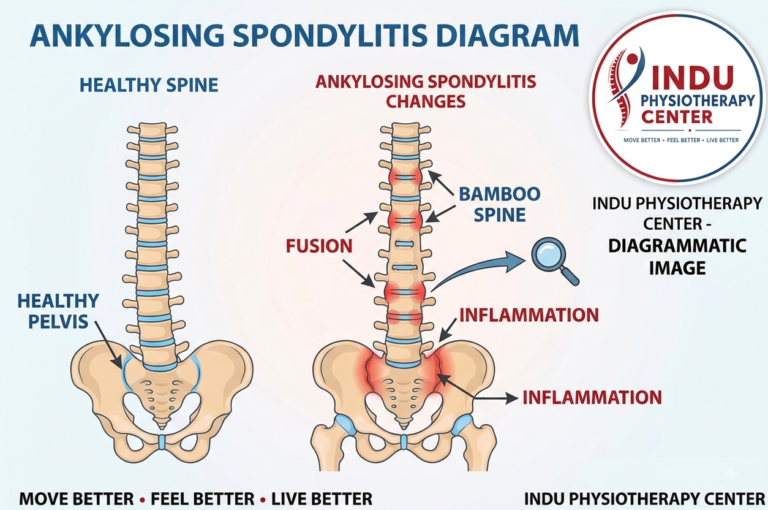
Ankylosing spondylitis is a type of inflammatory arthritis that commonly affects the joints between the spine and pelvis and the spine itself. Symptoms may develop gradually and can include persistent lower back pain, morning stiffness, reduced flexibility, and discomfort that may improve with movement.

In some people, prolonged inflammation can lead to changes in the spine and a progressive reduction in spinal movement. Early assessment and appropriate physiotherapy can help patients remain as active and mobile as possible.

Common Symptoms of Ankylosing Spondylitis

Symptoms can vary from person to person. Common symptoms include:

  • Persistent lower back or buttock pain
  • Morning stiffness
  • Stiffness after prolonged sitting or inactivity
  • Reduced spinal flexibility
  • Difficulty maintaining an upright posture
  • Pain around the hips or other joints
  • Reduced chest expansion in some individuals
  • Fatigue
  • Difficulty performing daily activities
  • Reduced physical activity due to pain and stiffness

If back pain and stiffness are persistent, particularly when symptoms are worse after rest and improve with movement, a healthcare professional should assess the condition.

How Physiotherapy Helps in Ankylosing Spondylitis

Physiotherapy focuses on maintaining movement, strength, posture, and functional independence. A personalized treatment program may include:

1. Therapeutic Exercises

A physiotherapist may prescribe exercises designed to maintain spinal mobility and improve overall physical function. Exercises can include gentle spinal movements, strengthening exercises, flexibility exercises, and functional training.

2. Posture Correction

Ankylosing spondylitis may affect posture and spinal alignment. Postural exercises can help patients become more aware of their positioning and maintain a more functional upright posture.

3. Spinal Mobility Exercises

Regular mobility exercises can help maintain the available range of movement in the spine. Your physiotherapist can teach safe exercises based on your symptoms and current mobility.

4. Stretching and Flexibility Exercises

Gentle stretching may help manage muscle tightness and improve flexibility around the spine, hips, shoulders, and other affected areas.

5. Strengthening Exercises

Strengthening the muscles around the trunk, hips, and other important areas can support movement and everyday activities. Exercise intensity should be adjusted according to the individual’s condition.

6. Breathing Exercises

Some people with ankylosing spondylitis may experience reduced chest mobility. Breathing and chest-expansion exercises may be incorporated into a physiotherapy program when appropriate.

7. Manual Therapy

In selected cases, a physiotherapist may use appropriate hands-on techniques to address muscle tightness and restricted movement. Manual therapy should be individualized and used alongside an appropriate exercise program.

8. Education and Activity Advice

Physiotherapy also involves teaching patients how to manage movement, posture, activity levels, and exercise safely. Learning how to remain active without unnecessarily aggravating symptoms is an important part of long-term management.

Benefits of Physiotherapy for Ankylosing Spondylitis

A consistent physiotherapy program may help:

  • Maintain spinal mobility
  • Reduce stiffness
  • Improve flexibility
  • Improve posture and physical function
  • Build muscular strength
  • Support better movement patterns
  • Improve tolerance for daily activities
  • Encourage regular physical activity
  • Maintain independence
  • Improve overall quality of life

The results can vary depending on disease activity, duration of symptoms, individual mobility, and adherence to the recommended treatment plan.

Ankylosing Spondylitis Exercise Program

Exercise is an important component of long-term management. Depending on an individual’s assessment, a physiotherapist may recommend:

  • Spinal mobility exercises
  • Postural exercises
  • Hip flexibility exercises
  • Core and trunk strengthening
  • General strengthening exercises
  • Walking or other suitable aerobic activity
  • Chest-expansion and breathing exercises
  • Functional exercises

Exercises should be performed with proper technique and adjusted according to symptoms. During periods of increased inflammation or significant pain, the exercise program may need modification.

Why Choose Physiotherapy at Indu Physiotherapy Clinic?

At Indu Physiotherapy Clinic, treatment is focused on creating an individualized rehabilitation program rather than using the same exercises for every patient.

Assessment may consider:

  • Pain and stiffness
  • Spinal mobility
  • Posture
  • Muscle strength
  • Flexibility
  • Functional limitations
  • Exercise tolerance
  • Daily activity requirements

Based on the assessment, the physiotherapist can develop a progressive treatment plan designed to help you move safely and maintain your physical function.

When Should You See a Physiotherapist?

Consider seeking professional assessment if you experience persistent back pain, recurring stiffness, reduced spinal movement, difficulty maintaining posture, or limitations in daily activities associated with ankylosing spondylitis.

Physiotherapy is generally most useful when incorporated into a broader medical management plan. If symptoms suddenly become severe, change significantly, or are accompanied by other concerning symptoms, seek appropriate medical evaluation.

Frequently Asked Questions

Can physiotherapy cure ankylosing spondylitis?

Physiotherapy does not cure ankylosing spondylitis. It is an important part of long-term management and can help maintain mobility, strength, posture, and physical function.

Is exercise safe for ankylosing spondylitis?

Exercise is generally an important part of managing ankylosing spondylitis, but the type and intensity should be appropriate for the individual’s symptoms and disease activity. A physiotherapist can help develop a suitable exercise program.

How often should I do physiotherapy exercises?

The frequency depends on your condition, symptoms, treatment goals, and exercise program. Your physiotherapist can provide individualized guidance.

Can physiotherapy help with morning stiffness?

Appropriate mobility exercises, stretching, and regular physical activity may help manage stiffness. A personalized program is preferable because symptoms and mobility limitations differ between individuals.

Can physiotherapy improve posture in ankylosing spondylitis?

Postural exercises and mobility training may help maintain functional posture and spinal movement. The degree of improvement depends on the individual’s condition and existing spinal changes.

Conclusion

Ankylosing Spondylitis Physiotherapy Treatment focuses on maintaining mobility, reducing stiffness, improving posture, strengthening muscles, and supporting independence. Regular exercise and individualized physiotherapy can be valuable components of long-term management.

If you are experiencing persistent back stiffness, reduced spinal mobility, or difficulty with daily activities due to ankylosing spondylitis, a professional physiotherapy assessment can help determine an appropriate rehabilitation approach.

GURGAON

Monday8:30am–9:30pm
Tuesday8:30am–9:30pm
Wednesday8:30am–9:30pm
Thursday8:30am–9:30pm
Friday8:30am–9:30pm
Saturday8:30am–9:30pm
Sunday9:30am–9:30pm
+91-9289 059 265

Most oral emergencies relate to pain, bleeding, or thoracic pain and should be attended by a Physiotherapist.

Make an appointment

We will send you a confirmation within 24 hours. Emergency? Call +91-9289 059 265

Most oral emergencies relate to pain, bleeding, or thoracic pain and should be attended by a Physiotherapist.

    Working Hours

    Monday 8:30am–9:30pm
    Tuesday8:30am–9:30pm
    Wednesday8:30am–9:30pm
    Thursday8:30am–9:30pm
    Friday8:30am–9:30pm
    Saturday8:30am–9:30pm
    Sunday8:30am–9:30pm
    Meet the professional therapist team

    Get started with Indu Physiotherapy Clinic!