(+91) 9289 059 265induphysiotherapy@gmail.com

Quadriplagia Physiotherapy Treatment

Quadriplagia Physiotherapy Treatment

Quadriplegia Physiotherapy Treatment: Rehabilitation, Exercises & Recovery

Diagrammatic Presentation

Spinal Cord Injury / Neurological Condition
↓
Weakness or Paralysis of Arms & Legs
↓
Reduced Mobility + Balance + Trunk Control
↓
Physiotherapy Assessment
↓
Positioning → Mobility → Strength → Balance → Functional Training
↓
Independence & Better Quality of Life

What Is Quadriplegia?

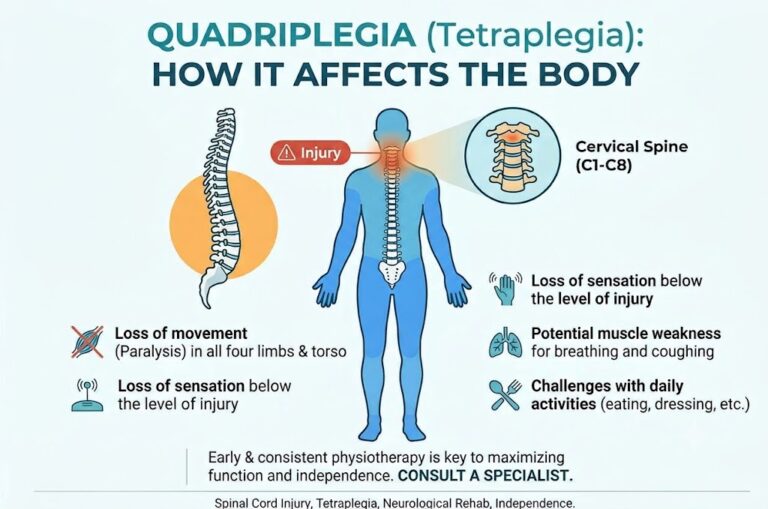
Quadriplegia, also called tetraplegia, is a condition in which a person experiences significant weakness or paralysis affecting both the arms and legs, usually because of an injury or disorder involving the cervical spinal cord.

The severity and pattern of movement loss can vary from person to person. Some individuals may have limited movement in their arms or legs, while others may require extensive assistance for mobility and daily activities.

Quadriplegia physiotherapy treatment focuses on maintaining physical function, preventing complications, improving available movement and strength, and helping the individual achieve the highest possible level of independence.

How Can Physiotherapy Help in Quadriplegia?

Physiotherapy is an important part of long-term neurological rehabilitation. Treatment is individualized according to the person’s neurological status, muscle strength, joint mobility, respiratory condition, functional ability and rehabilitation goals.

Main Goals of Quadriplegia Physiotherapy

1. Maintain Joint Mobility
Gentle range-of-motion exercises can help maintain flexibility and reduce the risk of joint stiffness and contractures.

2. Improve Available Muscle Strength
Where voluntary movement is present, appropriately graded strengthening exercises may help improve functional muscle performance.

3. Improve Sitting and Postural Control
Therapy can focus on trunk stability, head control and sitting balance to support daily activities.

4. Develop Functional Mobility
Depending on the individual’s abilities, rehabilitation may include bed mobility, transfers, wheelchair skills and other functional movements.

5. Prevent Secondary Complications
Physiotherapy can contribute to prevention strategies for problems associated with prolonged immobility, such as reduced joint mobility, poor posture and respiratory complications.

Quadriplegia Physiotherapy Treatment Plan

A typical rehabilitation programme may include several stages:

Assessment

The physiotherapist evaluates:

  • Muscle strength
  • Muscle tone
  • Joint range of motion
  • Sensation
  • Balance and posture
  • Respiratory function
  • Bed mobility
  • Transfer ability
  • Wheelchair mobility
  • Functional independence

↓

Positioning & Range-of-Motion Exercises

Gentle positioning and passive or active-assisted movements may be used according to the person’s neurological status.

↓

Strength & Motor Training

Available muscles are trained using carefully selected exercises. The intensity is progressed according to tolerance and functional goals.

↓

Balance & Trunk Control

Supported sitting, reaching activities and controlled weight-shifting can help develop postural stability.

↓

Functional Rehabilitation

The programme may progress toward:

Rolling → Sitting → Bed Mobility → Transfers → Wheelchair Skills → Daily Activities

Respiratory Physiotherapy

Some people with higher cervical spinal cord injuries can experience respiratory muscle weakness. Respiratory rehabilitation may therefore become an important part of the treatment plan.

Depending on the person’s condition, a qualified healthcare professional may use breathing exercises, supported coughing techniques, chest physiotherapy or other respiratory strategies.

Respiratory treatment should always be individualized, particularly in people with significant cervical spinal cord involvement.

Wheelchair & Transfer Training

For individuals who use a wheelchair, physiotherapy can help develop safe and efficient wheelchair mobility.

Training may include:

  • Wheelchair positioning
  • Sitting posture
  • Pressure-relief techniques
  • Bed-to-wheelchair transfers
  • Wheelchair propulsion skills
  • Reaching and balance activities
  • Safe movement strategies

The objective is not simply movement—it is functional independence and confidence in everyday life.

Quadriplegia Rehabilitation Exercise Examples

Depending on the individual’s medical condition and neurological level, a physiotherapist may prescribe:

  • Passive range-of-motion exercises
  • Active-assisted exercises
  • Breathing exercises
  • Supported sitting exercises
  • Trunk control activities
  • Upper-limb strengthening
  • Reaching exercises
  • Balance training
  • Transfer practice
  • Wheelchair mobility training
  • Functional task practice

Exercises should not be copied from a generic programme. The appropriate exercises, repetitions and intensity depend on the person’s neurological injury and overall medical status.

Physiotherapy Rehabilitation Flow

Neurological Assessment
↓
Identify Strength & Movement Potential
↓
Maintain Joint Flexibility
↓
Improve Muscle Activation
↓
Develop Postural & Trunk Control
↓
Train Transfers & Mobility
↓
Wheelchair & Functional Training
↓
Home-Based Exercise Programme
↓
Long-Term Functional Rehabilitation

Why Early Rehabilitation Matters

After a spinal cord injury or other neurological condition, rehabilitation should begin according to medical stability and the treating team’s recommendations.

Early, appropriately supervised rehabilitation can help establish safe movement strategies, maintain available physical capacity and prepare the person for greater participation in daily activities.

However, recovery from quadriplegia varies considerably. Physiotherapy cannot guarantee complete neurological recovery, but rehabilitation can help maximize the person’s functional potential and quality of life.

Home Physiotherapy for Quadriplegia

For individuals who have difficulty travelling to a clinic, home-based physiotherapy may be considered.

A home rehabilitation programme may focus on:

Bed Mobility → Positioning → Joint Movement → Strengthening → Sitting Balance → Transfers → Functional Activities

Family members and caregivers can also be taught appropriate positioning, transfer techniques and prescribed exercises to support rehabilitation safely.

Frequently Asked Questions

Can physiotherapy cure quadriplegia?

Physiotherapy does not directly cure spinal cord damage. Its role is to maximize functional ability, maintain mobility, prevent complications and support independence.

Can a quadriplegic patient walk again?

Walking potential varies greatly depending on the level and completeness of spinal cord injury and other medical factors. A rehabilitation team can assess the individual’s potential and establish appropriate goals.

How often is physiotherapy required?

Frequency depends on the person’s condition, rehabilitation stage, tolerance and goals. A physiotherapist should create an individualized programme rather than using the same schedule for every patient.

Is quadriplegia rehabilitation possible at home?

Yes, home-based rehabilitation may be appropriate for some individuals, particularly when travelling is difficult. The programme should be designed and supervised by qualified professionals.

What is the role of family members?

Family and caregivers can play an important role in supporting positioning, prescribed exercises, safe transfers, daily routines and long-term rehabilitation.

Quadriplegia Physiotherapy Treatment in Gurgaon

Individuals searching for quadriplegia physiotherapy treatment in Gurgaon may benefit from a structured neurological rehabilitation programme based on their individual movement capacity and functional goals.

Indu Physiotherapy Clinic provides physiotherapy and rehabilitation services with a patient-focused approach. Treatment planning can be tailored to neurological rehabilitation needs, mobility limitations and functional goals.

For severe neurological conditions, physiotherapy should be coordinated with the patient’s doctor and other rehabilitation professionals whenever required.


Monday8:30am–9:30pm
Tuesday8:30am–9:30pm
Wednesday8:30am–9:30pm
Thursday8:30am–9:30pm
Friday8:30am–9:30pm
Saturday8:30am–9:30pm
Sunday9:30am–9:30pm
+91-9289 059 265

Most oral emergencies relate to pain, bleeding, or thoracic pain and should be attended by a Physiotherapist.

Make an appointment

We will send you a confirmation within 24 hours. Emergency? Call +91-9289 059 265

Most oral emergencies relate to pain, bleeding, or thoracic pain and should be attended by a Physiotherapist.

    Working Hours

    Monday 8:30am–9:30pm
    Tuesday8:30am–9:30pm
    Wednesday8:30am–9:30pm
    Thursday8:30am–9:30pm
    Friday8:30am–9:30pm
    Saturday8:30am–9:30pm
    Sunday8:30am–9:30pm
    Meet the professional therapist team

    Get started with Indu Physiotherapy Clinic!