(+91) 9289 059 265induphysiotherapy@gmail.com

Rotator Cuff Tear Physiotherapy Treatment

Rotator Cuff Tear Physiotherapy Treatment

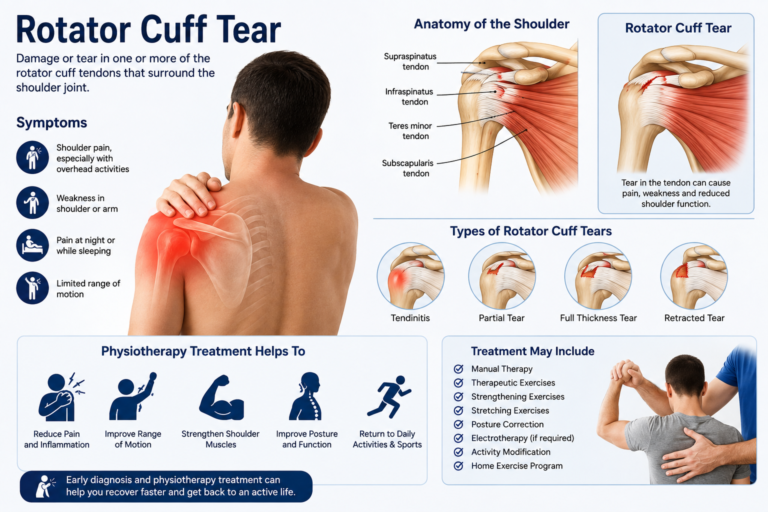
 What is a Rotator Cuff Tear?

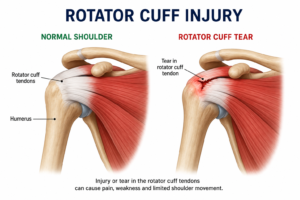
A rotator cuff tear occurs when one or more of the rotator cuff tendons become partially or completely torn. The injury may develop suddenly after trauma or gradually because of

Rotator Cuff Tear Physiotherapy Treatment

 repetitive shoulder movements and tendon degeneration.

Early physiotherapy plays a vital role in promoting healing, reducing inflammation, restoring shoulder movement, and preventing long-term disability.

 Anatomy of the Rotator Cuff

The rotator cuff is made up of four important muscles:

 Supraspinatus

Helps lift the arm away from the body.

 Infraspinatus

Responsible for external rotation of the shoulder.

 Teres Minor

Supports external shoulder rotation and stability.

 Subscapularis

Allows internal rotation and provides shoulder stability.

Together, these muscles stabilize the shoulder joint during movement.

 Causes of Rotator Cuff Tear

Common causes include:

  • Sports injuries
  • Sudden falls
  • Heavy lifting
  • Repetitive overhead activities
  • Aging and tendon degeneration
  • Shoulder dislocation
  • Poor posture
  • Repetitive occupational work
  • Chronic shoulder impingement
  • Muscle weakness

 Symptoms of Rotator Cuff Tear

Signs and symptoms include:

  • Shoulder pain
  • Pain while lifting the arm
  • Weakness in the shoulder
  • Night pain while sleeping
  • Difficulty reaching overhead
  • Limited shoulder movement
  • Clicking or popping sounds
  • Pain during dressing
  • Difficulty combing hair
  • Reduced sports performance

 Risk Factors

You may be at higher risk if you:

  • Are over 40 years old
  • Play overhead sports
  • Perform repetitive lifting
  • Work in construction or painting
  • Have poor shoulder posture
  • Smoke
  • Have diabetes
  • Previously injured your shoulder

 Types of Rotator Cuff Tears

 Partial Thickness Tear

Only part of the tendon is damaged.                                                                                                                                   Full Thickness Tear

The tendon is completely torn.

 Acute Tear

Occurs suddenly after trauma.

 Degenerative Tear

Develops gradually because of aging and overuse.

 Diagnosis

 Clinical Assessment

Our physiotherapist evaluates:

  • Pain location
  • Shoulder strength
  • Range of motion
  • Functional activities
  • Shoulder stability
  • Muscle weakness
  • Posture

 Imaging

Your doctor may recommend:

  • X-ray
  • Ultrasound
  • MRI Scan

Rotator Cuff Tear Physiotherapy Treatment

At Indu Physiotherapy Clinic, treatment is customized according to the severity of the tear, pain level, age, occupation, and activity goals.

 Comprehensive Physiotherapy Assessment

We evaluate:

  • Shoulder mobility
  • Muscle imbalance
  • Joint stability
  • Posture
  • Functional limitations
  • Pain severity
  • Movement quality

 Pain Relief Therapy

Our treatment may include:

  • TENS Therapy
  • IFT Therapy
  • Ultrasound Therapy
  • Cryotherapy
  • Heat Therapy
  • Manual Therapy
  • Soft Tissue Mobilization
  • Trigger Point Release

 Manual Therapy

Hands-on techniques help:

  • Improve joint mobility
  • Reduce muscle tightness
  • Decrease pain
  • Restore normal shoulder mechanics

 Shoulder Mobility Exercises

Treatment includes:

 Pendulum Exercises

Gentle movement to reduce stiffness.

 Assisted Range of Motion

Improves shoulder flexibility safely.

 Wall Climbing Exercises

Restores overhead movement gradually.

 Cane Exercises

Improves shoulder mobility.

 Strengthening Exercises

Once pain reduces, strengthening begins.

 Rotator Cuff Strengthening

  • External Rotation
  • Internal Rotation
  • Shoulder Abduction
  • Shoulder Flexion

 Scapular Stabilization

  • Scapular Retraction
  • Serratus Anterior Exercises
  • Lower Trapezius Strengthening

 Resistance Band Exercises

Improves muscle endurance and shoulder control.

 Functional Rehabilitation

Exercises focus on:

  • Reaching
  • Lifting
  • Carrying
  • Overhead activities
  • Work-specific tasks
  • Sports rehabilitation

 Post-Surgical Rotator Cuff Rehabilitation

Following surgery, physiotherapy helps:

 Phase 1

  • Pain control
  • Sling education
  • Passive movements

 Phase 2

  • Active-assisted exercises
  • Improved mobility

 Phase 3

  • Muscle strengthening
  • Functional recovery

 Phase 4

  • Sports-specific rehabilitation
  • Return-to-work training

 Benefits of Physiotherapy

Physiotherapy helps:

  • Reduce shoulder pain
  • Restore mobility
  • Improve shoulder strength
  • Enhance flexibility
  • Improve posture
  • Prevent stiffness
  • Avoid surgery in many cases
  • Restore daily activities
  • Improve sports performance
  • Prevent future injuries

Home Care Tips

 Do’s

  • Perform prescribed exercises
  • Maintain good posture
  • Apply ice during acute pain
  • Sleep in a comfortable position
  • Follow your rehabilitation program

 Don’ts

  • Avoid lifting heavy objects
  • Do not ignore shoulder pain
  • Avoid repetitive overhead activities
  • Do not stop exercises without guidance
  • Avoid sudden shoulder movements

 Recovery Time

Recovery depends on:

  • Severity of tear
  • Age
  • Treatment consistency
  • Muscle strength
  • Activity level

Typical recovery:

  • Mild tears: 6–8 weeks
  • Moderate tears: 8–12 weeks
  • Post-surgical rehabilitation: 4–6 months
  • Athletes: 4–9 months

 Why Choose Indu Physiotherapy Clinic?

 Expert Shoulder Rehabilitation

Our clinic offers:

  • Experienced Physiotherapists
  • Personalized Treatment Plans
  • Evidence-Based Physiotherapy
  • Advanced Electrotherapy
  • Manual Therapy
  • Sports Injury Rehabilitation
  • Post-Surgical Rehabilitation
  • Home Physiotherapy Services in Gurgaon
  • One-to-One Patient Care

 Frequently Asked Questions (FAQs)

Can a rotator cuff tear heal without surgery?

Many partial tears and some degenerative tears improve significantly with physiotherapy, activity modification, and strengthening exercises. Complete tears may require an orthopedic evaluation.

 Is physiotherapy painful?

Treatment is tailored to your comfort level. Some exercises may cause mild discomfort initially, but they should not cause severe pain.

 How many physiotherapy sessions are needed?

The number of sessions varies depending on the severity of the tear and your recovery goals. Most patients require several weeks of structured rehabilitation.

 Can I continue working during treatment?

Many people can continue working with activity modifications, but heavy lifting and repetitive overhead tasks may need to be limited until shoulder strength improves.

 Can physiotherapy prevent surgery?

Yes. In many cases, especially partial tears, early physiotherapy can reduce pain, improve function, and help patients avoid surgery.

GURGAON

Monday8:30am–9:30pm
Tuesday8:30am–9:30pm
Wednesday8:30am–9:30pm
Thursday8:30am–9:30pm
Friday8:30am–9:30pm
Saturday8:30am–9:30pm
Sunday9:30am–9:30pm
+91-9289 059 265

Most oral emergencies relate to pain, bleeding, or thoracic pain and should be attended by a Physiotherapist.

Make an appointment

We will send you a confirmation within 24 hours. Emergency? Call +91-9289 059 265

Most oral emergencies relate to pain, bleeding, or thoracic pain and should be attended by a Physiotherapist.

    Working Hours

    Monday 8:30am–9:30pm
    Tuesday8:30am–9:30pm
    Wednesday8:30am–9:30pm
    Thursday8:30am–9:30pm
    Friday8:30am–9:30pm
    Saturday8:30am–9:30pm
    Sunday8:30am–9:30pm
    Meet the professional therapist team

    Get started with Indu Physiotherapy Clinic!