(+91) 9289 059 265induphysiotherapy@gmail.com

Rotator Cuff Tear Physiotherapy Treatment In Gurgaon

Rotator Cuff Tear Physiotherapy Treatment In Gurgaon

Rotator Cuff Tear Physiotherapy Treatment In Gurgaon

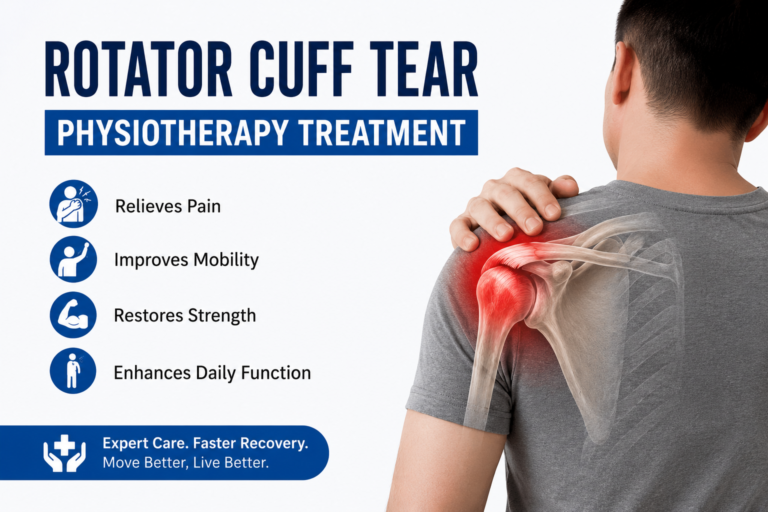
Shoulder pain that makes it difficult to lift your arm, reach overhead, or sleep comfortably may be caused by a rotator cuff tear. This common shoulder injury affects the muscles and tendons that stabilize the shoulder joint, leading to pain, weakness, stiffness, and reduced range of motion. Without proper treatment, a rotator cuff tear can interfere with work, sports, and everyday activities.

At Indu Physiotherapy Clinic, we provide advanced Rotator Cuff Tear Physiotherapy Treatment In Gurgaon using evidence-based rehabilitation techniques. Our personalized treatment programs focus on reducing pain, restoring shoulder mobility, strengthening the rotator cuff muscles, and helping patients return to their normal lifestyle without surgery whenever possible.

Whether your injury is caused by sports, heavy lifting, an accident, or age-related wear and tear, our experienced physiotherapists create individualized rehabilitation plans to promote faster recovery and prevent future shoulder injuries.

What is a Rotator Cuff Tear?

A rotator cuff tear is an injury to one or more of the four muscles and tendons that surround and stabilize the shoulder joint. These tendons help lift and rotate the arm while keeping the shoulder stable during movement.

A tear may be partial, where the tendon is damaged but not completely torn, or full-thickness, where the tendon separates completely from the bone. Early diagnosis and appropriate physiotherapy are essential for restoring function and preventing long-term complications.

Anatomy of the Rotator Cuff

The rotator cuff consists of four muscles:

  • Supraspinatus
  • Infraspinatus
  • Teres Minor
  • Subscapularis

Together, these muscles keep the shoulder stable and allow smooth movement during lifting, reaching, pushing, and pulling activities.

Common Causes of Rotator Cuff Tear

Several factors can lead to a rotator cuff tear, including:

  • Sudden shoulder injury or fall
  • Lifting heavy objects
  • Sports injuries (cricket, tennis, badminton, swimming, weightlifting)
  • Repetitive overhead movements
  • Age-related tendon degeneration
  • Poor shoulder posture
  • Shoulder impingement syndrome
  • Previous shoulder dislocation
  • Occupational overuse

Types of Rotator Cuff Tears

Partial Thickness Tear

Only part of the tendon is damaged, while some fibers remain attached.

Full Thickness Tear

The tendon is completely torn from the bone, causing significant weakness and reduced shoulder function.

Acute Tear

Occurs suddenly due to trauma, falls, or heavy lifting.

Degenerative Tear

Develops gradually because of aging, repetitive movements, and tendon wear.

Symptoms of Rotator Cuff Tear

Common signs and symptoms include:

  • Shoulder pain
  • Pain during overhead activities
  • Night pain while sleeping on the affected side
  • Shoulder weakness
  • Difficulty lifting the arm
  • Clicking or popping sounds
  • Limited range of motion
  • Difficulty reaching behind the back
  • Pain while dressing
  • Reduced shoulder strength
  • Stiffness
  • Difficulty carrying objects

Risk Factors

You may have a higher risk if you:

  • Are over 40 years of age
  • Play overhead sports
  • Perform repetitive lifting at work
  • Have poor posture
  • Smoke
  • Have diabetes
  • Previously injured your shoulder
  • Perform heavy manual labor

Why Physiotherapy is Important for Rotator Cuff Tears

Physiotherapy is one of the most effective non-surgical treatments for many rotator cuff injuries. A structured rehabilitation program helps reduce pain, improve shoulder movement, restore muscle strength, and enhance overall function.

Early physiotherapy can also reduce the risk of chronic stiffness, muscle weakness, and long-term disability. Even after rotator cuff surgery, physiotherapy plays a crucial role in achieving a full recovery.

Benefits of Rotator Cuff Tear Physiotherapy Treatment

Our physiotherapy program is designed to help patients:

  • Reduce shoulder pain
  • Improve range of motion
  • Restore shoulder strength
  • Improve flexibility
  • Reduce inflammation
  • Enhance joint stability
  • Improve posture
  • Prevent shoulder stiffness
  • Restore normal arm function
  • Improve sports performance
  • Reduce the risk of re-injury
  • Return safely to work and daily activities
  • Improve quality of life

When Should You Visit a Physiotherapist?

You should consult a physiotherapist if you experience:

  • Shoulder pain lasting more than one week
  • Difficulty lifting your arm
  • Pain during overhead activities
  • Shoulder weakness
  • Night pain
  • Reduced shoulder movement
  • Pain after a fall or sports injury
  • Difficulty performing daily activities

Early assessment and treatment can improve recovery outcomes and help prevent further damage.

Monday8:30am–9:30pm
Tuesday8:30am–9:30pm
Wednesday8:30am–9:30pm
Thursday8:30am–9:30pm
Friday8:30am–9:30pm
Saturday8:30am–9:30pm
Sunday9:30am–9:30pm
+91-9289 059 265

Most oral emergencies relate to pain, bleeding, or thoracic pain and should be attended by a Physiotherapist.

Make an appointment

We will send you a confirmation within 24 hours. Emergency? Call +91-9289 059 265

Most oral emergencies relate to pain, bleeding, or thoracic pain and should be attended by a Physiotherapist.

    Working Hours

    Monday 8:30am–9:30pm
    Tuesday8:30am–9:30pm
    Wednesday8:30am–9:30pm
    Thursday8:30am–9:30pm
    Friday8:30am–9:30pm
    Saturday8:30am–9:30pm
    Sunday8:30am–9:30pm
    Meet the professional therapist team

    Get started with Indu Physiotherapy Clinic!