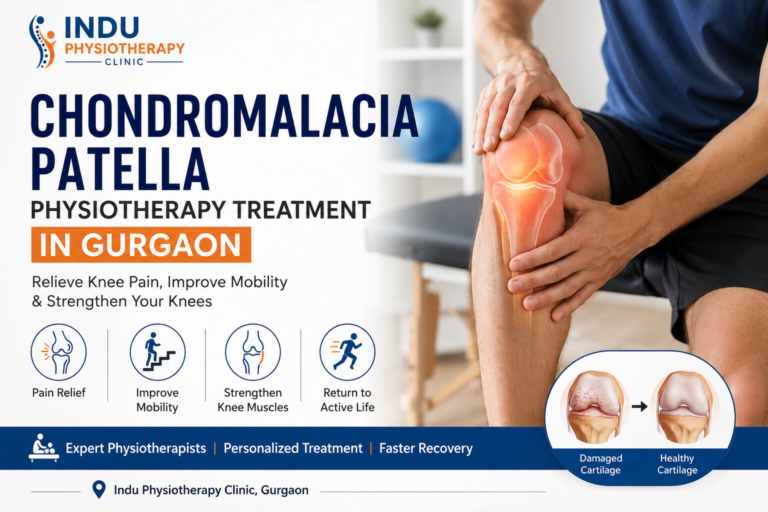
Are you experiencing knee pain while climbing stairs, squatting, running, or sitting for long periods? You may be suffering from Chondromalacia Patella, a common knee condition that affects the cartilage underneath the kneecap. At Indu Physiotherapy Clinic, Gurgaon, we provide specialized Chondromalacia Patella Physiotherapy Treatment in Gurgaon to help reduce pain, improve mobility, and restore knee function without surgery.
Our evidence-based physiotherapy programs are designed to address the root cause of your knee pain and help you return to your daily activities safely and effectively.
Chondromalacia Patella, also known as Runner’s Knee, is a condition where the cartilage on the underside of the kneecap (patella) softens and deteriorates. This causes friction between the kneecap and the thigh bone, leading to pain, inflammation, and difficulty in movement.
The condition is commonly seen in athletes, runners, cyclists, and individuals with poor knee alignment or muscle imbalances.
Several factors can contribute to the development of Chondromalacia Patella, including:
If you experience these symptoms, early physiotherapy intervention can prevent the condition from worsening.
Physiotherapy is considered one of the most effective non-surgical treatments for Chondromalacia Patella. The primary goal is to reduce pain, improve patellar tracking, strengthen muscles, and restore normal knee function.
Our physiotherapists perform a detailed evaluation of:
Based on the findings, a customized treatment plan is created.
Advanced modalities may include:
These treatments help reduce pain and inflammation.
Hands-on techniques are used to:
Targeted exercises focus on:
Strong hip muscles help maintain proper knee alignment.
Stretching helps relieve tight muscles around the knee:
Kinesiology taping techniques may be used to improve patellar tracking and reduce stress on the knee joint.
Improper walking and running patterns can contribute to knee pain. Our physiotherapists provide gait training and posture correction to optimize movement.
Individuals at higher risk include:
Recovery depends on the severity of the condition and adherence to physiotherapy treatment.
Recovery may take 4 to 6 weeks.
Recovery typically requires 6 to 12 weeks.
Recovery may take 3 to 6 months with a structured rehabilitation program.
Consistent physiotherapy significantly improves recovery outcomes.
Regular strengthening exercises help support the knee joint.
Always perform proper warm-up activities before sports or workouts.
Supportive footwear helps maintain proper lower limb alignment.
Gradually increase exercise intensity to prevent overloading the knee.
Excess body weight increases pressure on the knee joint.
Our team has extensive experience in treating knee conditions and sports injuries.
Every patient receives an individualized rehabilitation program.
We utilize evidence-based treatment approaches and modern physiotherapy equipment.
We focus on long-term recovery and prevention of future injuries.
We also provide physiotherapy treatment at home in Gurgaon for patients who require convenient care.
Yes, physiotherapy is one of the most effective treatments for reducing pain, improving knee function, and preventing recurrence.
Most cases can be successfully managed with physiotherapy, exercise, and lifestyle modifications without surgery.
Yes, gentle walking is usually beneficial, but activities should be guided by a physiotherapist to avoid aggravating symptoms.
The number of sessions depends on the severity of the condition, but most patients benefit from a structured rehabilitation program over several weeks.
Most oral emergencies relate to pain, bleeding, or thoracic pain and should be attended by a Physiotherapist.
We will send you a confirmation within 24 hours. Emergency? Call +91-9289 059 265
Most oral emergencies relate to pain, bleeding, or thoracic pain and should be attended by a Physiotherapist.