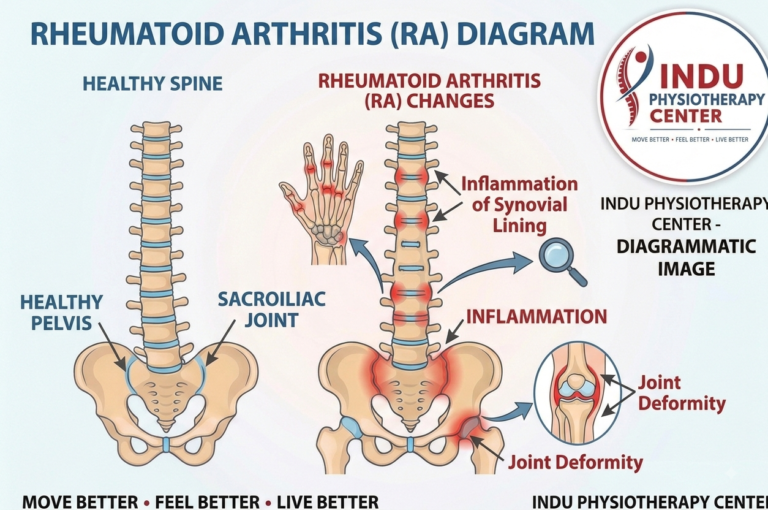
Rheumatoid Arthritis (RA) is a chronic autoimmune condition that can cause joint pain, swelling, stiffness, weakness, and reduced mobility. It commonly affects the hands, wrists, knees, feet, shoulders, and other joints. When symptoms interfere with walking, working, exercising, or daily activities, a structured physiotherapy program can help improve movement and physical function.
Rheumatoid Arthritis Physiotherapy Treatment in Gurgaon focuses on individualized rehabilitation, gentle mobility exercises, strengthening, flexibility training, functional exercises, joint protection, and patient education. Treatment is adapted according to the patient’s symptoms, physical ability, and disease activity.

Rheumatoid arthritis occurs when the immune system mistakenly attacks tissues around the joints, leading to inflammation. Persistent inflammation can contribute to pain, stiffness, reduced range of motion, muscle weakness, and joint changes.
Unlike osteoarthritis, rheumatoid arthritis is an autoimmune disease and may affect several joints, often on both sides of the body.
People with rheumatoid arthritis may experience:
Early assessment and appropriate management can help people maintain mobility and function.
A physiotherapist evaluates movement, joint mobility, muscle strength, balance, posture, functional ability, and activity limitations before developing an individualized treatment plan.
Physiotherapy may include appropriate techniques and activity modification to help manage pain and improve comfort. Treatment intensity is adjusted during periods of increased inflammation.
Gentle range-of-motion exercises can help maintain joint flexibility and reduce stiffness. Exercises are selected according to the affected joints and the individual’s tolerance.
Rheumatoid arthritis may contribute to muscle weakness and reduced physical activity. Carefully progressed strengthening exercises can improve muscular support and help with everyday tasks.
Appropriate stretching and mobility exercises can help maintain flexibility. Exercises should be performed comfortably and modified if they increase joint symptoms.
When RA affects the knees, ankles, feet, or other lower-limb joints, balance and gait exercises may help improve walking ability and confidence.
Physiotherapy can focus on activities such as:
The goal is to make everyday movement safer and easier.
Patients can learn practical strategies for reducing unnecessary stress on painful joints. These may include pacing activities, improving body mechanics, using appropriate movement techniques, and balancing activity with rest.
A personalized home exercise program can help maintain mobility and strength between physiotherapy sessions. Regular, appropriate physical activity is an important part of long-term rehabilitation.
Rheumatoid Arthritis
↓
Joint Inflammation
↓
Pain + Swelling + Morning Stiffness
↓
Reduced Joint Movement
↓
Muscle Weakness + Reduced Activity
↓
Difficulty With Daily Activities
Assessment
↓
Pain & Symptom Management
↓
Gentle Mobility Exercises
↓
Strength & Flexibility Training
↓
Balance & Functional Training
↓
Joint Protection Education
↓
Home Exercise Program
↓
Improved Mobility & Functional Independence
A properly designed physiotherapy program may help:
Physiotherapy does not cure rheumatoid arthritis, but rehabilitation can be an important part of comprehensive symptom and function management.
Professional physiotherapy provides an individualized approach rather than a one-size-fits-all exercise routine. The physiotherapist can modify exercises according to pain, joint involvement, strength, mobility, and current disease activity.
At Indu Physiotherapy Clinic in Gurgaon, treatment can focus on improving movement, strength, flexibility, functional ability, and confidence while keeping exercises appropriate for the patient’s condition.
Physiotherapy may be beneficial for people experiencing:
People experiencing a significant flare, severe pain, marked swelling, fever, sudden loss of function, or other concerning symptoms should seek appropriate medical assessment.
Yes. Physiotherapy can help maintain joint mobility, improve strength and physical function, and teach safe movement and joint-protection strategies. It should form part of an overall management plan.
Depending on the person’s condition, suitable exercises may include gentle range-of-motion movements, strengthening exercises, flexibility training, balance exercises, and functional activities. Exercise selection should be individualized.
Exercise may need to be modified during an active flare. High-intensity or aggravating exercises may not be appropriate when joints are significantly inflamed. Your physiotherapist and medical team can guide activity levels.
The frequency depends on symptoms, functional limitations, treatment goals, and response to rehabilitation. Your physiotherapist can recommend an individualized schedule.
Rheumatoid Arthritis Physiotherapy Treatment in Gurgaon can help people manage movement difficulties associated with rheumatoid arthritis and maintain physical function. Through individualized mobility exercises, strengthening, flexibility training, balance work, functional rehabilitation, and joint-protection education, physiotherapy can support a more active and independent lifestyle.
For the best approach, rheumatoid arthritis physiotherapy should be coordinated with appropriate medical management and adjusted according to the individual’s symptoms and disease activity.
Most oral emergencies relate to pain, bleeding, or thoracic pain and should be attended by a Physiotherapist.
We will send you a confirmation within 24 hours. Emergency? Call +91-9289 059 265
Most oral emergencies relate to pain, bleeding, or thoracic pain and should be attended by a Physiotherapist.